Trail bike, great explorer, or e-enduro? We took the Fantic Sierra Factory out on the trails, then swapped tires to see how far it can go. And we discovered a bike with two very different personalities.
The new Fantic Sierra Factory It was born around a rather clear concept: to create an e-MTB capable of tackling the mountains at 360 degrees, without necessarily being confined to the most extreme enduro use.
A bike designed to rack up the miles, alternating between trails and long dirt roads, tackling technical climbs and, when the terrain slopes downhill, putting on the table geometry and suspension capable of giving a lot.
It is therefore one trail bike in philosophy, but with a decidedly enduro heart.
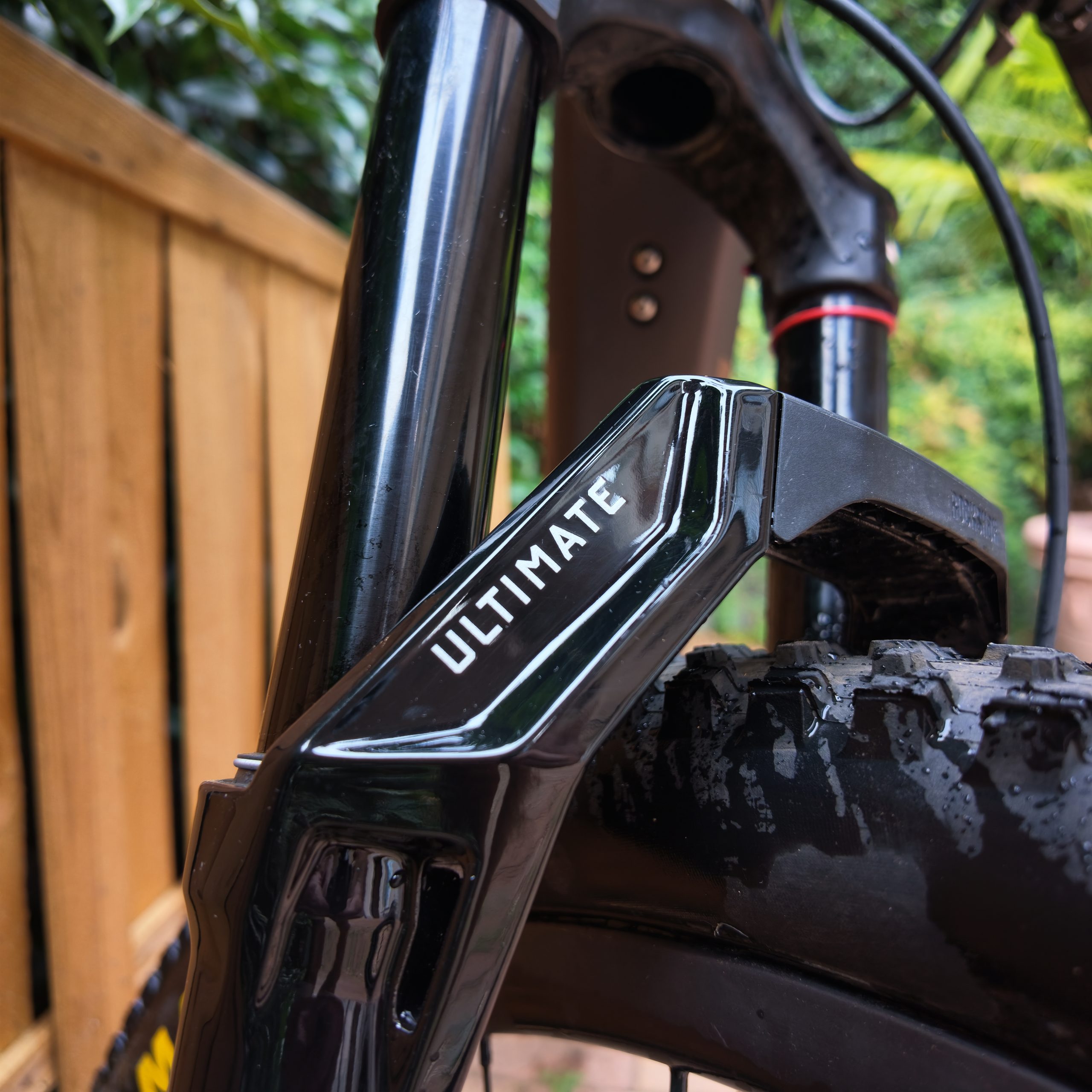
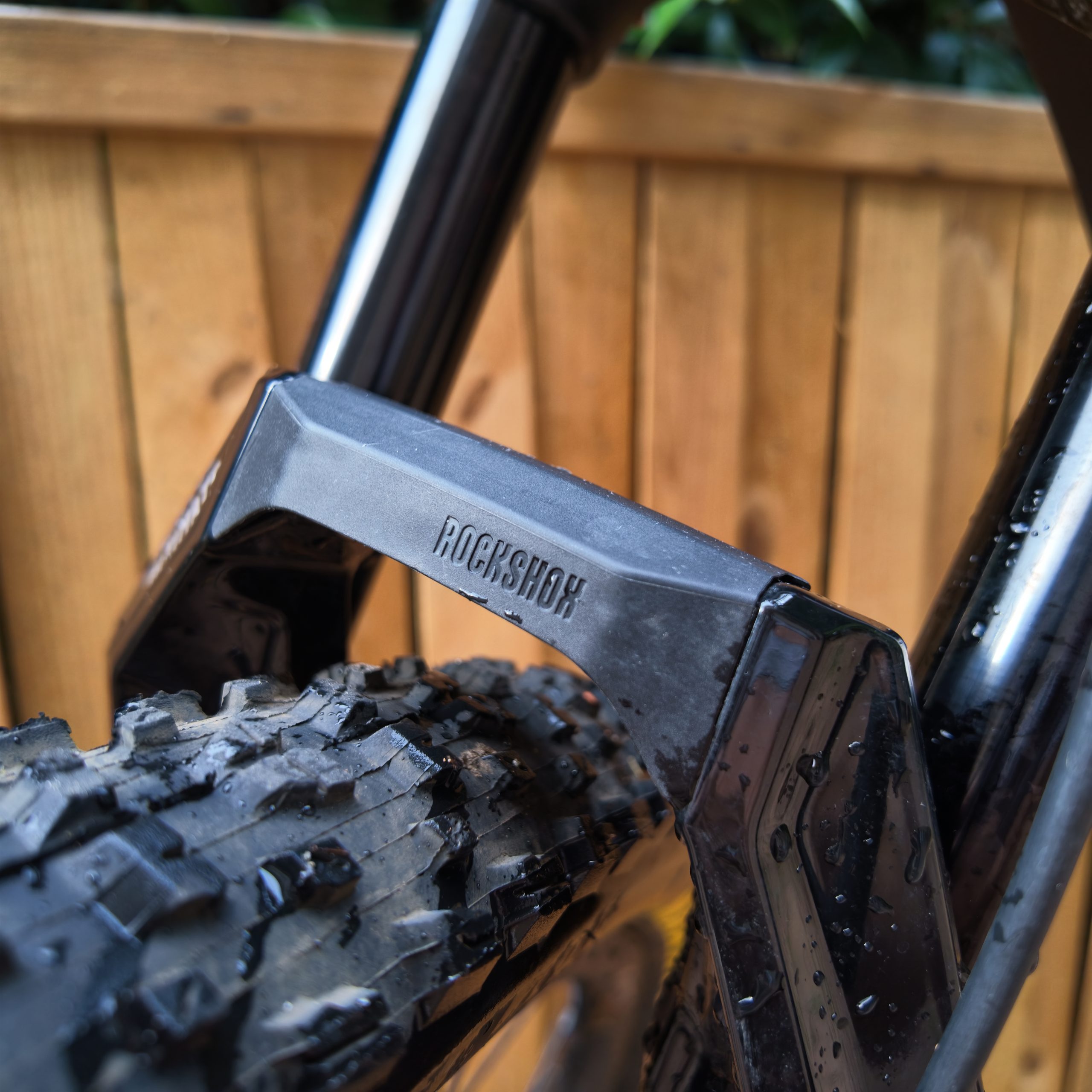
The 160mm RockShox Lyrik Ultimate fork, 65° head angle, and 448,5mm chainstay immediately reveal the leeway available when the trail gets steep and rough. At the same time, however, Fantic didn't build the Sierra as a simple e-enduro bike: the goal is to find a balance between downhill ability, efficiency, and battery life, making it a bike suitable for even the longest days in the mountains.
Carbon and Bosch CX: a promising base
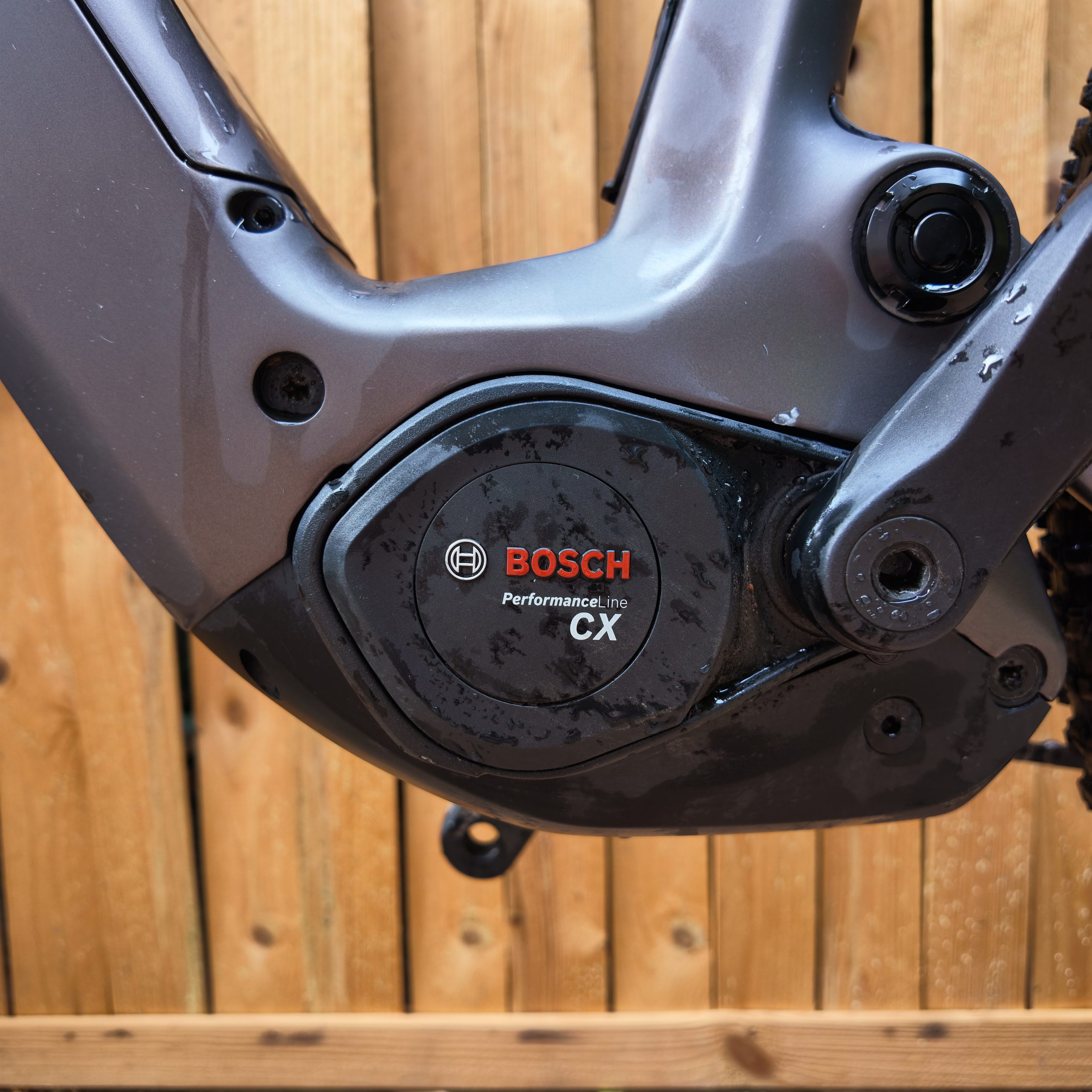
The frame is made of carbon fiber, with a project aimed at optimizing rigidity and weight. Inside there is space for the Bosch PowerTube 800 Wh, combined with the fifth-generation Performance Line CX: a combination that provides a large energy reserve for rides with a lot of altitude difference and for those tours where the goal is not simply to reach the summit, but to keep exploring.
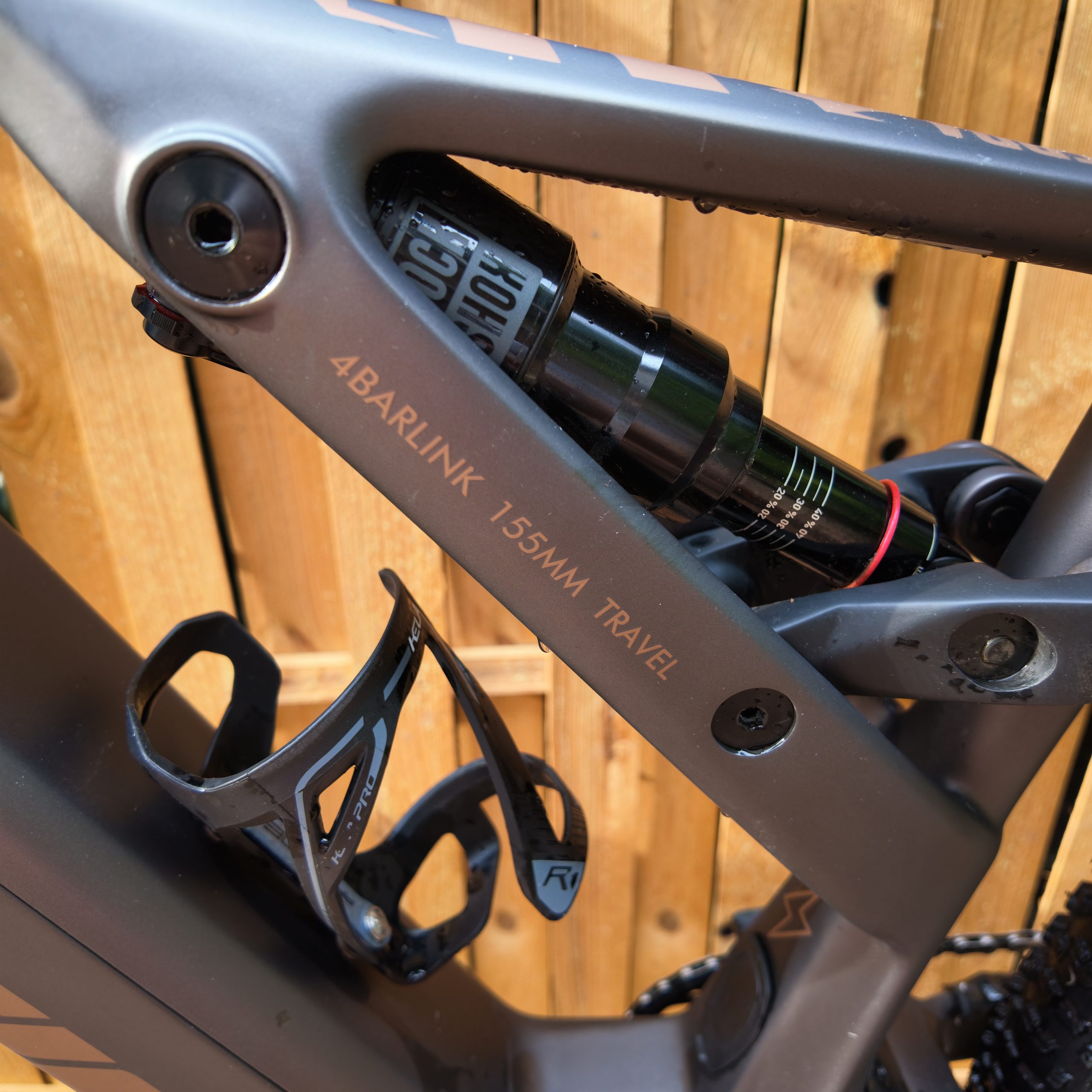
The suspension department is entrusted to a 160mm RockShox Lyrik Ultimate and a 185x55 mm Deluxe Select+. At the rear, Fantic uses a Horst Link coaxial, designed to maintain effective suspension performance even when braking. Added to this is a flip chip that allows you to adjust the suspension's behavior and expand the bike's configuration options.
The Factory version we tested adopts an electronic transmission SRAM GX AXS T-Type 12-speed, with a 10-52 cassette and 34-tooth chainring. Braking is handled by SRAM Maven Silver, while the cockpit uses a 780mm FSA KFX UD carbon handlebar and 50mm Gradient stem.
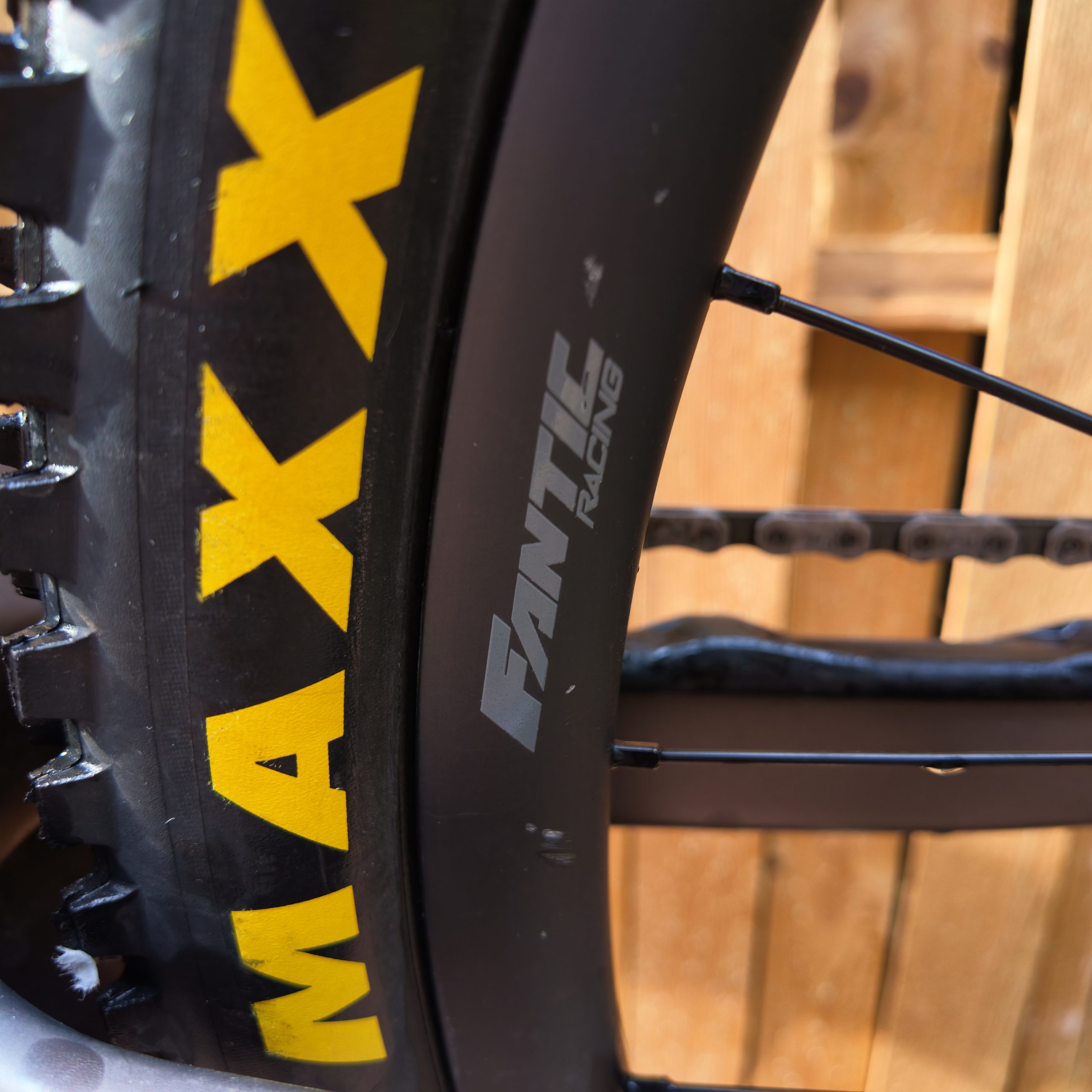
Particularly interesting is the choice of Fantic Racing carbon wheels, paired with 29×2.4″ Maxxis Rekon 3C EXO tires as standard.
And it is precisely from this choice that we begin to understand the Sierra philosophy.
Instead of pursuing exclusively grip and e-enduro-like robustness, Fantic also sought smoothness and weight containment, characteristics that become important when you want to tackle long and highly varied routes.
Modern geometry, without extremism
Even the geometries tell of this balance.
The steering is open to 65°, the seat tube measures 76,5° and the rear triangle measures 448,5 mm on all sizes. The reach goes from 429 mm on the S to 501 mm on the XL, with 449 mm on the M and 477 mm on the L.
Modern numbers and aggressive enough to tackle challenging terrain, but included in a project that is not born just for downhill racing.
On paper, then, Sierra seems to want to occupy an interesting space: an e-MTB with which you can set off without necessarily knowing where the ride will end.
But it is on the ground that we must understand whether these different souls can really coexist.
Field Test
Going uphill, everything starts from the position
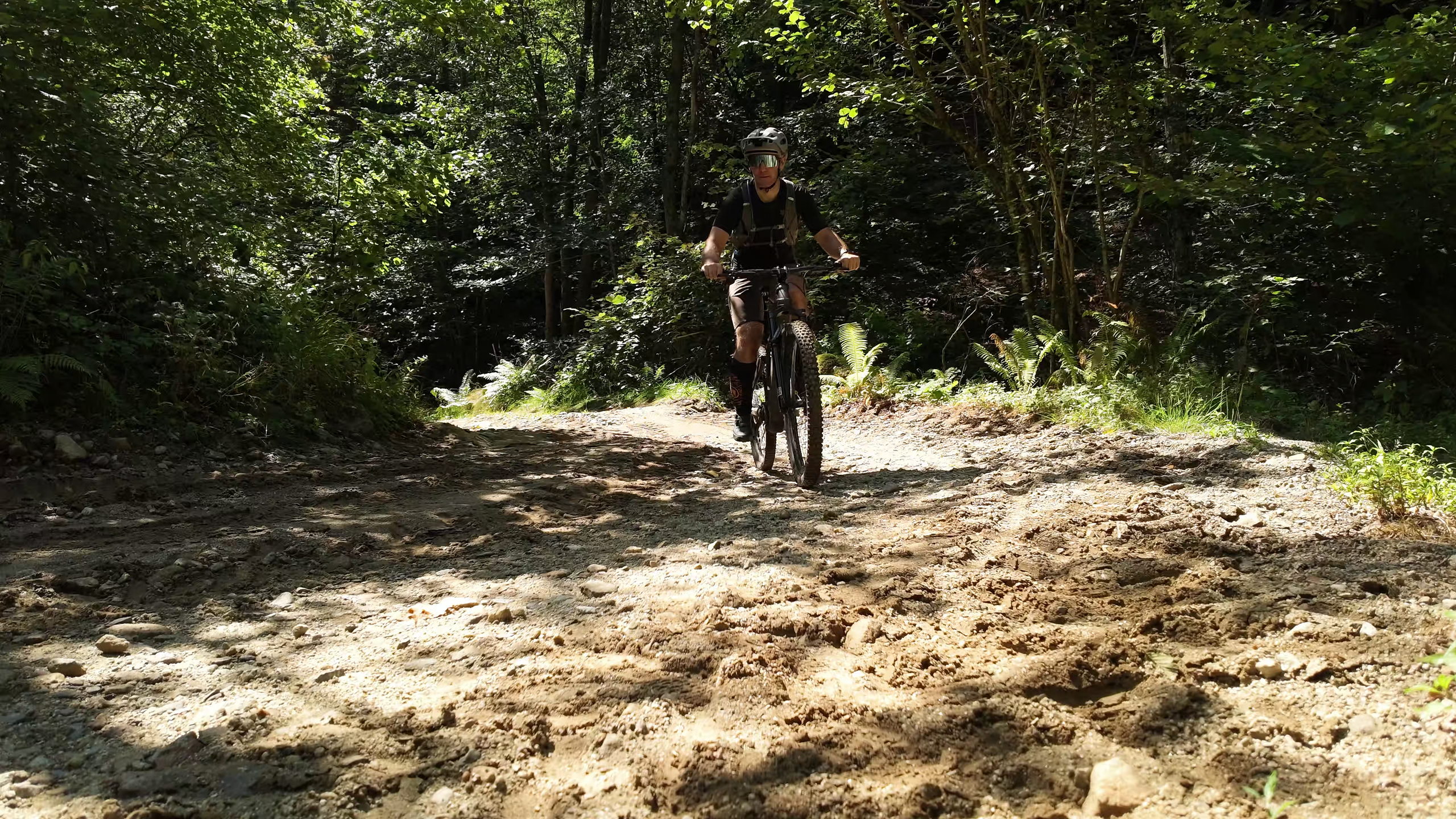
Before even talking about the engine, suspension and ability to overcome the most technical passages, on the Fantic Sierra it is worth starting from a seemingly banal element: the riding position.
The Sierra makes it easy to find a good fit, also working on the saddle setback to achieve the right balance between comfort and pedaling efficiency.
This isn't something you should overlook just because you're riding an e-bike. In fact, when you're aiming for long days in the mountains and hours on the pedals, proper positioning becomes even more important.
The motor reduces the effort required to move forward, but doesn't eliminate the pedaling action. Finding the right balance allows for a more natural and fluid leg action and better manages loads during long hours in the saddle.
As the miles and elevation gain add up, your knees, hips, and core muscles benefit from proper alignment.
The first step to truly exploiting the Sierra's qualities is therefore to dedicate a few minutes to adjustments and finding your position.
Bosch CX: lots of thrust, above all lots of control
On the assistance front we find the Bosch Performance Line CX fifth generation, an engine that is now well-known and which on the Sierra confirms one of its most important qualities: the ease with which it allows you to manage the power.
The thrust is consistent yet controllable, which is especially helpful when the terrain gets rough. On technical sections, you can easily control the power, while on steeper walls, the available torque allows you to keep moving forward without having to attack every section.
It is precisely this predictability of response that conveys safety: you can concentrate on the line and management of the bike, leaving the Bosch system to provide the required assistance.
On a bike designed to tackle very long journeys, however, the absolute performance of the engine is only part of the equation.
It also matters how easily the bike can maintain speed once launched.
Maxxis Rekon: a choice that makes sense
Here comes into play one of the most interesting choices of the Factory set-up: the Maxxis Rekon 29×2.4″ 3C EXO.
On an e-MTB with 160 mm of front travel and a setup geared toward enduro, it would have been easy to opt for more aggressive tires. Fantic, however, went a different route, favoring a smoother-rolling tire that's consistent with the Sierra's all-mountain and exploratory nature.
When you spend long hours in the saddle, reducing rolling resistance means you need less energy to maintain your pace.
The advantage doesn't just concern battery consumption: the bike feels more fluid, maintains speed more easily and provides a less "rubbery" pedal stroke, with a less bouncy effect.
On a short ride or when repeatedly tackling very rough terrain, the difference may seem marginal. However, as the miles, hours, and journeys on smooth dirt roads increase, this choice begins to matter much more.
And it is precisely here that the true focus of the original installation emerges: not necessarily the short, aggressive tour, but the big mountain tour, where efficiency, autonomy and comfort become as important as performance on the individual technical section.
Suspension: support without sacrificing sensitivity
The RockShox sector is also working in the same direction.
When climbing, the ability to provide more support to the suspension allows you to limit unwanted movements without making the bike completely insensitive to the terrain.
There remains that minimum amount of work needed to absorb bumps and vibrations, a behavior that is particularly appreciated on long dirt roads and bumpy climbs.
This is where the chassis design comes into play: the suspension continues to follow the road surface without giving the sensation of wasting the energy applied to the pedals.
The result is a Sierra that when climbing it doesn't just try to take us to the top thanks to the power of the engine. Position, tire smoothness, suspension behavior and Bosch assistance work in the same direction, making it natural to maintain the pace for a long time.
The 800 Wh battery provides the energy reserve, but it is the overall efficiency of the vehicle that really makes sense.
Because when the goal is to go far, it's not just how much energy we have available that matters: it's also how much we waste to get there.
Downhill: The Two Souls of the Sierra
It is when the road begins to descend that probably the most interesting aspect of the Fantic Sierra Factory emerges.
Because here the discussion must necessarily be divided into two: the Sierra with its standard equipment and the Sierra whose chassis allows you to glimpse beneath the surface.
Let's start from the original configuration.
With the 2.4″ Maxxis Rekon, smooth-rolling and relatively light tires, the Sierra performs well and transmits a pleasant feeling of stability from the first few meters.
The frame is precise, the geometry gives confidence and above all the RockShox component allows you to tackle rough terrain with great control.
The 160mm Lyrik Ultimate offers support and absorbency even when the terrain starts to get tough, while the swingarm keeps the rear wheel composed and capable of following the bumps.
The feeling, however, is that of having a chassis with greater potential than the standard setup actually allows you to exploit.
With Rekon you have to know what you want
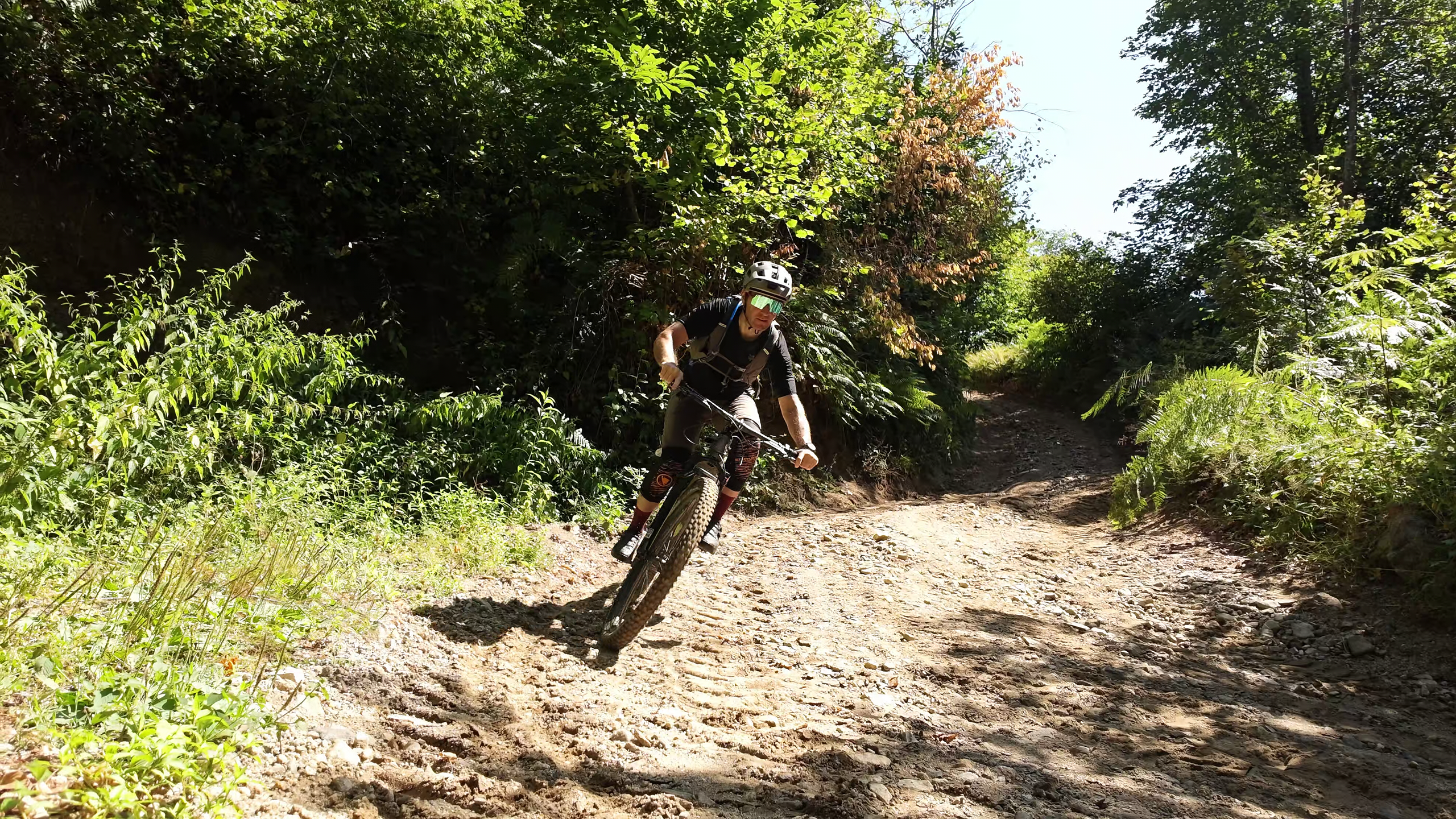
If your goal is long all-mountain days, dirt road connections, flowing trails, and big traverses, choosing the Rekon makes perfect sense.
The smoothness appreciated during climbs and transfers is a real advantage as the kilometers and hours in the saddle increase. Inevitably, however, something has to be given up when it comes time to descend.
On more compact surfaces and flowing trails, the Sierra remains intuitive and fun. However, when the gradient, speed, rocks and loose terrain increase, it is necessary drive with a greater margin, especially when braking and in lateral support.
It's not the chassis or suspension that are asking to slow down: it's mainly the tires that remind us of the true purpose of this specific setup.
If the day's plan is a long tour, with many kilometers, altitude differences, forest roads and trails of varying difficulty, you simply need to take into account a slightly more conservative management of aggressive descents.
But the frame, geometry and suspension kept asking us a question.
What happens if we give the Sierra a tire capable of fully supporting its more aggressive side?
We decided to find out.
Two Assegai and everything changes
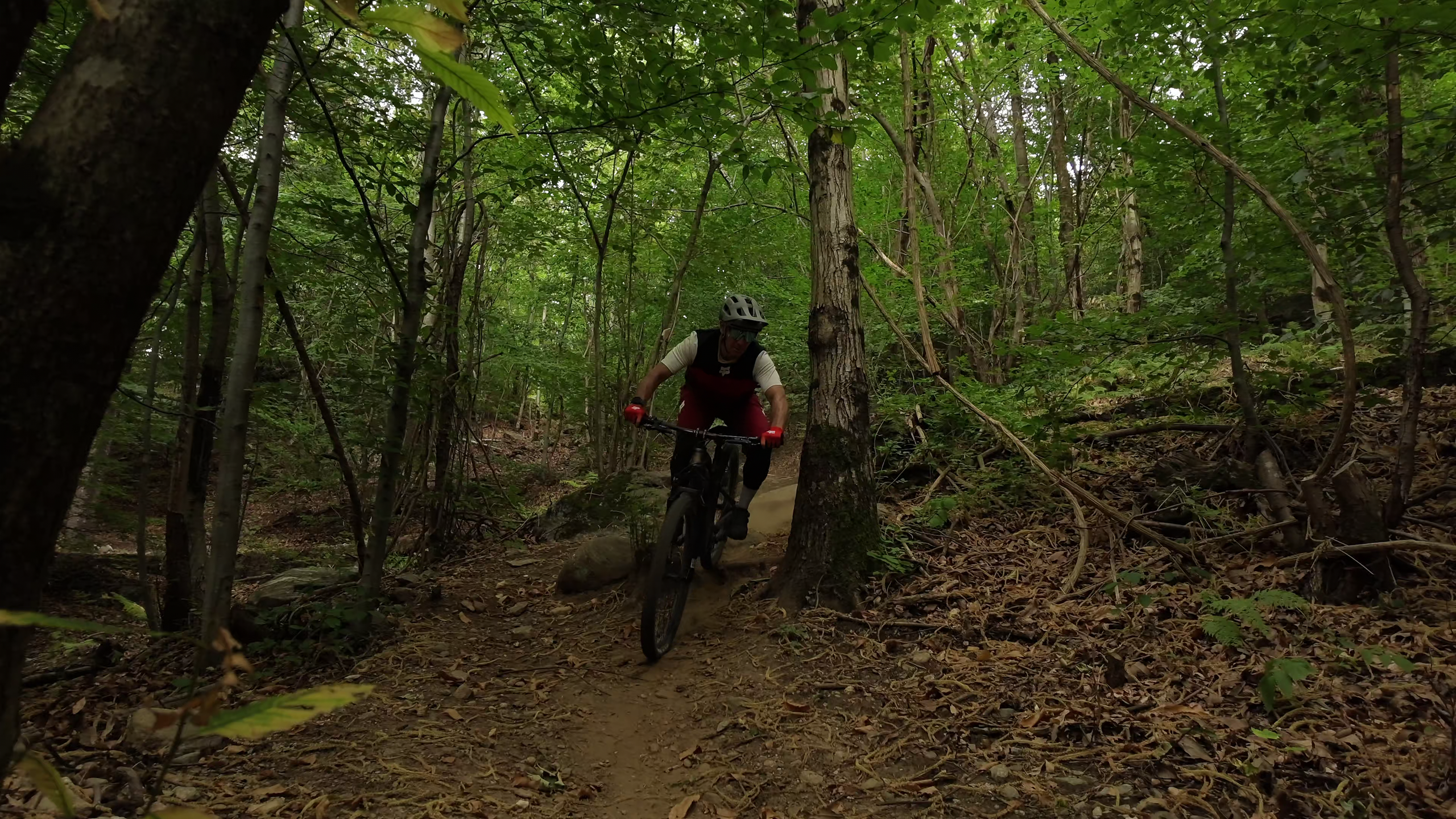
Staying within Maxxis and also consulting with Fantic technicians, we replaced the standard tires by fitting I assigned both the front and the rear.
The choice is not random.
The Assegai is one of the benchmark tires for gravity riding and, above all, it's a tire I know very well, having also used it in Superenduro racing. This allowed me to have a precise reference and focus on the bike's reactions.
The result?
What was only hinted at with the original setup explodes with the Assegai. And the Sierra's true soul emerges.
The bike changes character.
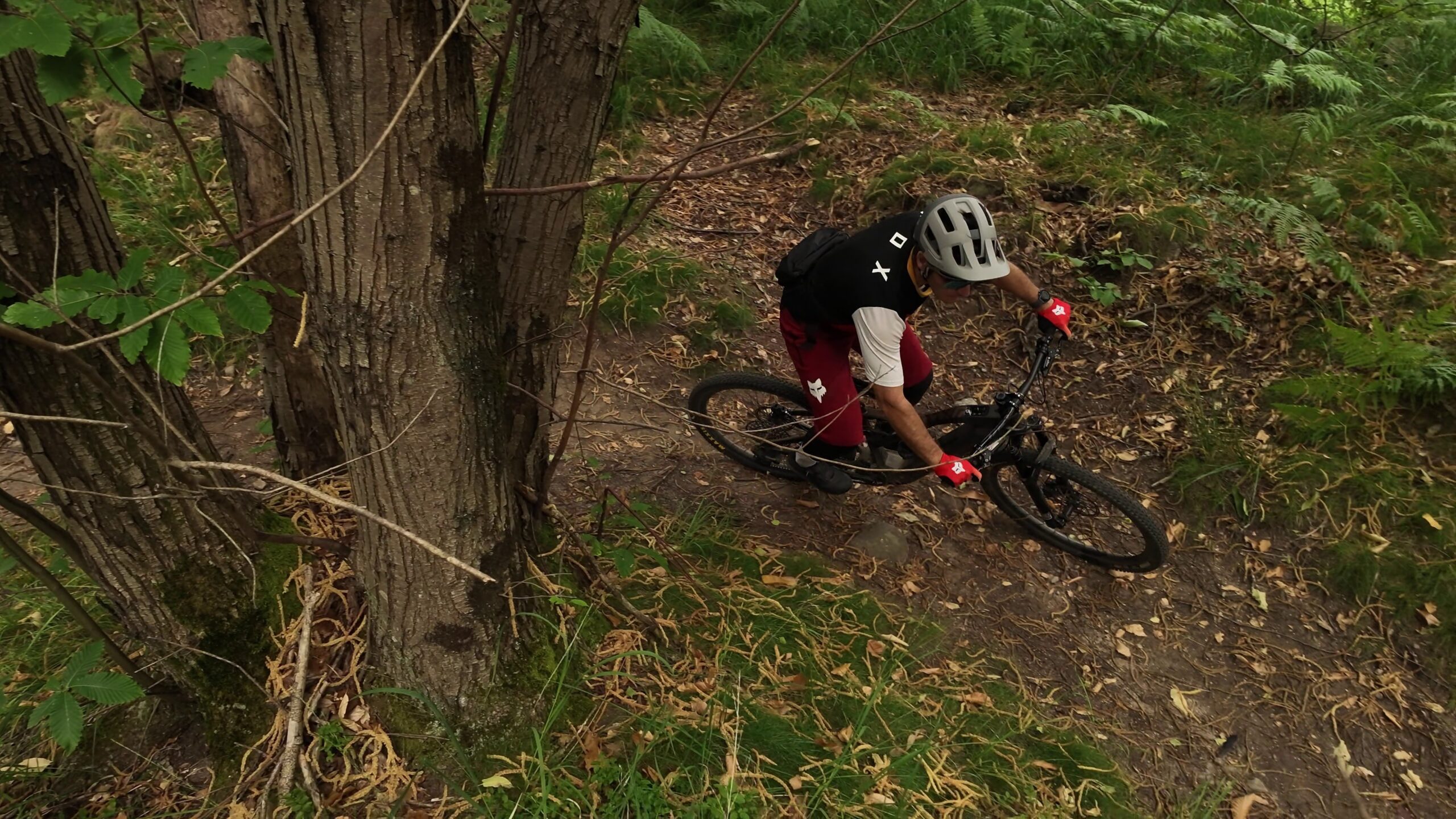
It becomes a true hill-devouring machine, stable and confident when speed increases, yet eager to be ridden with determination. It demands anticipation, movement, and active riding. The harder you push it, the more the Sierra seems to reveal the hidden potential of its chassis.
The geometry finds a particularly successful balance between agility and stability.
On natural mountain trails, the bike remains maneuverable when changing direction, but doesn't become nervous as speed increases. Turn entry is precise, support becomes significantly more consistent, and above all, braking confidence increases.
Now you can arrive faster, brake later and really exploit the work of the suspension.
It is in this configuration that the Sierra shows a modern interpretation of enduro: not necessarily an extreme bike or one designed exclusively for the bike park, but an e-MTB capable of pedaling for hours, conquering a lot of altitude and then tackling technical trails with a chassis that allows you to ride hard.
Lyrik: Those 35mm Films You Don't Expect
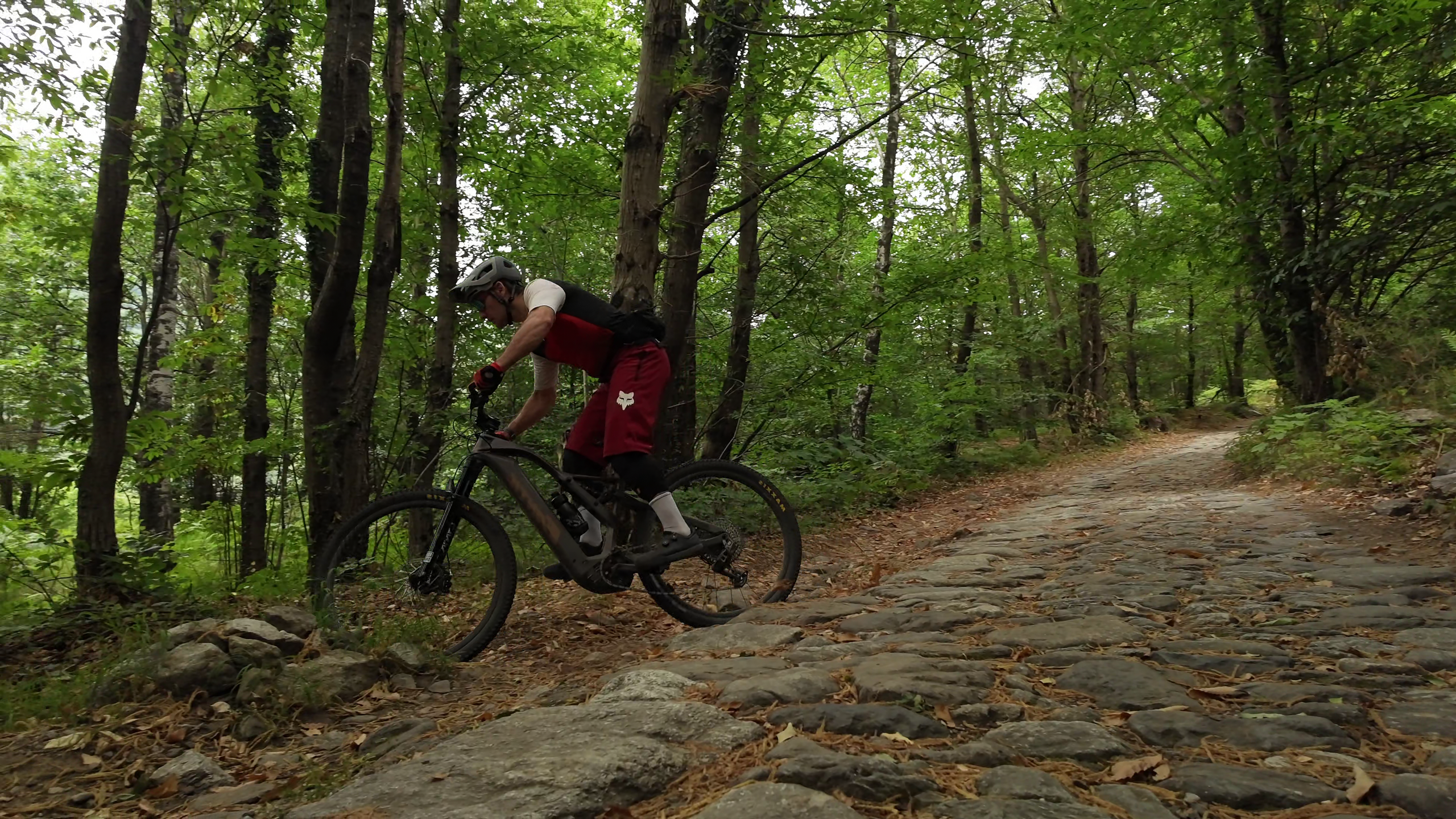
One of the biggest surprises of the test comes from the RockShox Lyric Ultimate.
Before trying it, I had some doubts. On an e-bike in this category, a fork with 35 mm stanchions might seem like a limiting choice, especially considering the weight involved and comparing it to a more substantial structure like that of a RockShox ZEB.
On the ground, however, these doubts quickly disappeared.
The Lyrik's structure provides a precise and sufficiently rigid front end even when you start riding decisively. We didn't experience that feeling of imprecision you might expect when putting pressure on a lighter structure: the fork holds its line, supports loads well, and allows you to place the front end exactly where you want it.
Added to this structural precision is hydraulics capable of offering support during active riding without sacrificing absorption capacity.
When the front end is loaded, the Lyrik holds its own. When rocks, roots, and impacts come in succession, it keeps working, keeping the wheel under control.
And it is perhaps precisely this balance, rather than the absolute rigidity, that makes it particularly suitable for the Sierra: precision when needed, sensitivity when the terrain asks the fork to work.
The cart absorbs, but also knows how to push
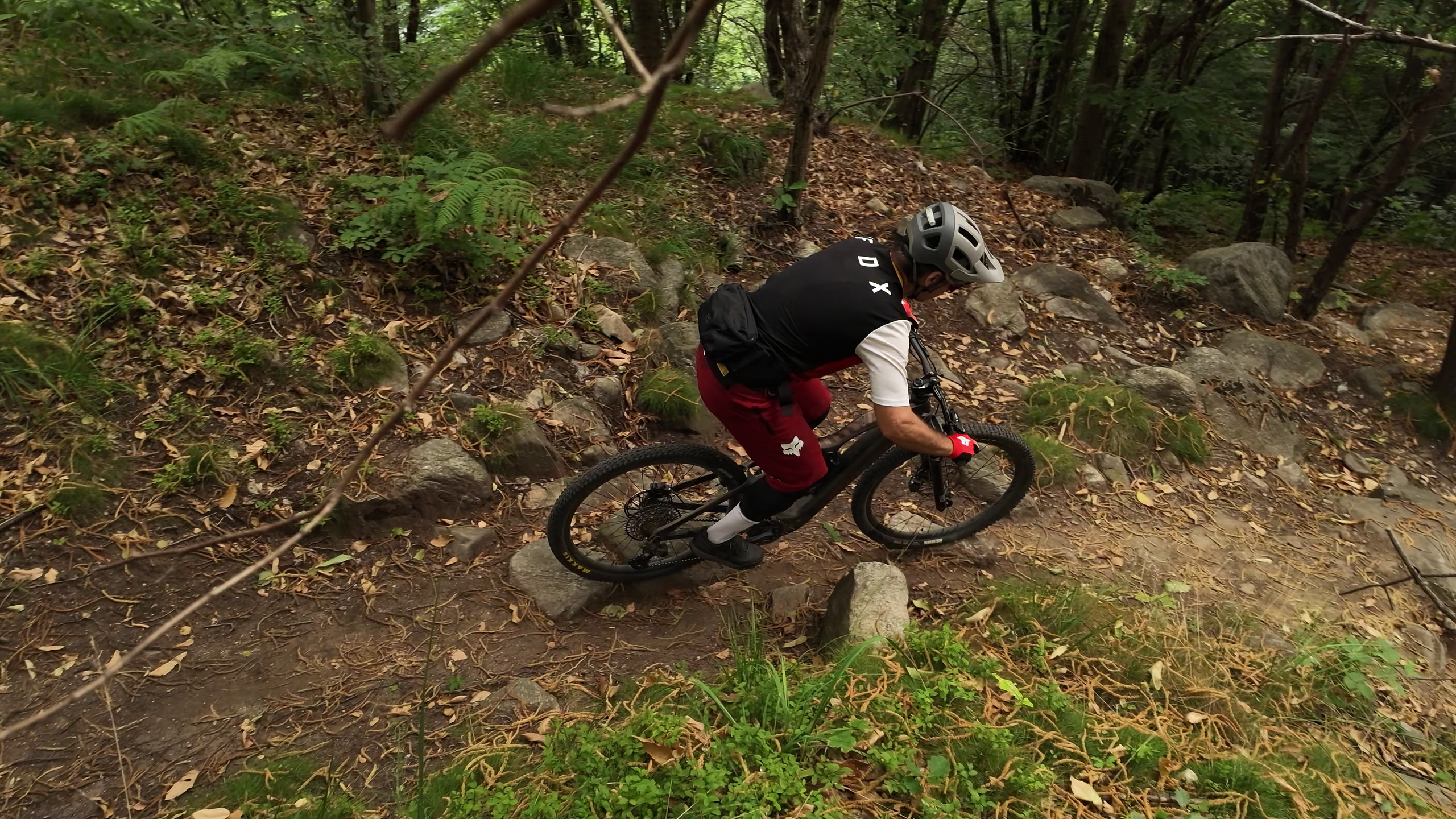
If the front end surprises, the rear completes the picture.
The Sierra's chassis has a great ability to absorb bumps and keep the wheel in contact with the ground, but the most interesting feature emerges when you start driving dynamically.
It is not a suspension that simply “eats” obstacles.
When exiting a corner you can load, pump and exploit the chassis' response to generate speed, with a sensation that in some ways recalls that of a good muscular MTB.
The mass of the e-bike remains, of course, but it does not continuously dominate the ride.
This is an important detail. A very absorbent suspension can sometimes make the bike effective but unresponsive, almost like it's sitting on the ground. On the Sierra, however, we found an excellent compromise between absorption and support: the swingarm copies when it needs to copy, but returns energy when the rider decides to push it.
It is the sign of a successful balance between kinematics, chassis and hydraulic management of the shock absorber.
SRAM Maven: When you really need to stop
On an e-bike capable of reaching significant speeds and with a chassis that invites you to push, the braking system cannot be considered a detail.
Fantic has chosen the SRAM Maven Silver, a system perfectly consistent with the Sierra's performance.
The first sensation is that you always have plenty of power available, but without sacrificing modulation. This is especially crucial on natural trails, where you don't just need to stop the bike: you need to be able to precisely manage your speed, maintain grip, and correctly time your turn-in.
Even as you increase the pace and duration of your runs, the Mavens remain consistent.
The weight of the e-bike and aggressive riding impose significant loads, but during our test the system showed no signs of giving up just as we began to exploit the Sierra's potential more fully.
Solid, powerful, modular and above all reliable.
It's also a sign of how much the world of e-MTBs has matured: components of this level are perfectly sized to handle the weight, speed, and stresses typical of modern e-bikes, without giving the feeling of being simple adaptations of something born for another use.
Conclusions: Which Sierra do you want?
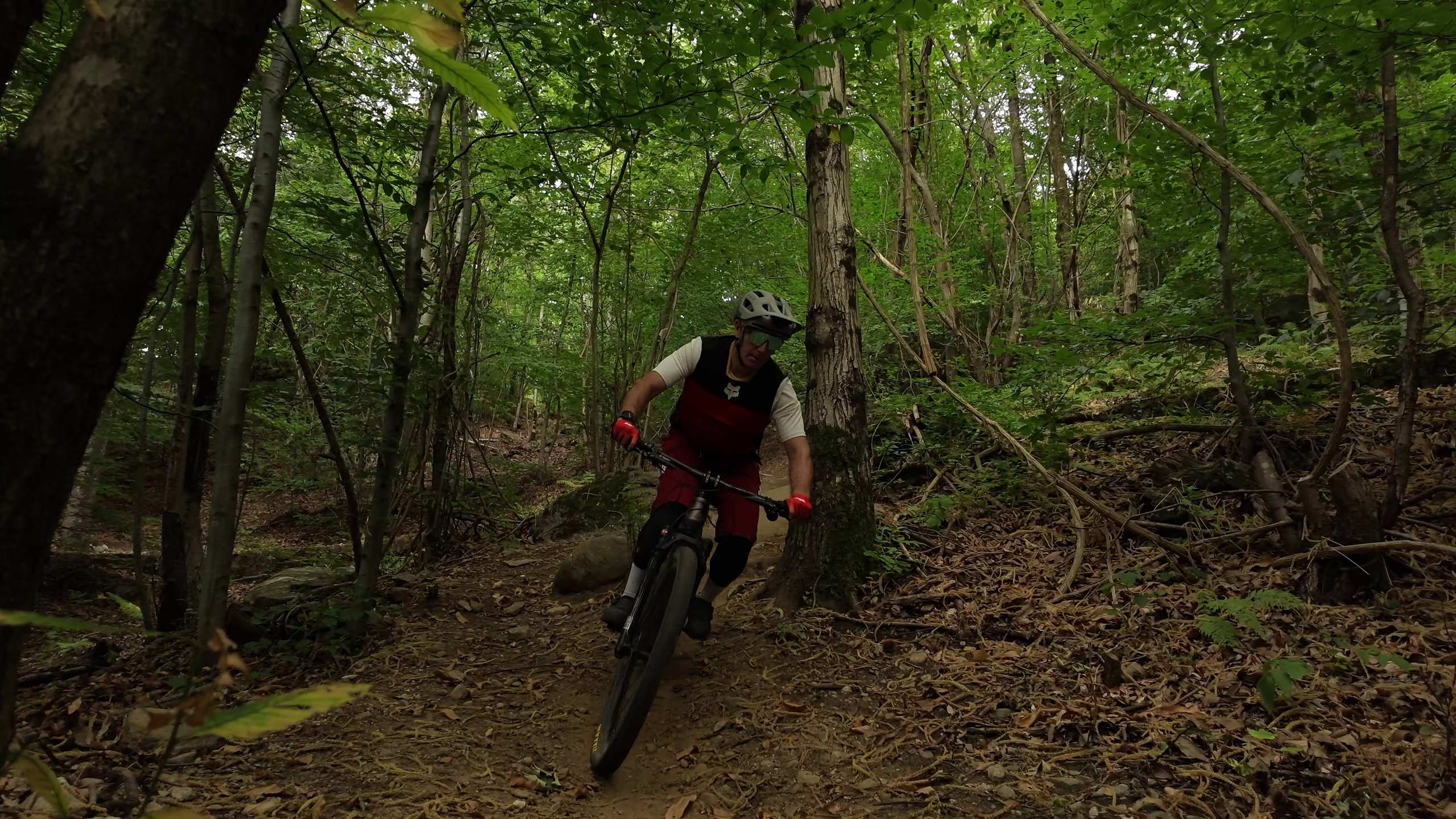
At the end of the test, the feature that struck us most about the Fantic Sierra Factory it is not a single component.
It's not the Bosch CX, it's not the suspension, it's not even the carbon frame.
It's his ability to change identity without losing coherence.
The basis is that of a modern e-MTB, with balanced geometry, a functional and effective riding position and a chassis capable of tackling very different terrains.
From here, however, two paths open up.
With its original setup, the Sierra perfectly captures the role of explorer. An 800 Wh battery, smooth-rolling tires, and a position that allows for long hours in the saddle make it the ideal companion for long Alpine tours, where dirt roads, mule tracks, technical climbs, transfers, and trails follow one another seamlessly.
It's the Sierra to leave with in the morning without being in too much of a hurry to return.
Then all it takes is a change of perspective—and in our case, change tires—to discover what lies beneath this great traveler guise.
With the Maxxis Assegai, we've unleashed the bike's second soul. The same geometry that guaranteed stability on a long tour becomes a foundation for pushing hard. Suspension makes even more sense, the swingarm allows for active riding, and the Lyrik surprises with its precision and support.
The Sierra thus becomes a vehicle with which to fearlessly tackle a bike park or a real enduro trail, one of those where grip, precision and the ability to quickly change line are required. A terrain like that of Pogno and the Superenduro routes, so to speak, perfectly represents the other side of the coin.
One bike, two souls. The choice is yours.
And this is probably the key to understanding the Fantic Sierra Factory.
We don't have before us an enduro disguised as a trail bike, nor a trail bike that tries to venture beyond its natural terrain.
The Sierra is a platform that leaves the biker with considerable freedom in deciding what to do with it.
You can prioritize smoothness and set out to tackle steep climbs and long rides. Or you can sacrifice some rolling resistance, fit more aggressive tires, and transform it into an e-bike to push the limits on the trails.
In the middle, there remains a successful frame, a modern geometry, the Bosch Performance Line CX with 800 Wh battery and a suspension system capable of supporting both interpretations.
The Fantic Sierra Factory doesn't decide for you what type of e-bike it should be.
You can make it a great explorer, a climber or an e-enduro with which to seek lines and speed.
And this is perhaps its greatest merit: leave it up to the biker to choose what to make of it.