


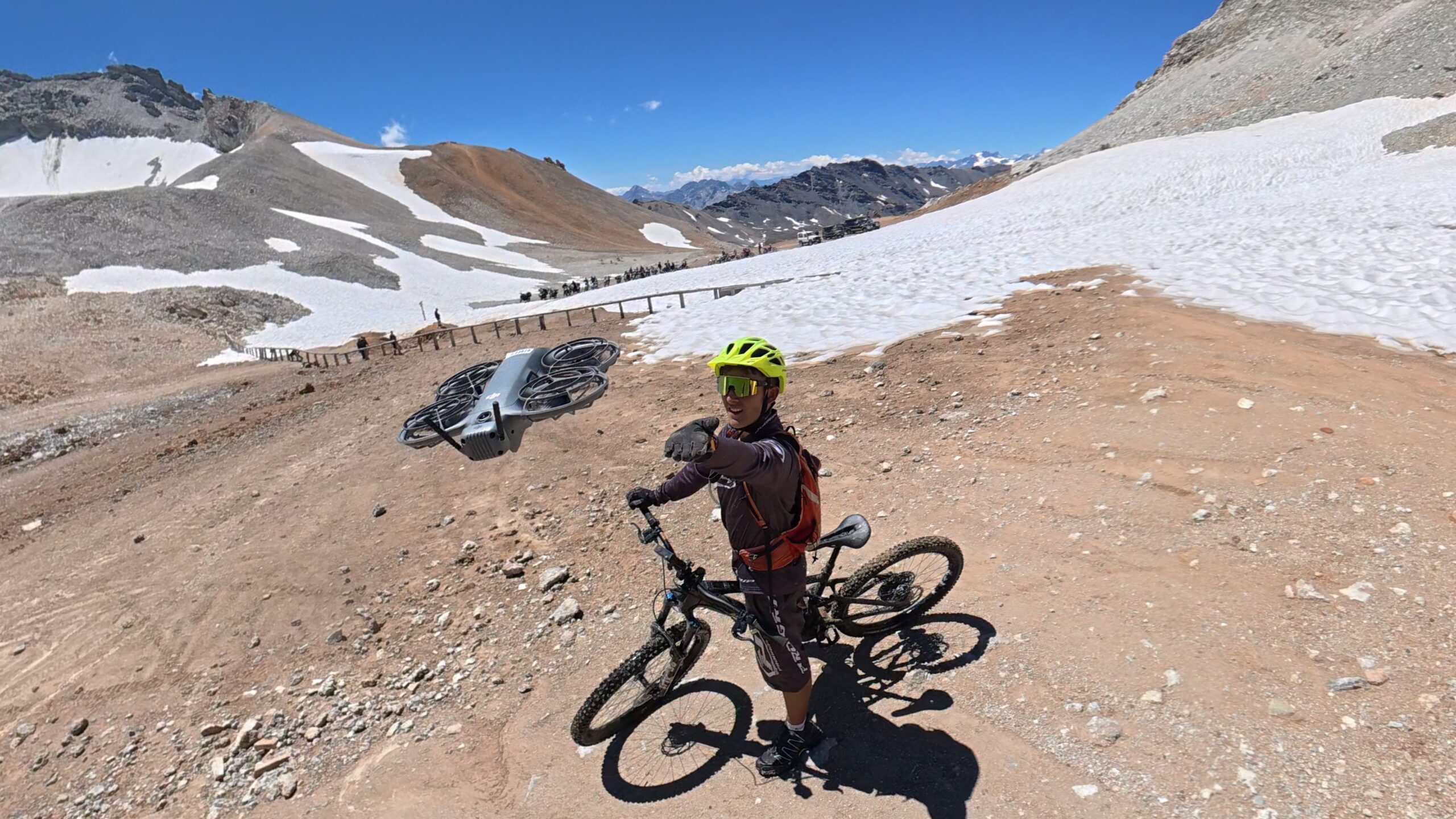
When the heat becomes unbearable on the plains, one of our favorite solutions is always the same: load up the bikes and head up. Very high.
This time, the destination was Sommeiller, above Bardonecchia, with the goal of exceeding 3.000 meters. But there were also a couple of curiosities to satisfy along the way.
I was curious to try the DJI Neo 2 at high altitude: to understand how the batteries would react in temperatures much lower than on the plains, to what extent the wind would hinder such a small and light drone and, above all, to see how it would perform in following during a mountain bike descent, even exceeding 40 km/h.
If you are curious to see the result, find the video HERE.
But this outing also featured another protagonist: Simone, a teenager and certainly not an experienced biker. The Sommeiller was completely new to him, and this gave us an interesting insight: understanding how far a young man with no particular MTB experience can go when an e-bike makes a route physically accessible that would otherwise require a decidedly different level of training.
This doesn't mean that the mountains suddenly become easy. Above 2.500-2.600 meters, terrain, altitude, cold, and bike riding skills continue to play a significant role. But pedal-assist allows you to remove much of the effort required to gain above 1.000 meters from the equation, leaving you with more energy to focus on riding and, above all, enjoying the scenery.
And that's exactly what we did.
Towards the Sommeiller
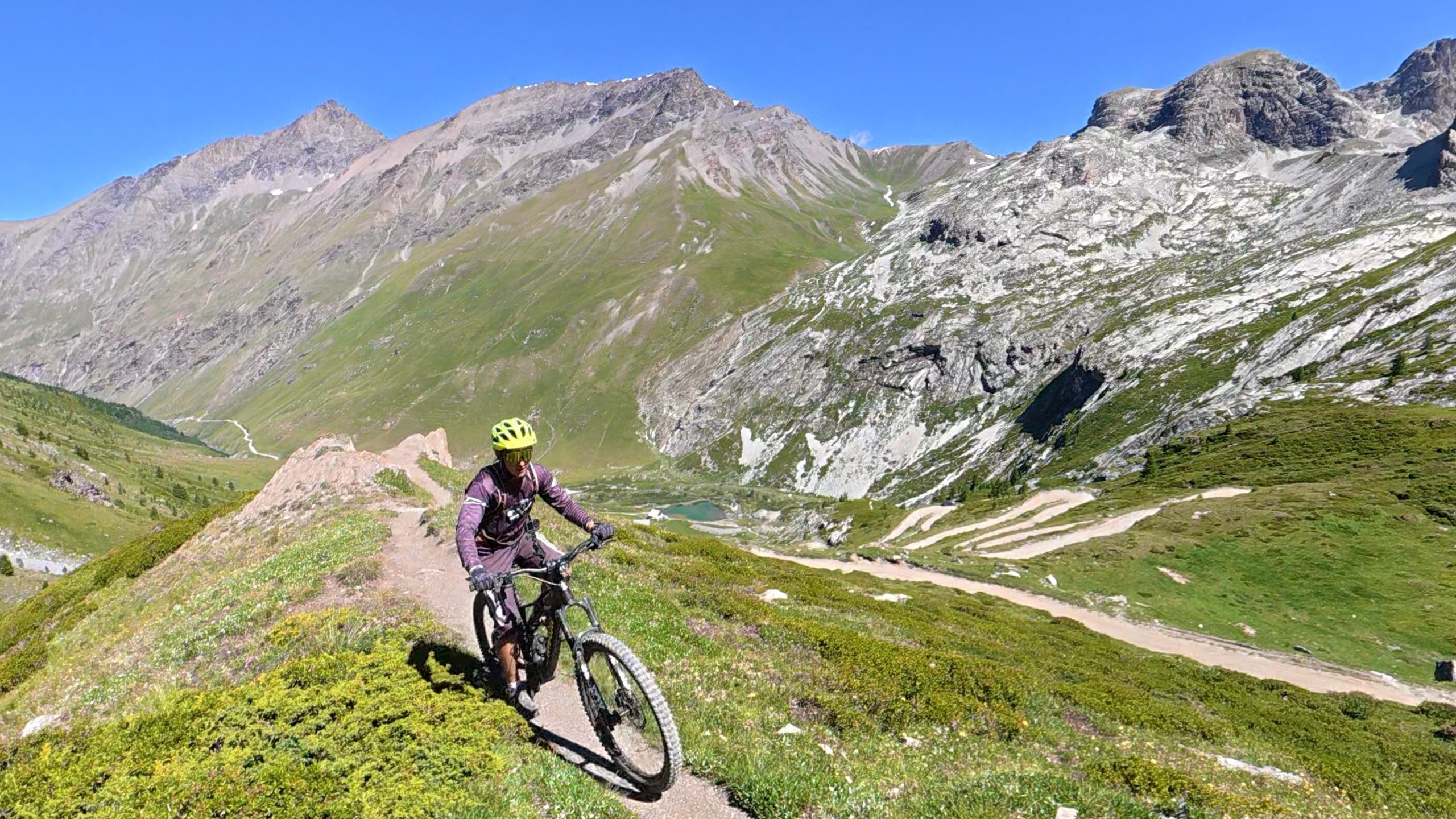
We set off from the Fregiusia basins, above Bardonecchia (TO), taking the Decauville, a road once built as a service railway and now transformed into a beautiful cycle/pedestrian path.
For about 6 km, you cycle at around 2.000 meters above sea level, virtually flat, until you reach the Rochemolles dam area. From here, everything changes: you continue towards the Scarfiotti Refuge and then towards the Sommeiller, with another 17 km or so of climbing.
It's one of those routes where the landscape seems to constantly change under your wheels.
At the start, there's still vegetation, with damp patches and relatively soft ground. Then the dust sets in, more and more rocks appear, and after about 2.600 meters, they're practically all that's left.
Stones. And more stones.
The valleys open up, waterfalls cascade from the mountains, and the vegetation gradually disappears. The higher you climb, the more it feels like you've left the Alps behind and entered a lunar landscape.
Climbing above 3.000 meters with a teenager
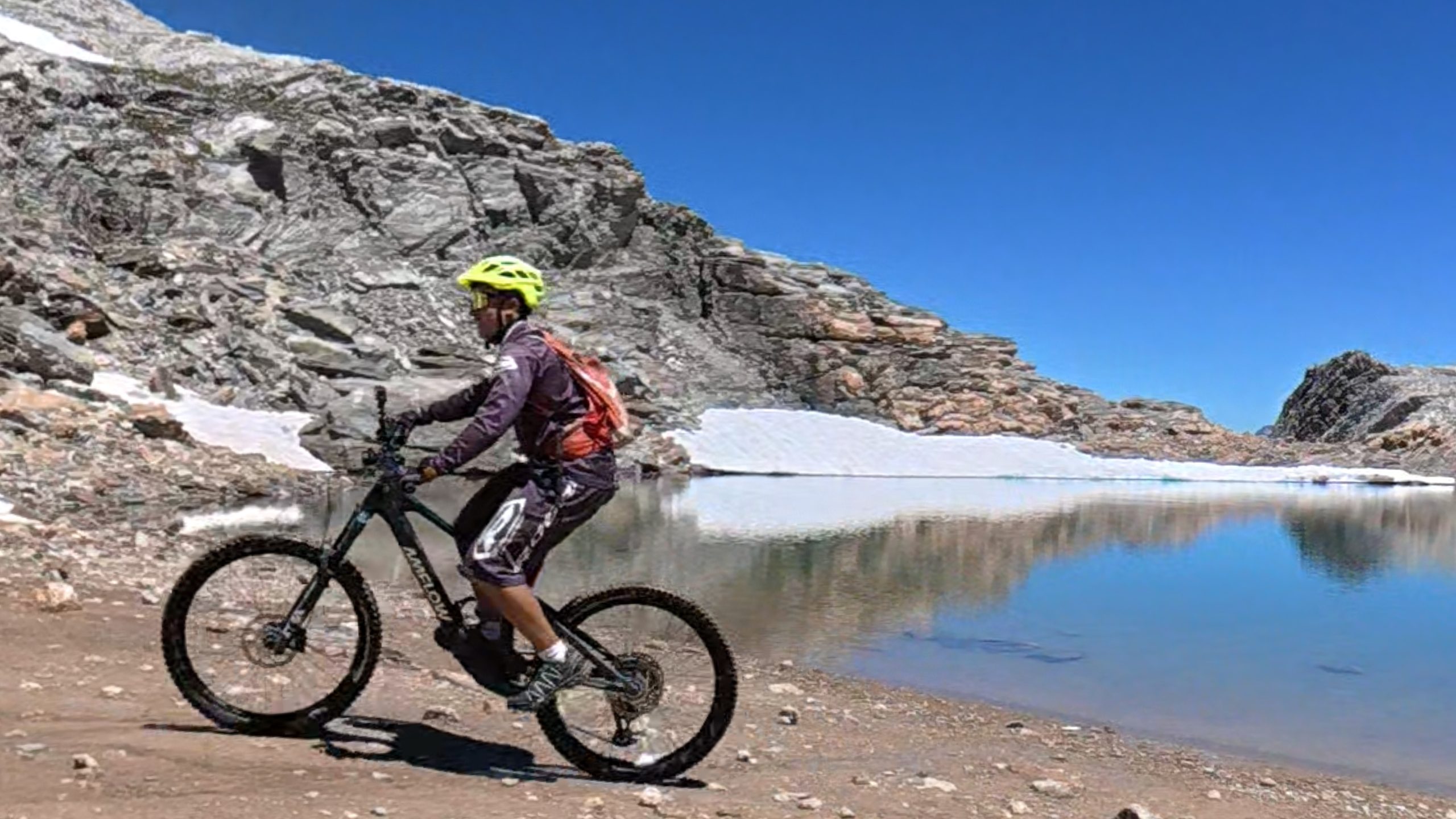
This is where Simone's presence made this outing different from the usual ones.
We're not talking about a young athlete who spends every weekend on the trails or a biker with years of experience. Yet he managed to get up here and experience firsthand an environment we normally associate with decidedly challenging outings.
In this sense, the Amflow PX Carbon, with Avinox M2S motor, has done exactly what a modern e-MTB should do: not eliminate the technical difficulties, but make the difference in altitude manageable even for those who do not yet have the legs to reach these altitudes with a traditional MTB.
Naturally, we couldn't resist the temptation to leave the main road for a while and take a ride on some single track.
And it's precisely here that we understand the limits – and at the same time the beauty – of pedal assistance: the motor can help Simone climb, but when he needs to choose a line, overcome an obstacle, or control the bike on rough terrain, he has to be the one to drive.
From the Moon to Mars
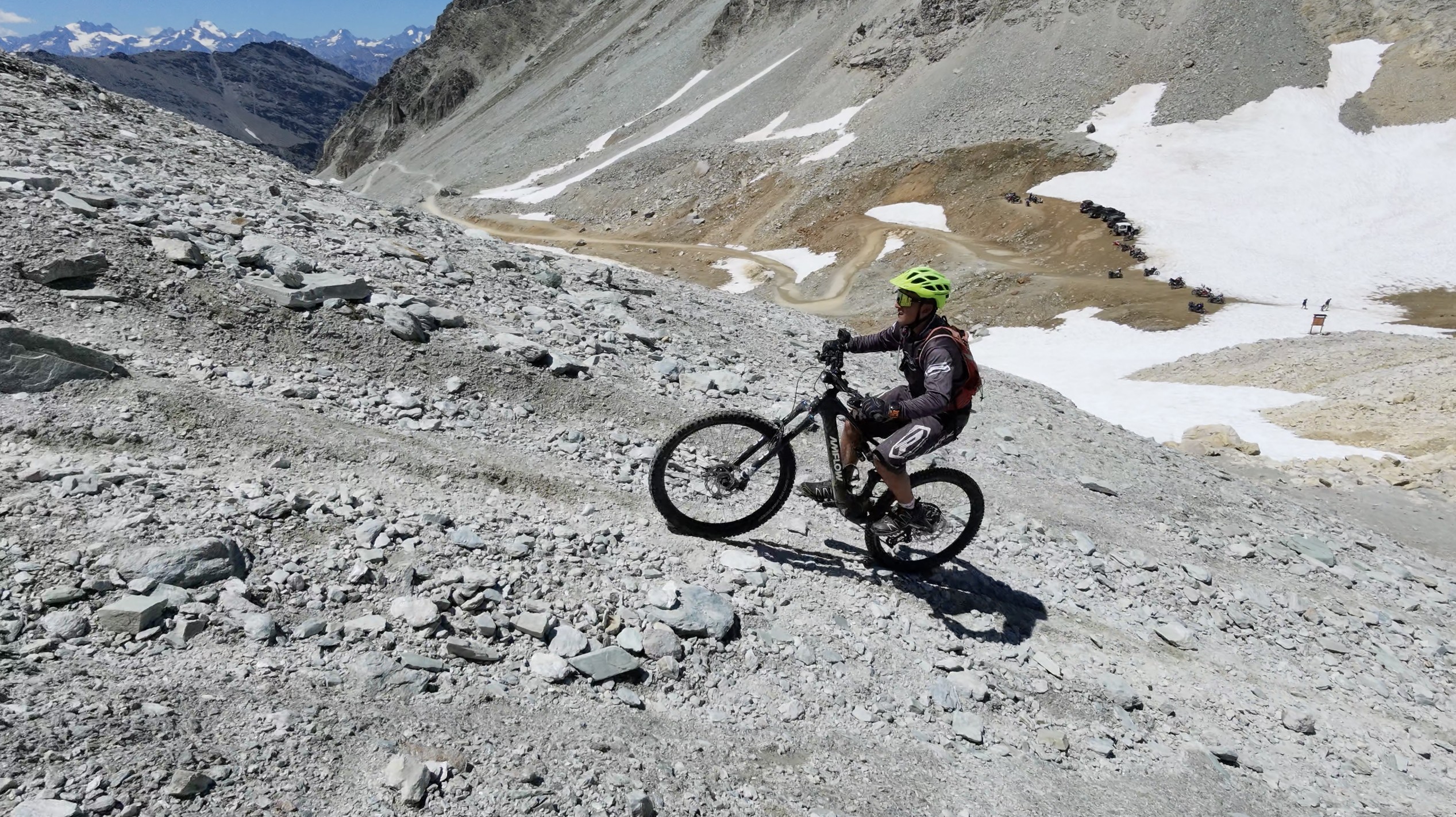
Something special happens in the last bends.
The gray that accompanied us for much of the climb gradually gave way to reddish hues. It almost felt like we were switching planets: from the Moon to Mars in the space of a few hundred meters.
Then the snow appears.
In front of us, the lake seems to blend into the sky and we finally pass an altitude of 3.000 meters.
At that point it's natural to stop.
Not so much because of the effort, but because there are places where continuing to pedal without looking around would almost be a sin.
For Simone, it's also the satisfaction of having reached a place he'd never seen before and having arrived there by bike. And perhaps this is one of the most appealing aspects of e-MTBs: allowing people of different skill levels and ages to share the same experience.
Not content with that, of course, we climb a little further. Just to see what lies beyond.
A 151-gram drone at 3.000 meters
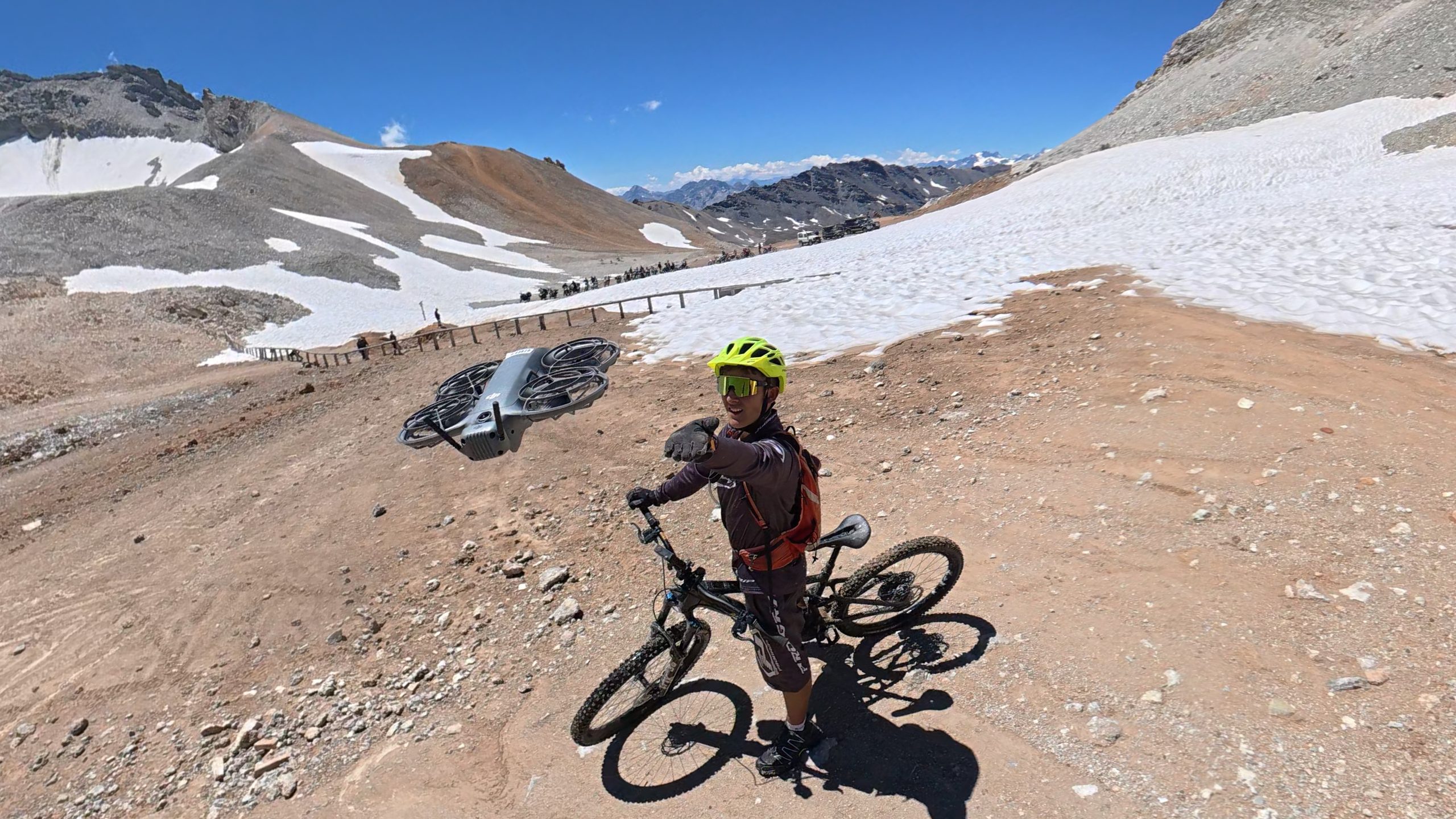
Meanwhile the Neo 2 continued to follow us.
And it was one of the experiments of the day.
In the mountains, a drone must deal with conditions that are very different from those normally encountered: thinner air, rapidly changing winds, low temperatures, and batteries that inevitably suffer.
The question was therefore simple: can such a small drone really be useful for following a mountain bike in such an environment?
We tested the Follow both uphill and on faster sections, even taking it to over 40 km/h on the descent. The small size and 151 grams are certainly convenient when everything you use needs to fit in your backpack, but it was above all the real-world behavior on the terrain that we were interested in verifying.
In the video HERE you can get a much better idea of how it went.
For ground shots, we mainly used the DJI Osmo 360. There is also an interesting feature linked to the Amflow: from the OLED display integrated into the frame, it is possible to control the action cam and synchronize some data from the bike in the shots.
Speed, slope, altitude and route information can thus become part of the video without having to reconstruct everything later.
More than 8K at 50 fps or 10-bit on paper, a release like this is all about being able to turn it on, record, and forget about the camera as much as possible. Because when you have a panorama like this in front of you, the last thing you want to do is spend the day fiddling with your gear.
And then comes the descent
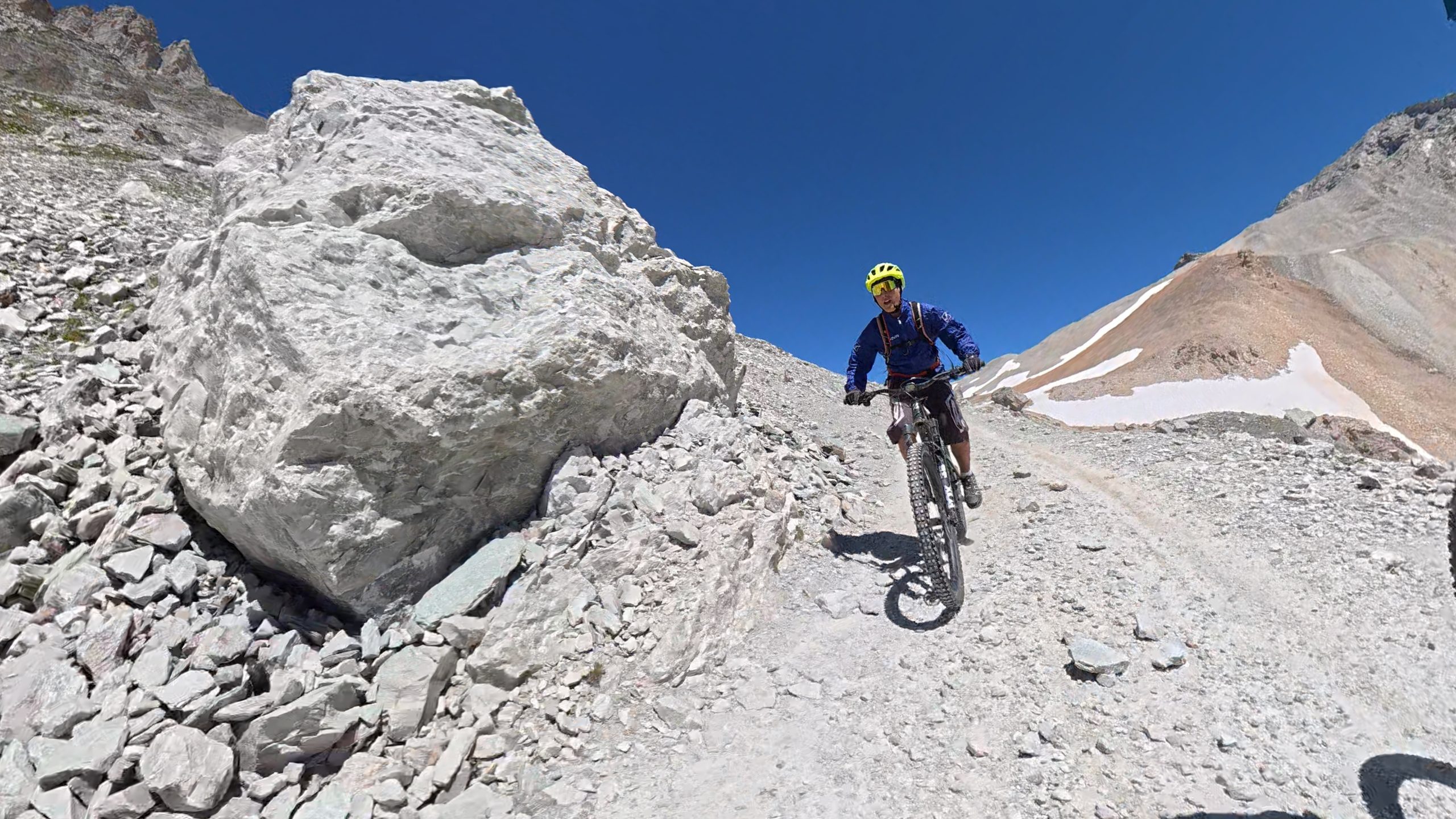
After passing 3.000 meters, the time inevitably comes to turn the bike around.
And the Sommeiller changes face again.
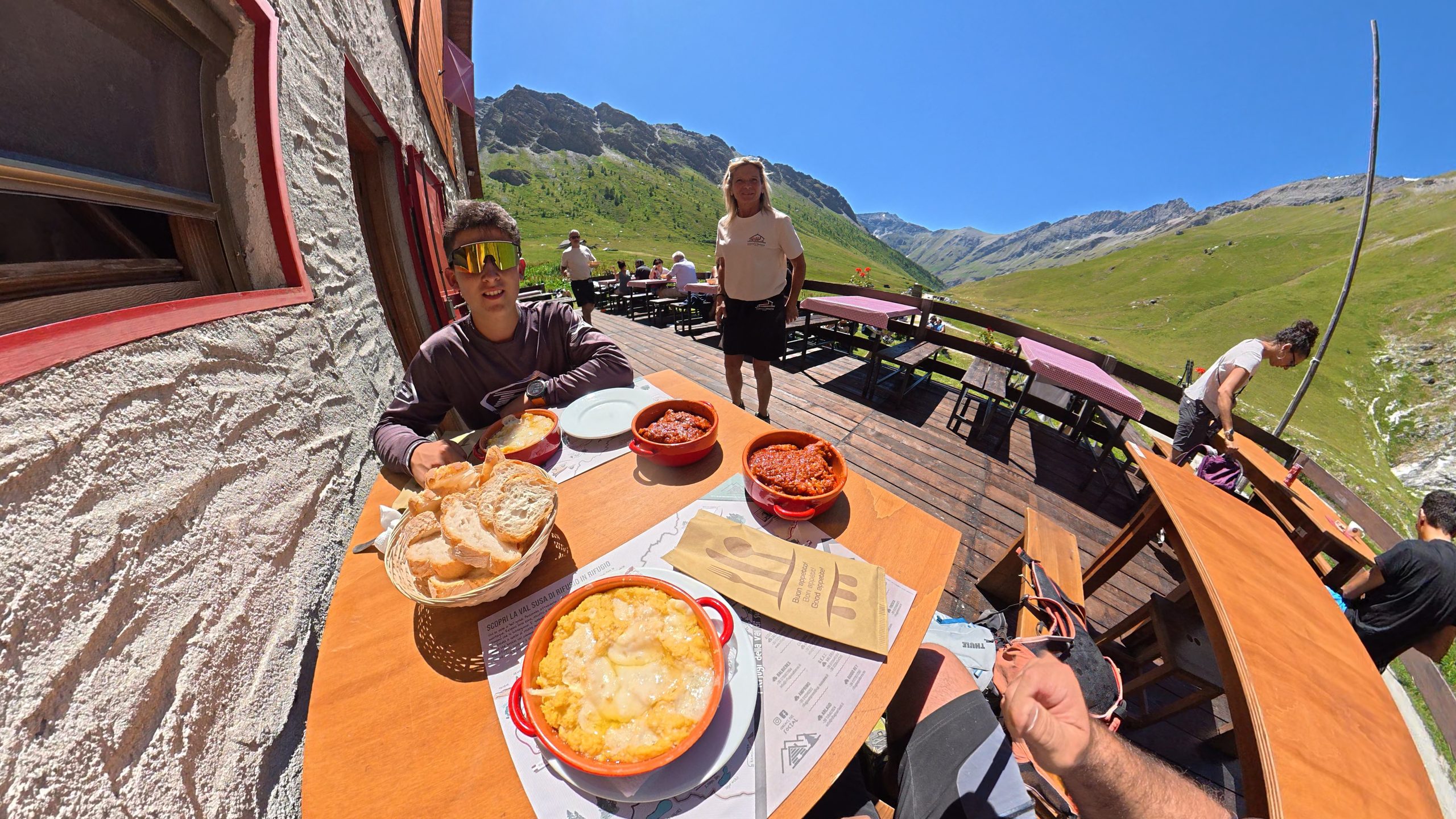
What seemed like an endless succession of rocks on the way up suddenly becomes a huge playground. We rapidly lose altitude, and the Scarfiotti Refuge becomes our next objective for a very simple reason: we're hungry.
Polenta with cheese, ribs or sausage.
After a day like that, you don't need much else.
The refuge is also an important reference point for those who travel through this area, both for refilling water and, if desired, for stopping to sleep.
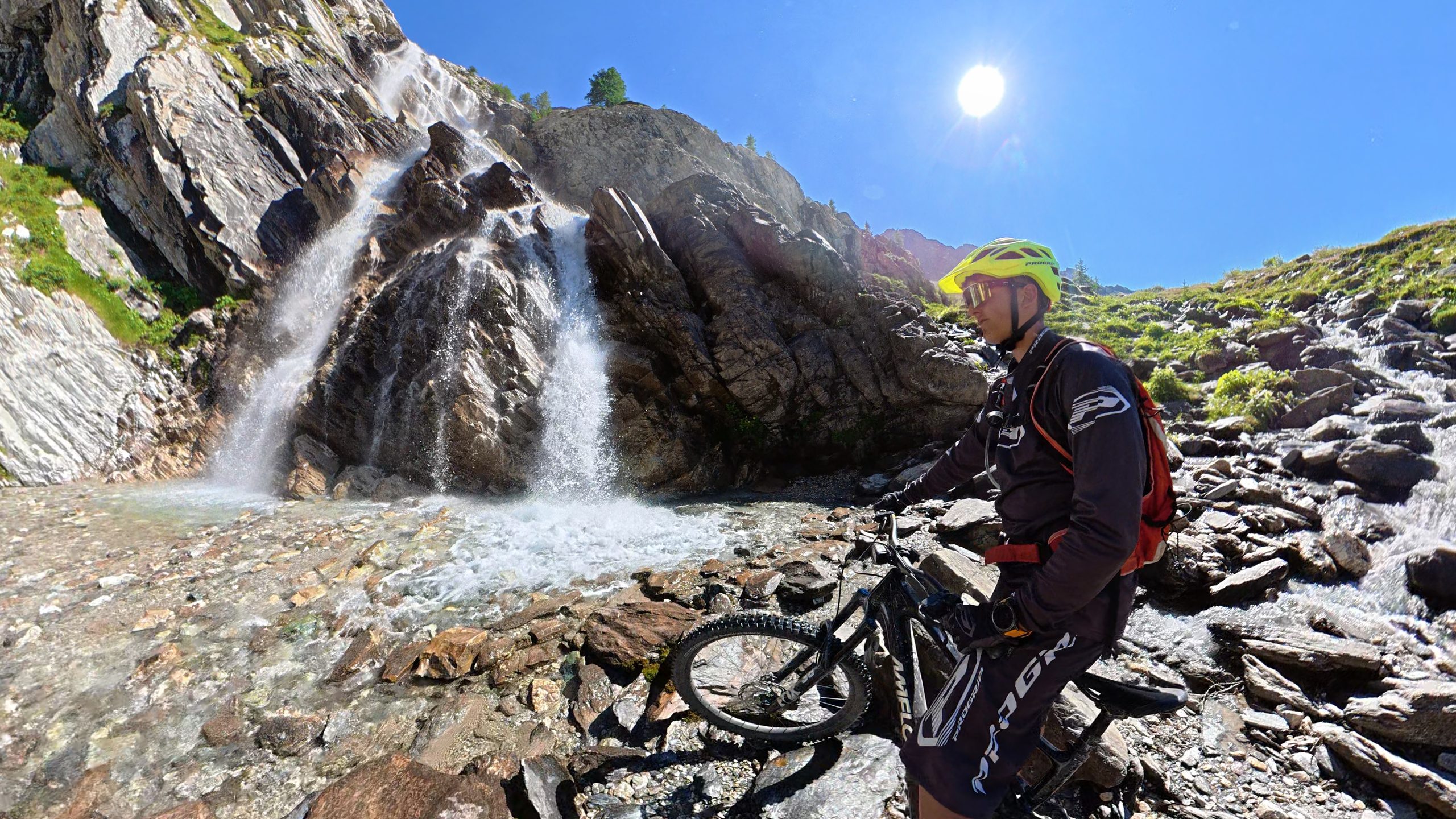
Behind it, towards the mountain, there are the waterfalls: the perfect place to stop, cool off and take a few minutes before heading back.
The Sommeiller on an e-MTB: What to Know Before You Go
Before tackling this tour there are a few things to keep in mind.
During the summer, the road is closed to motor vehicles on Tuesdays and Thursdays: if you want to enjoy the climb with minimal traffic, these are particularly interesting days. The Decauville trail, from the Fregiusia basins, is a cycle/pedestrian path, and there is parking available near the start.
For water you can stock up in Bardonecchia or at the Scarfiotti Refuge (+39 0122 901892).
Even if you're starting from the plains in 30-degree weather, pack a windbreaker. At 3.000 meters, the weather can change rapidly and the temperature can drop significantly.
A puncture kit and small tools are practically mandatory. On such rocky terrain, it may be wise to use a slightly higher pressure than usual to reduce the risk of pinching a tube or hitting the rim violently with a tubeless system.
We also carry a chain tool: if a crash were to compromise the gears or dropouts, in an emergency, shortening the chain and disengaging the derailleur could make the difference between pedaling back home and walking for miles.
Furthermore, from about halfway onwards, telephone coverage becomes very poor or non-existent.
Helmets, goggles, and gloves shouldn't even be a topic of discussion. A simple slip or a stone in the eye up here can turn a beautiful day into something decidedly less fun.
A power bank is also useful. Cold temperatures reduce battery life, and between smartphones, action cams, and drones, you can never have enough power. We had a 20.000 mAh, 35 W XTORM, ruggedized, with IP65 protection and a built-in flashlight: the latter might seem like a minor detail until you find yourself having to fix something on your bike as darkness sets in.
A day that clearly explains the meaning of e-MTB
In the end, more than a test of a bike, a camera or a drone, this outing became a small experiment.
On the one hand, we wanted to understand how the video equipment would behave when taken out of its most basic environment, above 3.000 meters, amidst the wind, cold, speed, and long hours away from an electrical outlet.
On the other hand there was Simone.
A teenager, not an expert biker, who thanks to pedal-assist was able to reach an extraordinary high mountain environment by bike, while still facing all the technical difficulties of the route firsthand.
Perhaps this is the part of the day that we will carry with us the longest.
Because in the end, watts, Newton meters, millimeters of travel, resolutions and frames per second only matter up to a certain point.
They're useful if they allow you to get here, experience a day like this, and return home with something to tell.
And the Sommeiller, from this point of view, has a lot to tell.
Fabrizio Gillone and Simone
Used material
Amflow PX Carbon with Avinox M2S motor
DJI Osmo 360
DJI OsmoAction 6
DJI Neo 2
Progrip clothing and helmets
XTORM Power Bank

