


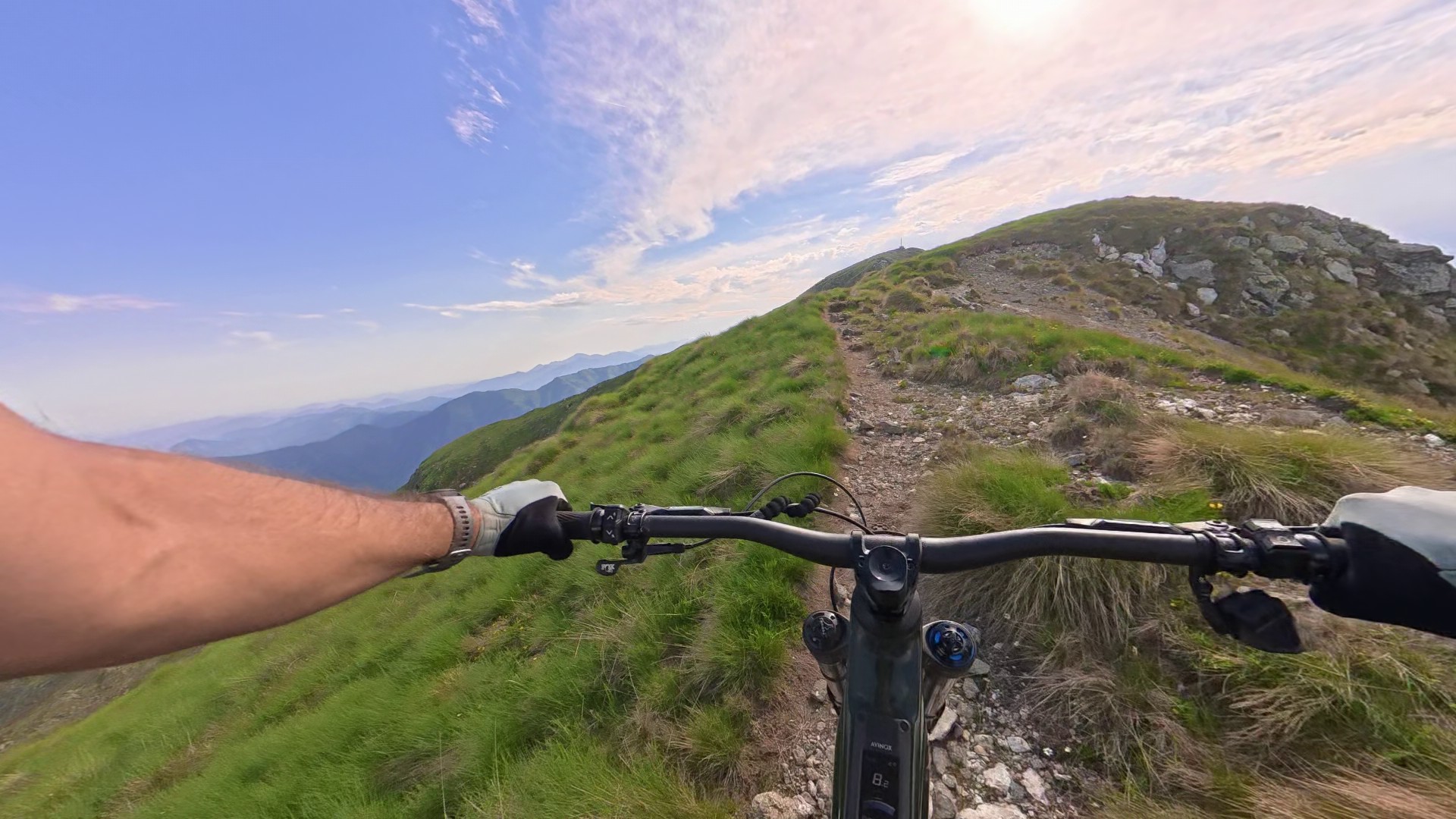
There are mountains that seem tailor-made for cycling, and others that, instead, make you realize right from the start that you'll have to conquer every inch. Monte Massone definitely belongs to the latter category.
From Ornavasso, you can see it up there, looming over the valley, and that alone would be enough to make you wonder if it even makes sense to even think about reaching the top on a mountain bike. But it's precisely these tours that intrigue me the most, the ones where you know from the start that not everything will be rideable and that, sooner or later, the bike will end up on your back.
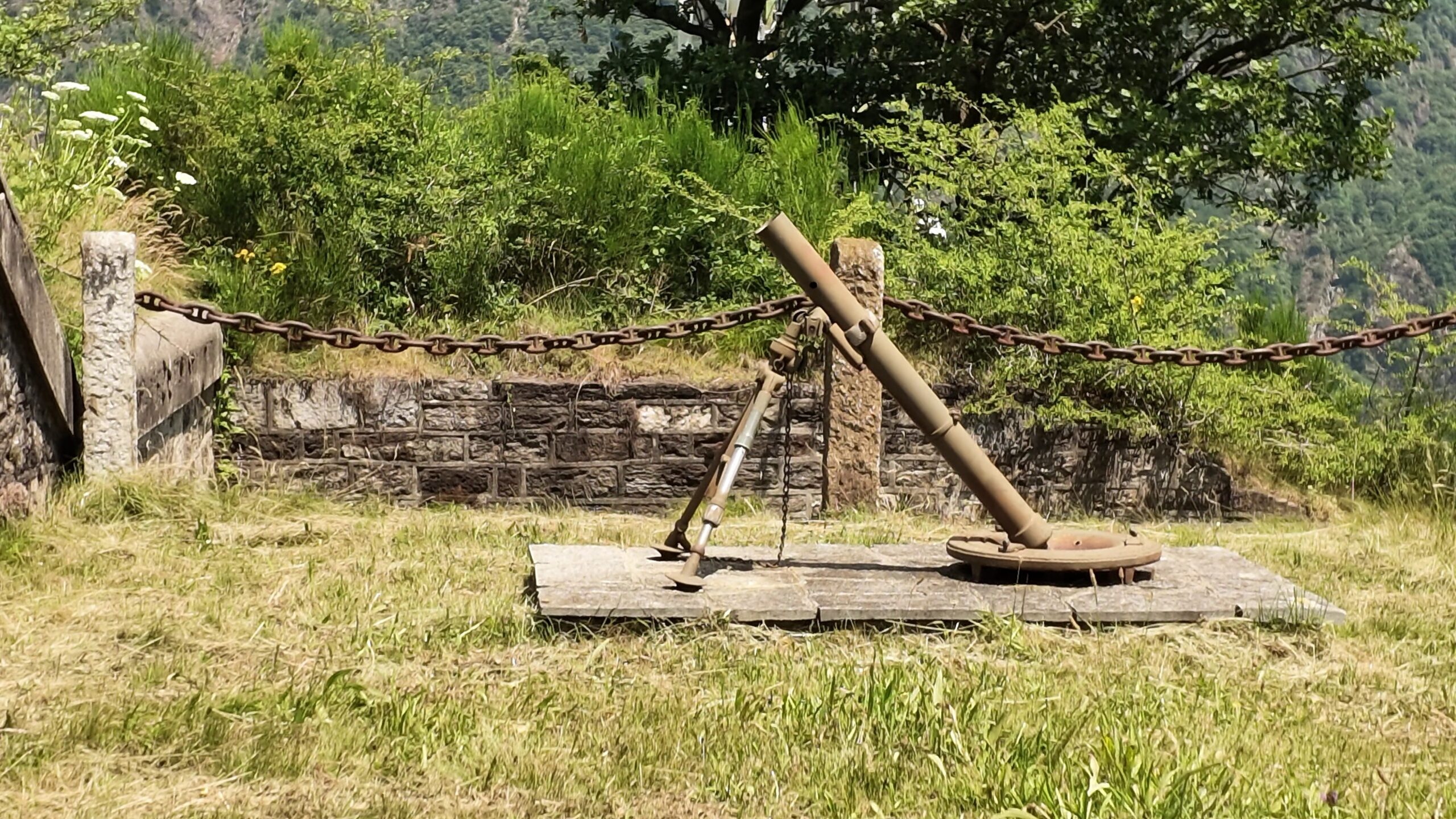
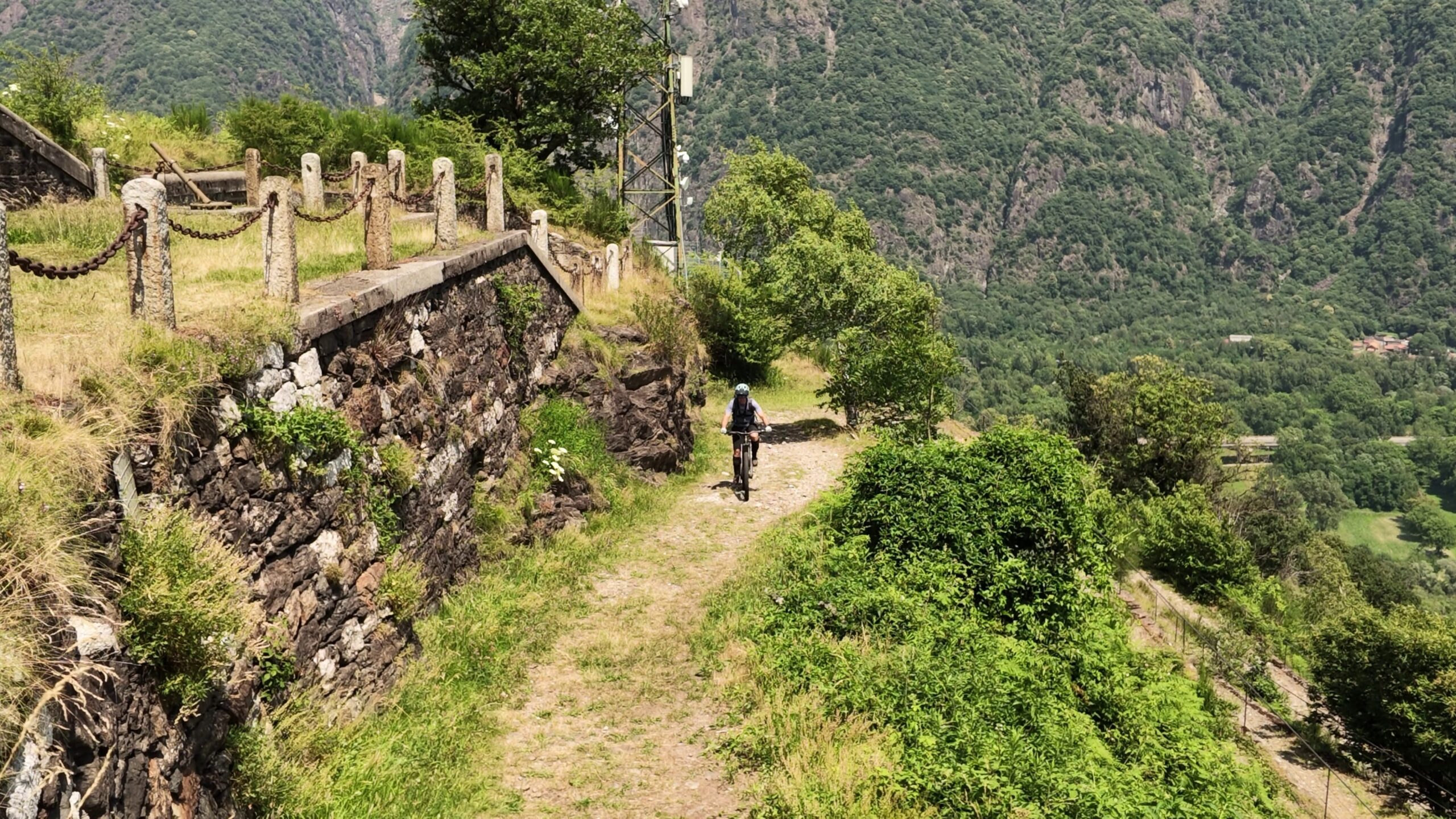
The day begins in Ornavasso and almost immediately we encounter one of the elements that will accompany much of our tour: the Cadorna Line. We pass by the Bara Fort and begin climbing along roads and military structures that have now been largely reabsorbed by the forest. It's always strange to ride in places like this, because it inevitably makes us think about why these roads were built and the people who traveled them over a century ago. Today, instead of soldiers, there are hikers and mountain bikers, and, fortunately, the only sounds are those of tires on the ground and our own breathing, which, as the kilometers go by, begins to make itself felt.
Because the climb to Cortevecchio is long and, above all, demanding. There aren't many moments to truly relax, and you need to find a pace that allows you to continue gaining altitude without spending it all too quickly.
For this trip I had with me the Mondraker that I was testing and of which you can find the test HERE, equipped with the Avinox system. On a route like this, the engine's boost certainly allows for better handling of such a challenging climb, but above all, it opens up interesting possibilities when the terrain becomes technical.
There are, in fact, several points where the climb stops being just a matter of legs and becomes almost trial-like. Steps, rocks, changes in elevation, and sections where you have to choose your line carefully. This is where I had the most fun exploiting the power of the Avinox. Sections that would normally have meant getting off and pushing the bike become a challenge: you look where you want to go, try to maintain traction, shift your weight, and give it a try.
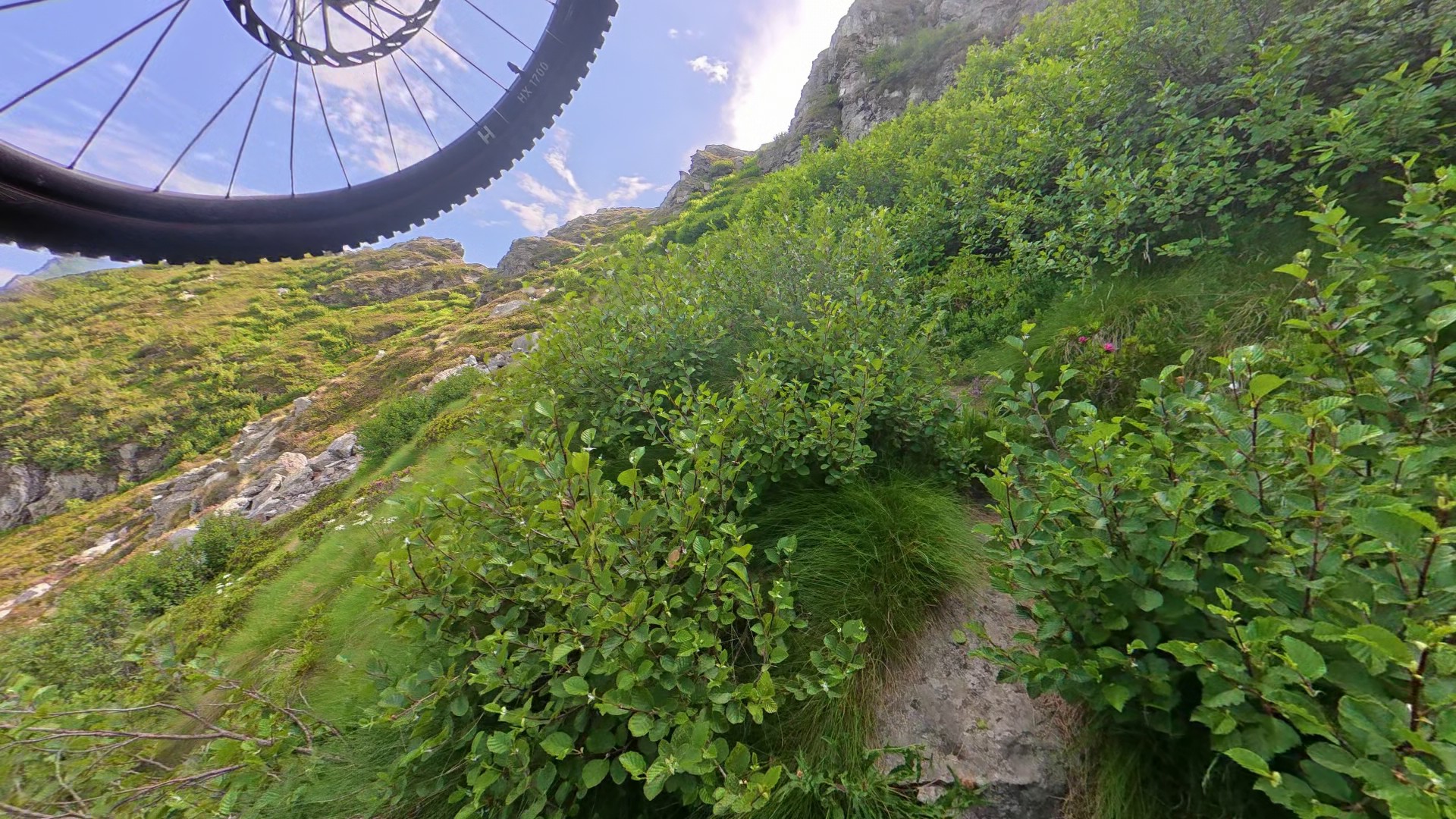
It doesn't always go well, of course, but when you manage to overcome a stretch that seemed impossible just seconds before, the satisfaction is immense. And it's also a great way to realize how much the possibilities offered by the latest e-bikes have changed. The motor doesn't eliminate the technical difficulty; on the contrary, having so much thrust also means having to learn to manage it. But it does allow you to explore lines and sections that otherwise you probably wouldn't even consider.
Cortevecchio, a house at 1.700 meters
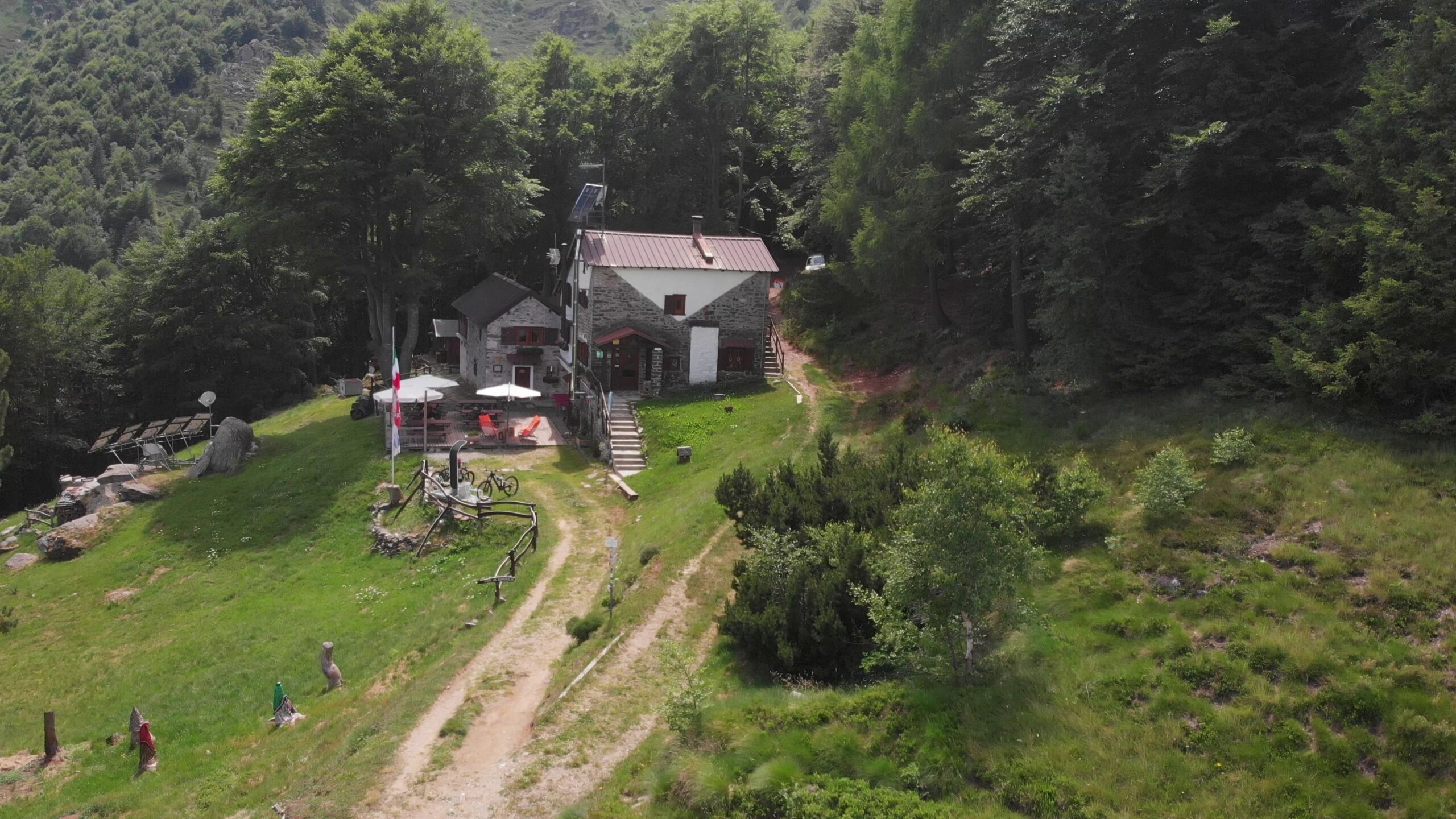
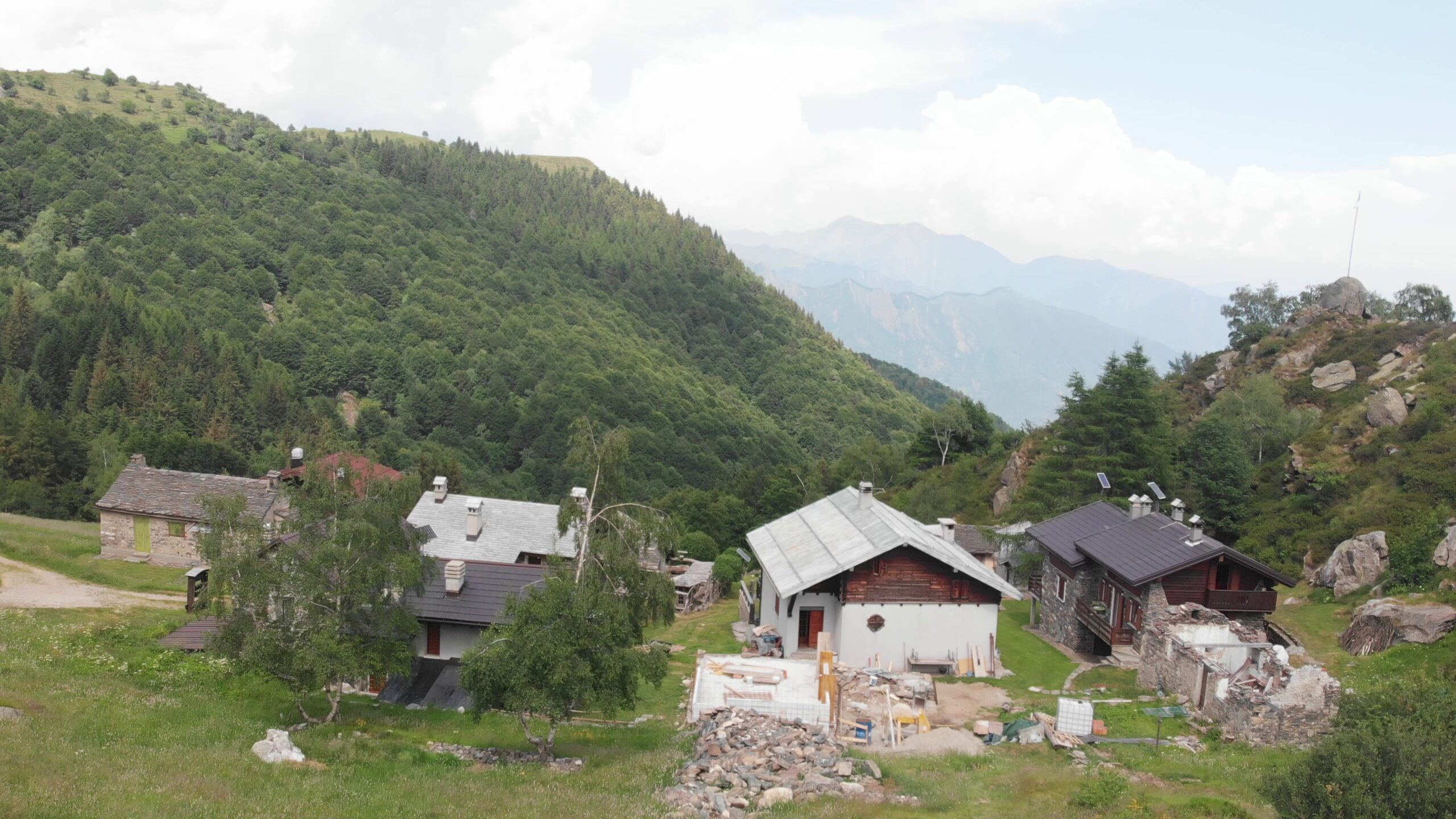
After such a climb, reaching Cortevecchio is already a small achievement. We're around 1.700 meters above sea level, and here we find the refuge, a place I'd initially considered simply a stop on our tour, but which instead became one of the most interesting memories of the day.
Ultimately, we can look at a refuge in two completely different ways. For those of us who arrive by bike, it's a place to stop, grab a bite to eat, drink, and recharge before setting off again. For those who manage it, however, it's a home and, above all, a lifestyle choice.
And it is by speaking with those who live in Cortevecchio every day that this difference becomes evident.
Running a refuge at 1.700 meters, reached by a dirt road, inevitably means learning to adapt. To the mountains, to the seasons, to the weather, to the people who come, and especially to the times when virtually no one comes. There are times of the year when up here you're left with the silence of the mountains and the company of your own thoughts.
Put like that, from the comfort of the valley, it might seem like a difficult choice to understand. And it probably is, at least until you spend some time in a place like this.
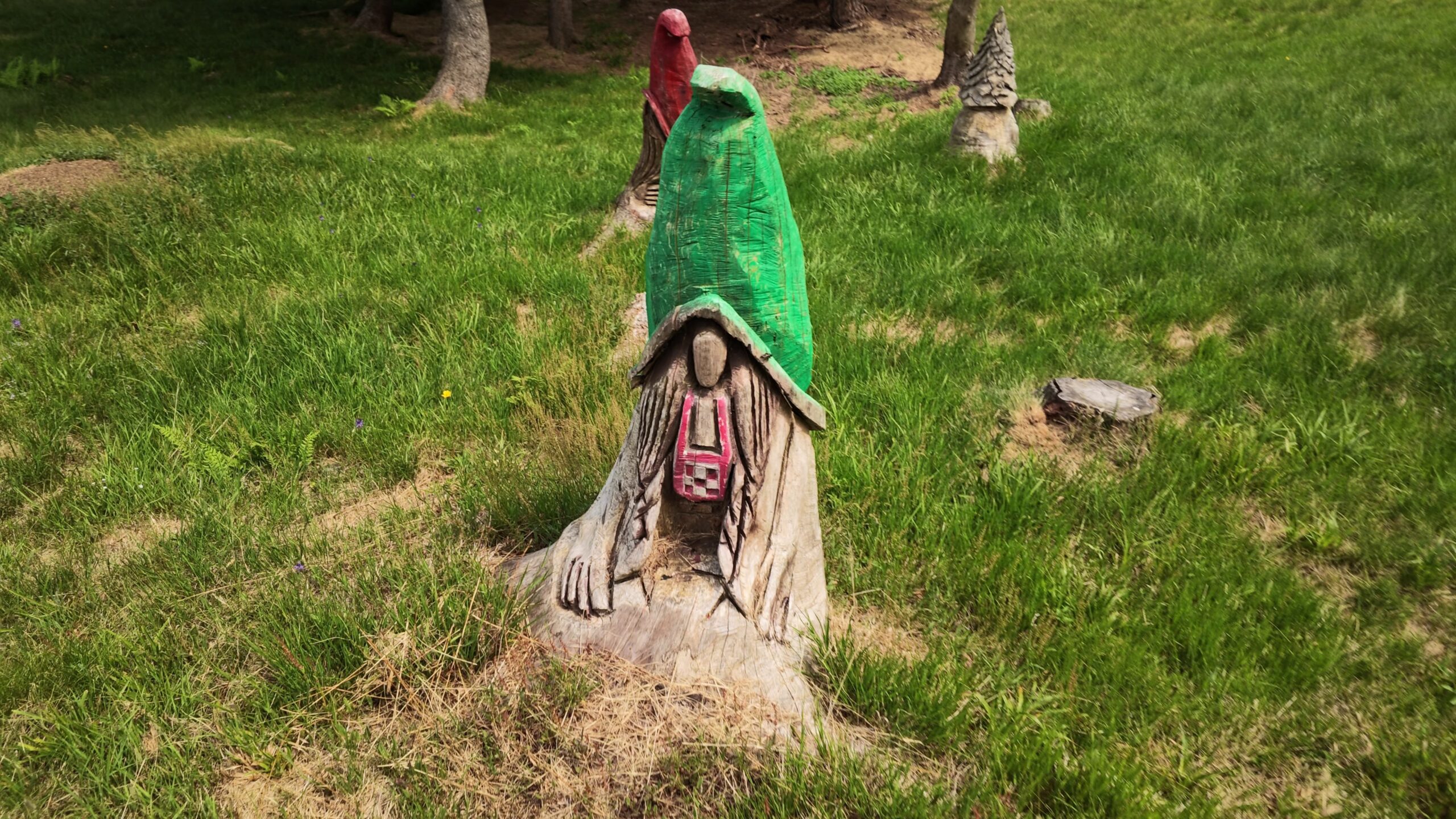
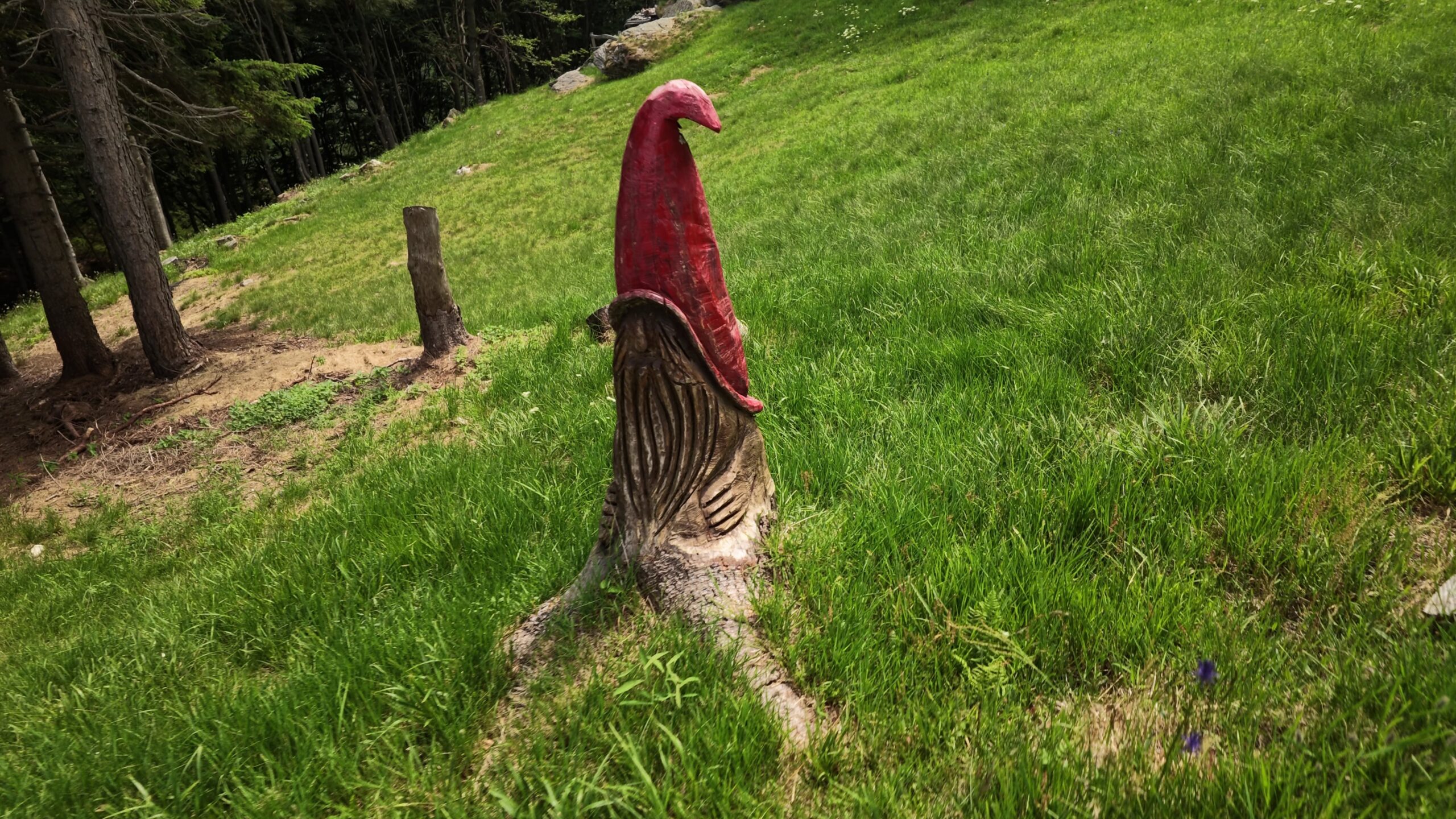
Cortevecchio is different from the typical refuge where you come in, drink, and leave. It's run with the spirit of a home, and the hospitality reflects this very way of experiencing the place. You don't feel like a mere passing guest, but almost like a guest.
As you stand there, talking and looking around, you begin to understand how such a lifestyle choice can completely shift your priorities. You certainly have to give up something, you have to adapt and learn to live with challenges that simply don't exist down in the valley. But in return, you get silence, space, time, and a relationship with the mountains that, for those of us accustomed to spending only a few hours there, is difficult to fully understand.
Maybe you have to live there to truly understand it. But the feeling is that, if you manage to find your balance up here, your way of seeing things changes. And with that, the very concept of quality of life changes.
We, however, still have to finish climbing that mountain.
From Cortevecchio, the mountain changes face
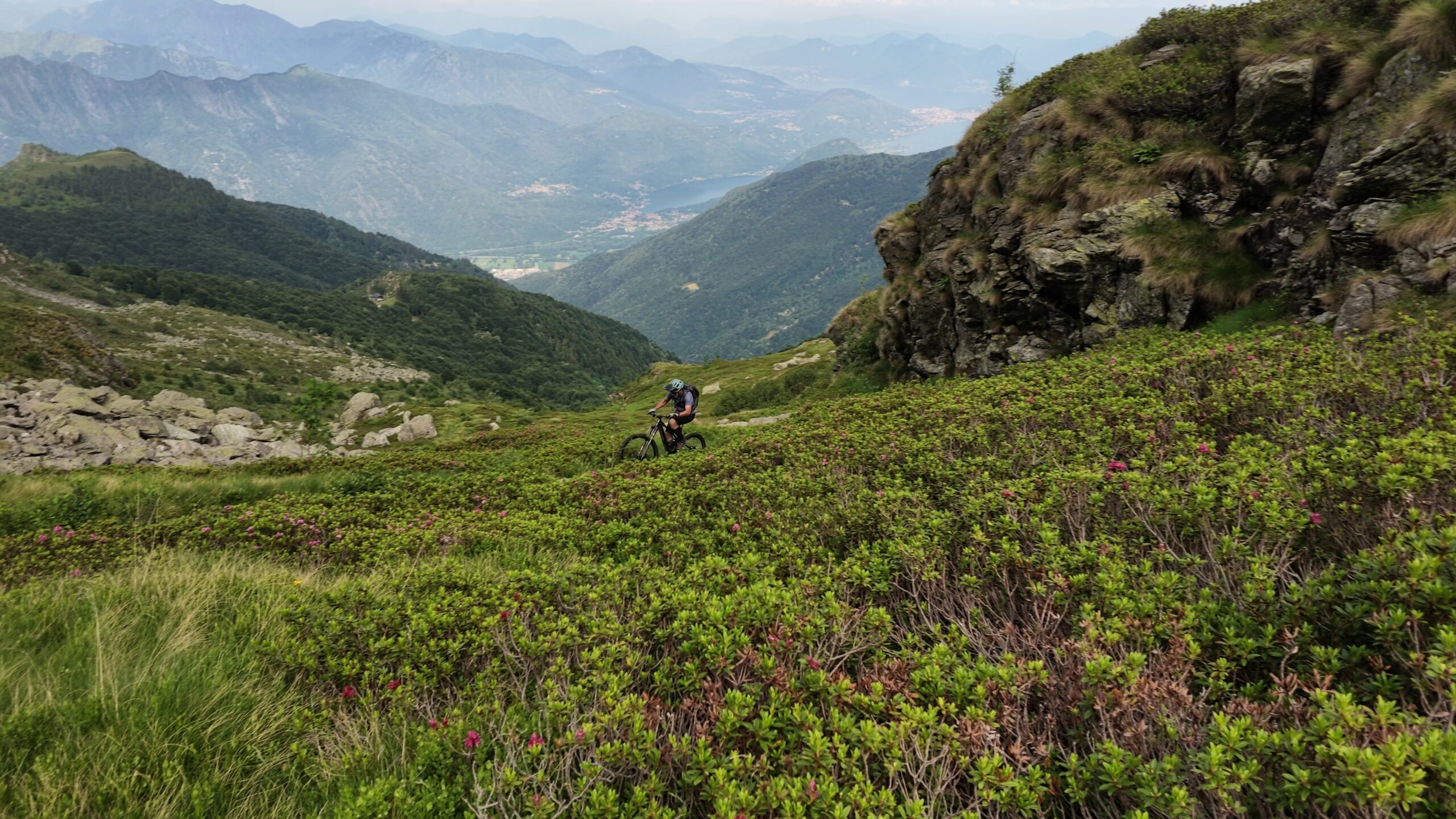
After leaving the refuge, we set off again in the direction of Massone and once again encounter traces of the Cadorna Line. It's interesting how this historical thread accompanies practically the entire day, from the start in Ornavasso to the highest altitudes, but from Cortevecchio onward, the relationship with the bike changes most.
The pedaled climb gradually gives way to more difficult terrain. You continue to use all the pedal power you can muster, and with the Avinox's push, some sections once again become quite challenging terrain, but as you approach the pass, the sections begin where no engine can hold you back.
We have to go down.
First you push, then in some places the bike actually has to be carried on your shoulders.
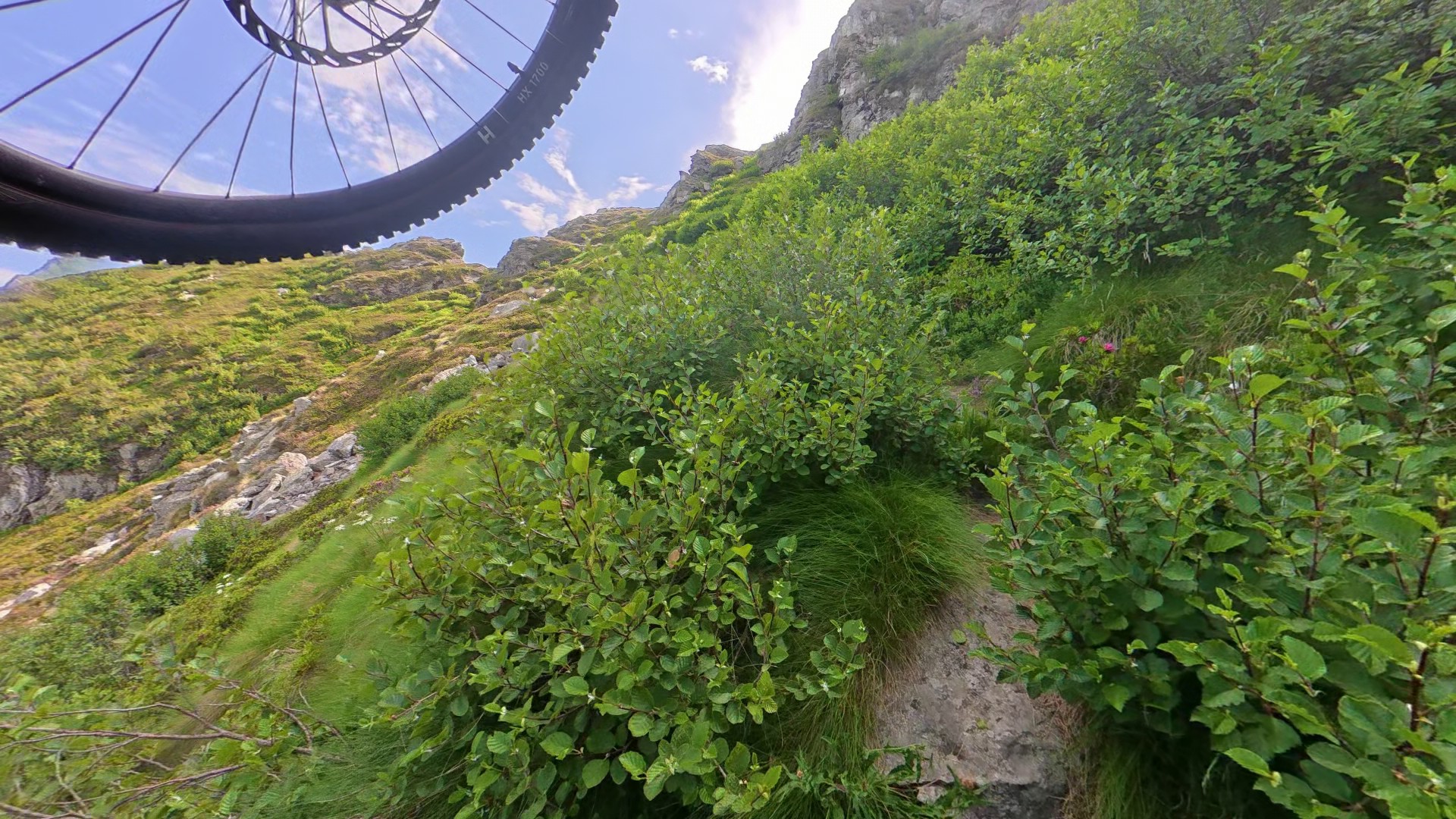
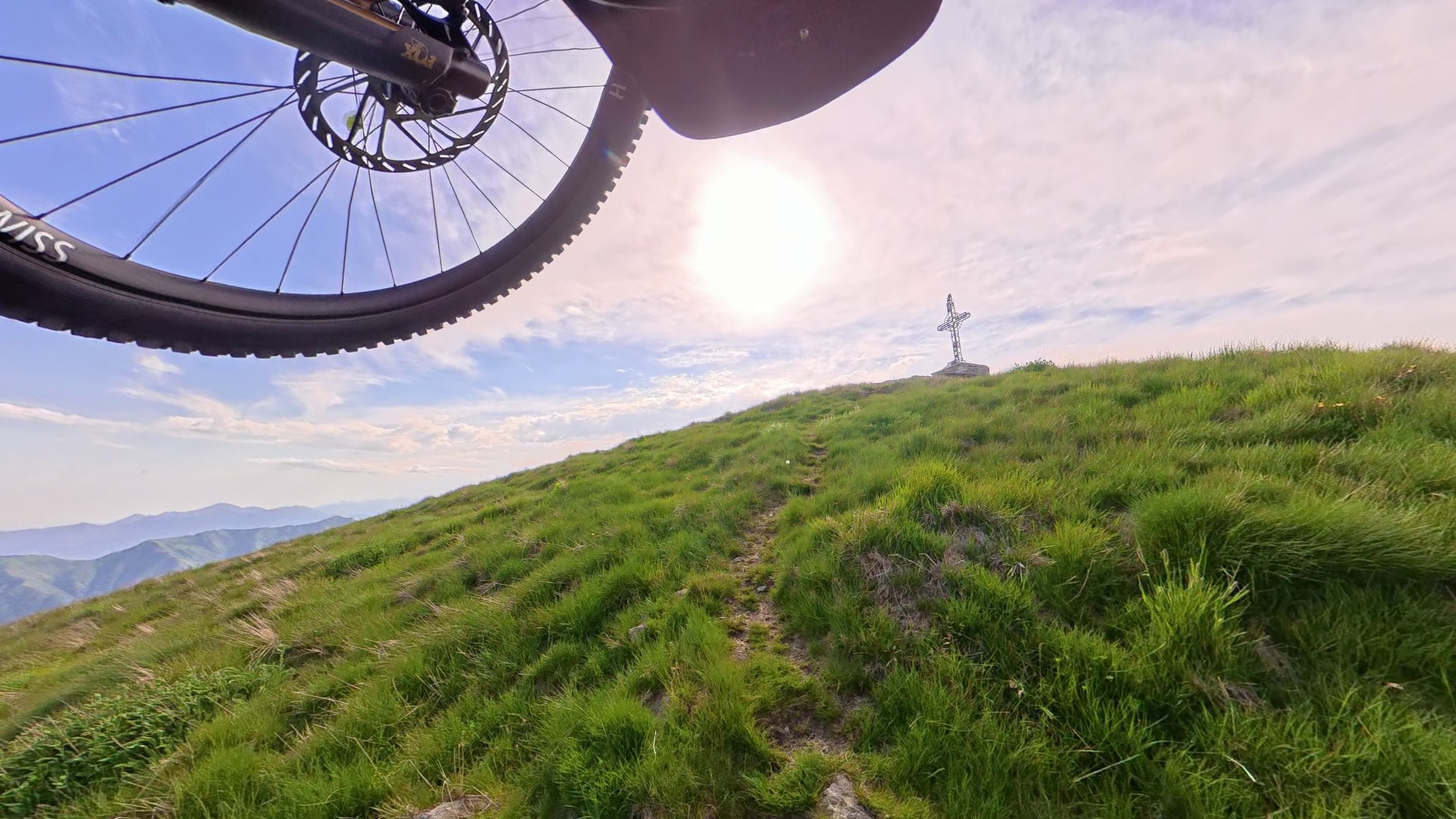
And this is where the e-bike inevitably comes into play. During the climb, the motor's power allowed you to overcome steep slopes and significant obstacles, but when you have to lift the bike, all that technology suddenly feels like a burden again. Carrying an e-bike on these stretches is no walk in the park, and I must admit that, as I climbed with the Mondraker on my back, I more than once wondered whether it was even sensible to want to carry it all the way to the summit.
The answer, however, began to come simply by looking around.
As we gain altitude, the forest opens up, and Massone begins to reveal the true reason why all this effort is worth it. Its location is incredible: it's a mountain that divides the Cusio and Ossola regions, and as we ascend, the view continues to expand, encompassing the entire Verbano area.
It's one of those views that constantly change as you climb. Just a few dozen meters, turn around, and what you saw a moment ago already seems different. At a certain point, you even stop finding the forced portage stops annoying, because they become the perfect excuse to put down your bike, catch your breath, and look around.
All the way to the top, bike included
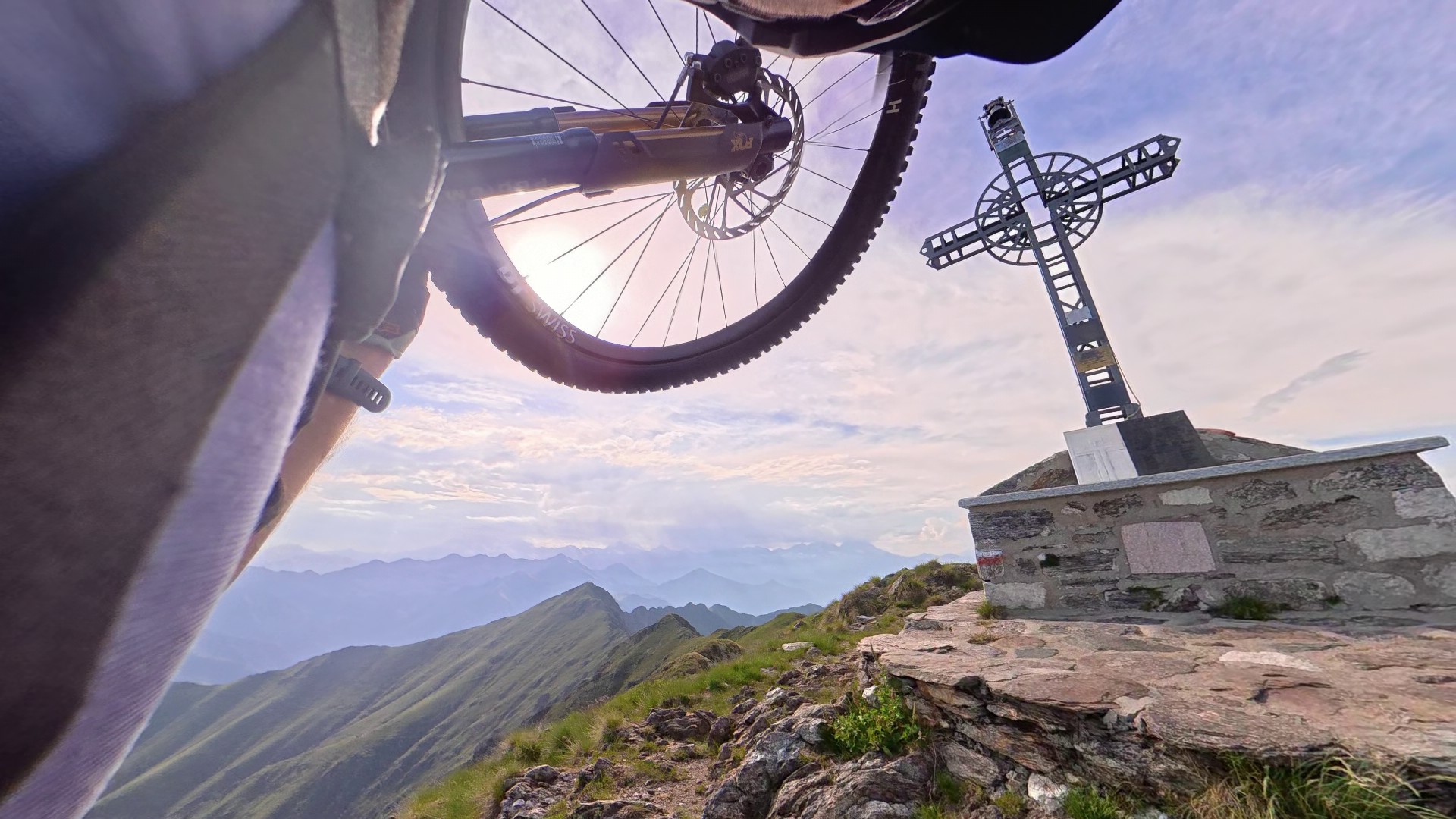
At a certain point, I could have easily left the bike and continued on foot. It would probably have been the most rational choice, but after carrying it this far, I'd decided that the Mondraker would accompany me to the summit of Massone.
So we continue.
Where you can, you push, where you can't, you carry, and in the few places where the terrain allows, you even pedal again. These are those moments when the summit seems very close but still requires time, because in the mountains, distances seen from below are almost always deceiving.
Then you finally get there.
And when you're on top of Massone, with your bike next to you, the first thing you do is look around and realize that yes, in the end it was worth it.
From up here, the view is truly difficult to describe without resorting to the usual adjectives. You have the Ossola on one side, the Cusio on the other, and the Verbano stretching out before your eyes. The mountains stack one behind the other, and the villages that normally represent our points of reference become small and distant.
This is probably the characteristic that struck me most about the Mason: the feeling of truly being in the middle of different territories, on a mountain that separates them but at the same time allows you to see them all together.
And after spending a long time looking at the bike as a burden to be carried to the top, the moment finally comes when it once again becomes the reason we dragged it up there.
From the Mason to the mouth, finally we go down
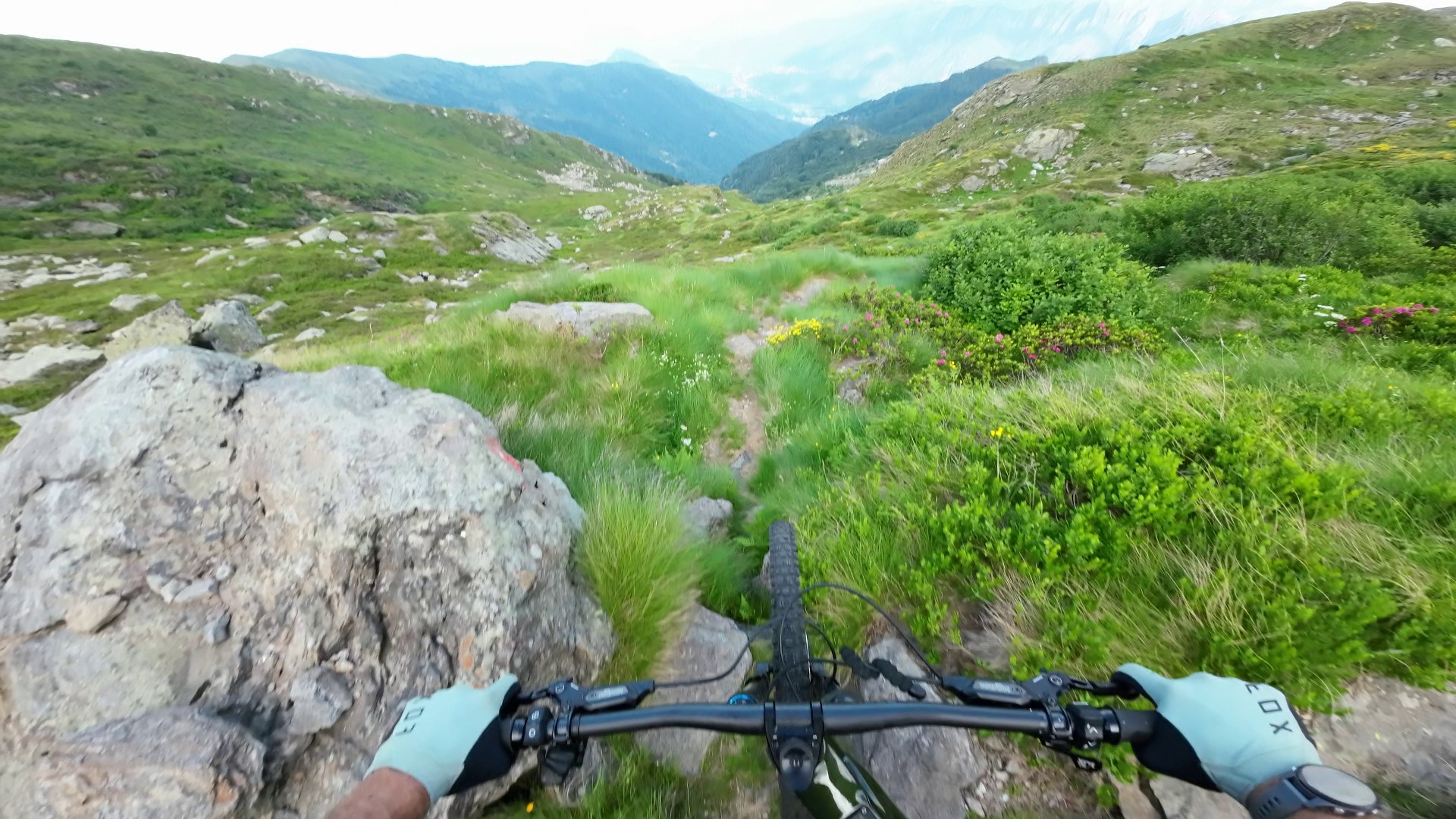
The descent from the Massone towards the pass is a spectacle and is probably also the moment when all the effort made up to that point finally takes on meaning.
After hours of climbing, pushing, and carrying, feeling the bike move beneath me again is almost liberating. The terrain is technical and requires attention, but it finally allows you to truly ride, and most importantly, you do so within a panorama that remains breathtaking.
It's one of those descents where you struggle to decide whether to look at the trail or at what's around you. Of course, it's best to look at the trail, because getting distracted isn't exactly advisable here, but every time the terrain allows a moment, it's natural to look up.
And I think the beauty of this descent also depends on everything that happened before. If we had gotten up there comfortably with a ski lift, it probably would have been a beautiful descent. But after gaining every meter, after the portage, and after dragging an e-bike to the summit, it takes on a completely different flavor.
You earned it.
More than a mountain bike ride
Ultimately, a day on Monte Massone could be described simply through numbers: kilometers, elevation gain, gradients, percentage of rideable distance, and portage sections. And these are important numbers, especially because this isn't a route you'd expect to tackle on a regular e-bike ride. It requires preparation, you need to be accustomed to mountain biking, and above all, you need to take into account that, from Cortevecchio onward, you'll need to carry your bike at several points.
But when I come back from days like this, numbers are almost always the last thing I think about.
Of the Massone, I remember the departure from Ornavasso and the passage along the Cadorna Line, the Forte di Bara that appears in the woods, the muscular climb towards Cortevecchio, and the small challenges on the technical sections tackled using the Avinox's thrust. I'm left with the fatigue of the portage and that inevitable question when you're carrying an e-bike: who made you do it?
But above all, I'm left with Cortevecchio, the people who decided to make it their home and a lifestyle choice, and that view from the summit that encompasses Cusio, Ossola, and Verbano.
That's what I like about certain rides. The bike remains the thread that holds the whole day together, but in the end, it's not necessarily the most important thing you take home.
It allows you to enter a territory, to travel through its history, to meet people who have made different choices than yours and to reach places where, without it, you probably would not have gone that day.
Then of course, sometimes you also have to carry it on your shoulders.
But when from the top of Massone you finally begin to descend towards the pass, with that panorama in front of you and under your wheels a path you've been waiting for for hours, you've already forgotten the weight of the climb.
And maybe that's exactly why, in the end, we continue to take our bikes to places where someone might easily ask us: but why do you do that?

