A complicated final stage, with rain, mud, mechanical problems, and a qualification missed by just a few seconds. I'll tell you what happened, the feelings I'm having with the World Cup season, and how I see a downhill that keeps changing.
Between mud and mechanical problems, a weekend that started off uphill
There are weekends where, from the very first moment, you know everything will be more complicated than expected. The last World Cup stage, for me, was exactly like that. One of those races where you always find yourself chasing something: the right feeling with the bike, the best lines, the pace of the others, and, ultimately, even the time needed to qualify.
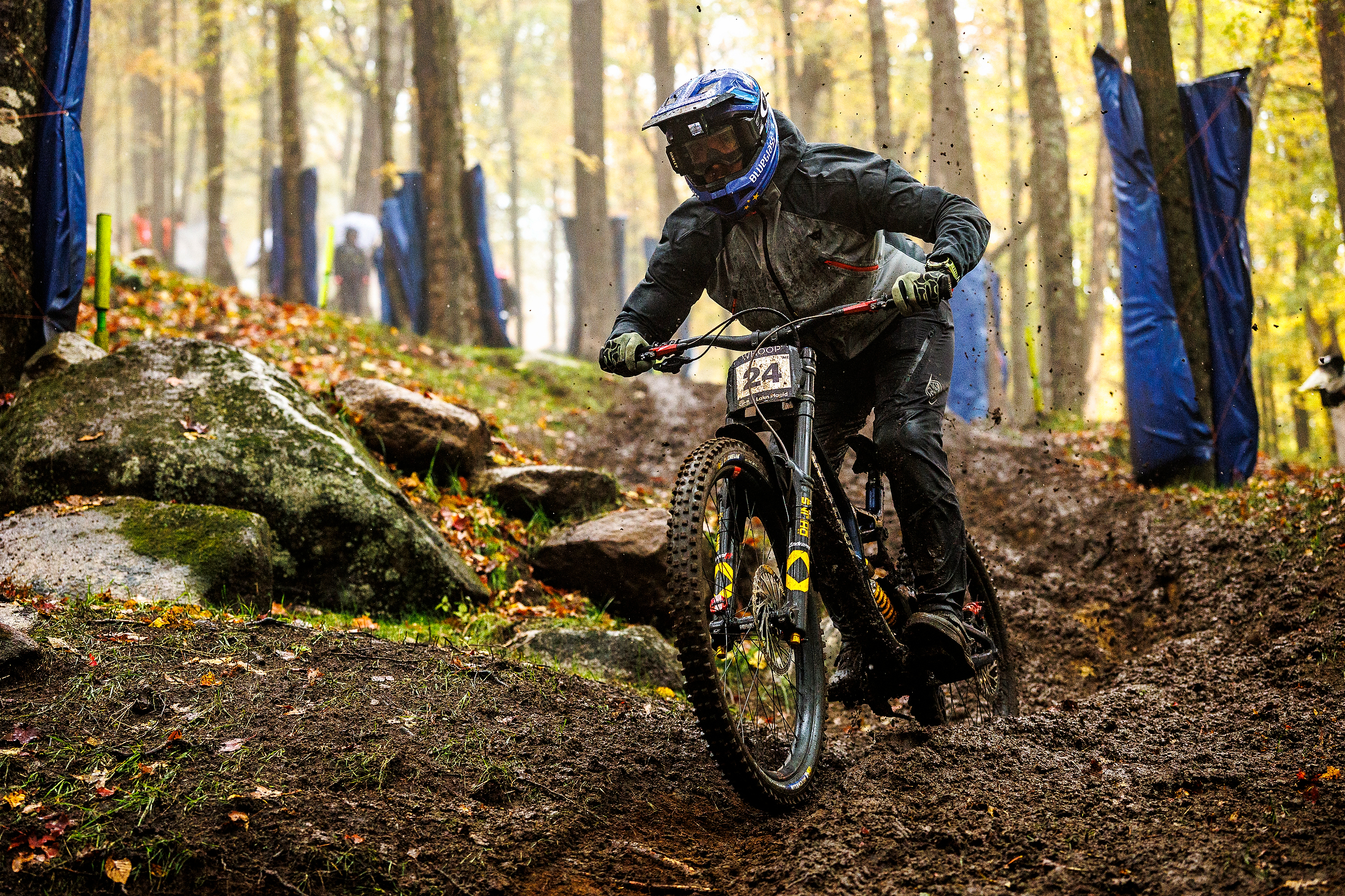
It all started during the track walk, when it started to rain. Knowing the type of terrain, which is quite sandy, we thought it would hold water better. Instead, it quickly turned into a veritable quagmire. The conditions were truly difficult, so much so that during practice they had to close the final section of the track. The jumps were so soft they couldn't be safely negotiated, and we could only run until the third split.
The strange thing is that, once it dried and the lines were formed, the track became truly beautiful. It's a shame that in the meantime, for me, other problems arose.
On the first lap, I had a fork failure that caused me to miss practically the entire first practice session. I spent that time with the Öhlins technicians trying to resolve the situation, but the spare fork also had an air cartridge issue, probably caused by the flight.
Eventually, they fitted me with a fork I'd never used before. They gave me some initial pressure recommendations, and from there I began experimenting, trying to find a setup that worked. The problem was that, with a track like that, it was incredibly difficult to truly understand how the bike worked.
And that's exactly what shaped my entire weekend. While the others were racking up laps and gaining confidence, I was still trying to understand the bike and make up for lost time. I chased practice, I chased the others, and I chased everything I needed to do to be prepared for qualifying.
Only on the last practice lap before qualifying did I manage to find a half-way point with the setup.
An uphill qualifying battle
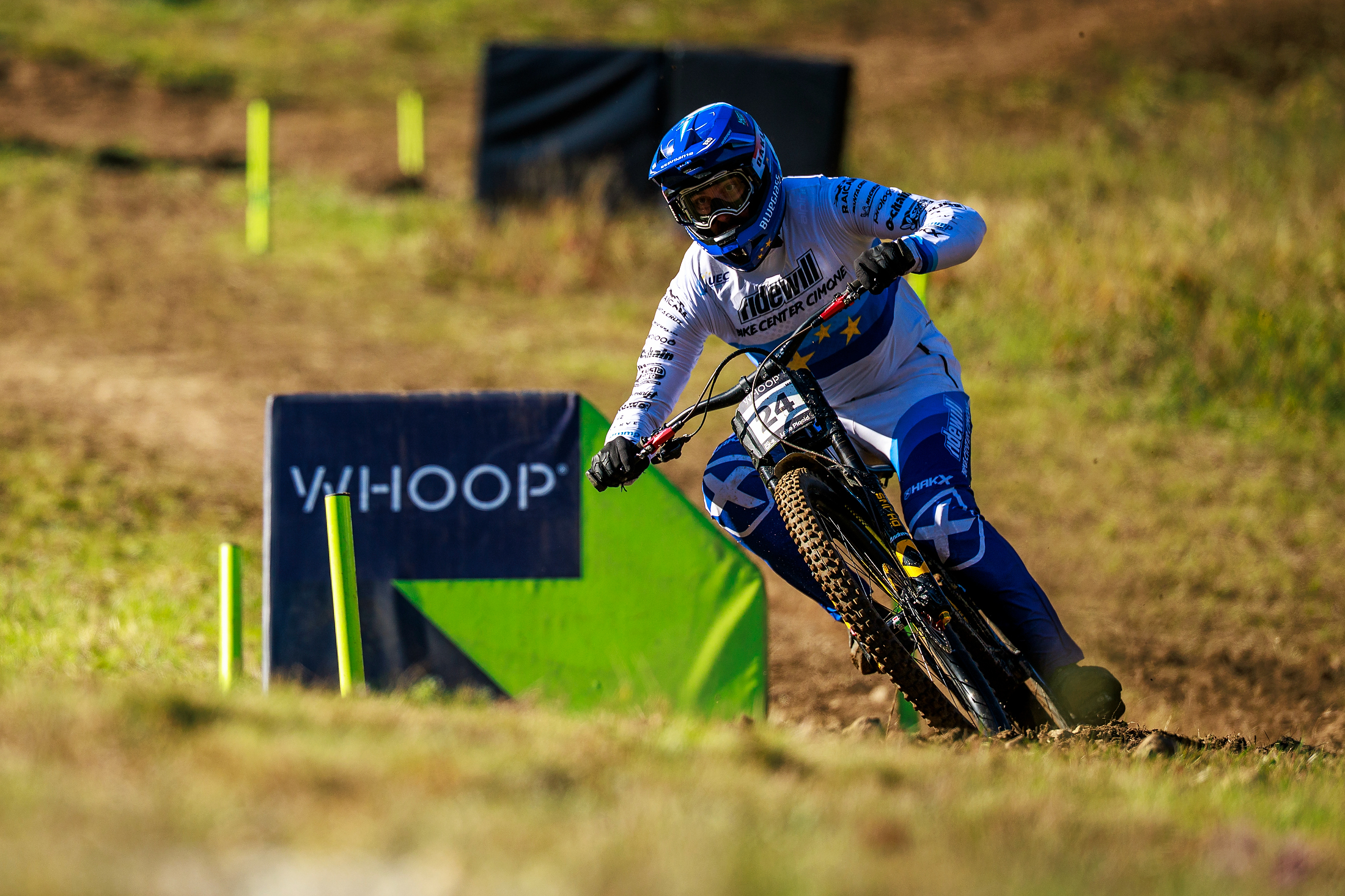
In Q1, I still wasn't completely sure about my speed, the lines, or how much I could push. I set off and, in the first few corners, I made a mistake on a rather tricky counter-slope. I ran wide, passed close to a tree, and practically lost all my speed.
At the first split time I was around fiftieth position, but from there I managed to recover to 25th place, finishing about a second behind the qualifying position.
At that point, I told myself I could do it. Despite the initial mistake, I was still close, so I knew I had a margin.
In Q2, I started with more confidence, even though I made another mistake on the first counter-slope, fortunately less than in the previous heat. I kept pushing, thinking that if I'd managed to get close to my qualifying time with the mistake I'd made in Q1, I could recover this time too.
I pushed until, with about a minute to go, I went off the track.
In the end I missed qualifying by three seconds.
It was a bitter conclusion, because I never really had the chance to build the weekend as I would have liked. In downhill Nowadays, losing a practice session weighs heavily, especially when you have to face a difficult track, conditions that are constantly changing and opponents who don't give you anything.
A hard-fought season, with good feelings and missed results
If I had to sum up my World Cup season, I'd say it went pretty well, at least performance-wise. I'm happy with the way I rode and the feeling I had on the bike, but a little less so with the results I managed to bring home. On several occasions, I was just missing out on the final: sometimes one or two places, other times just a few tenths of a second. Situations that inevitably leave a bitter taste in the mouth, especially when you feel like you have the speed to compete.
On the other hand, it was an extremely competitive World Cup season, with a very high overall level and very close gaps. A small mistake was enough to find yourself out of the final, and it wasn't just me. Some of the biggest names in the world also… downhill The World Championships have had to contend with missed qualifications and unexpected events. Jackson Goldstone, for example, missed the final in his home race in Whistler, while Amaury Pierron failed to qualify in Lake Placid. And let's not forget Finn Iles, who was sidelined by injury while he was near the top of the World Cup standings.
These episodes demonstrate just how eventful and unpredictable this season has been. The level is so high today that no one can afford to let their guard down, not even the riders who usually fight for the win. As for me, I'm still a bit disappointed with the results, but also satisfied with having found good speed and a positive feeling while riding. This is where I want to start again.
La downhill It's changing, and not just in terms of speed.
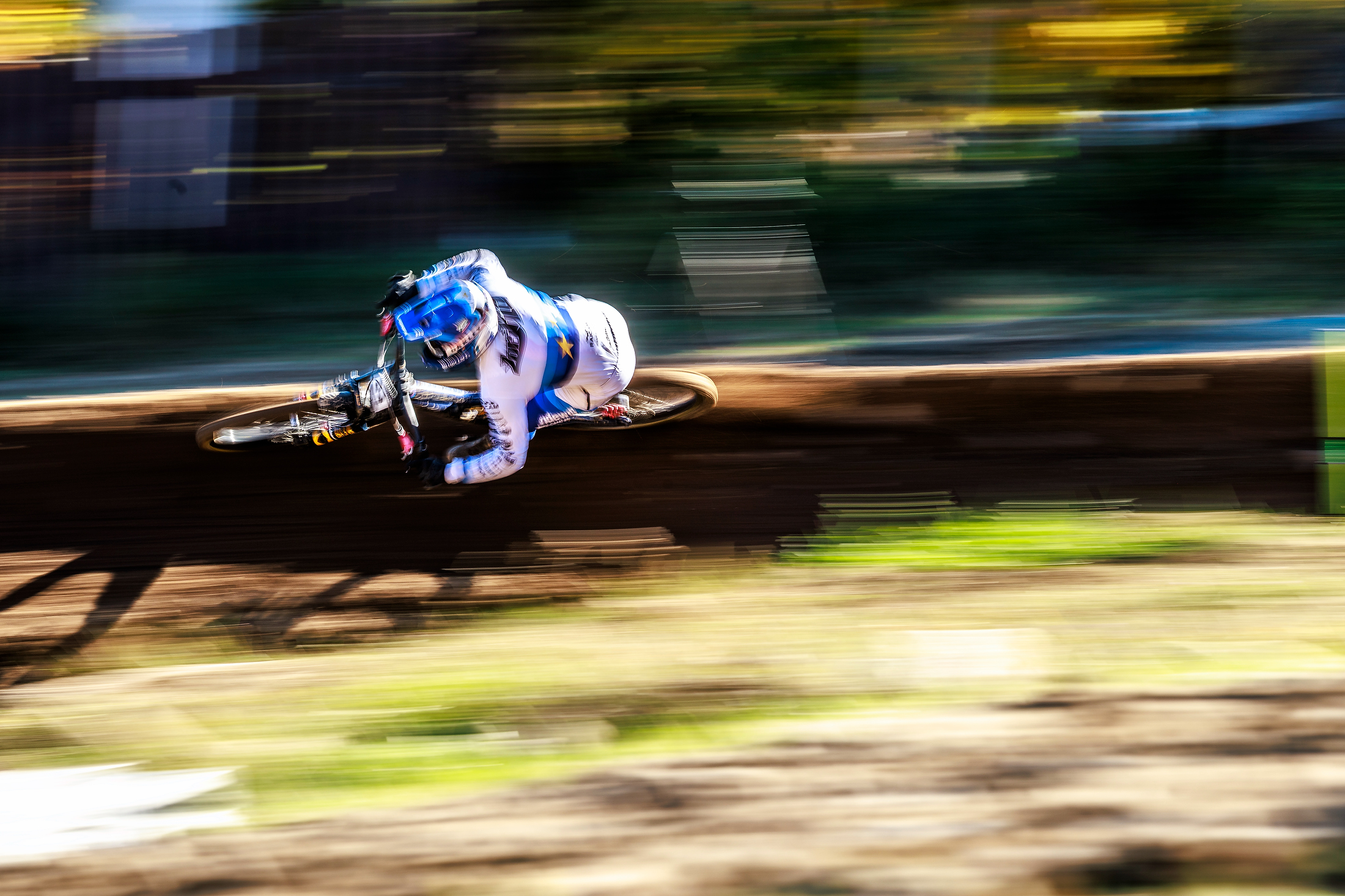
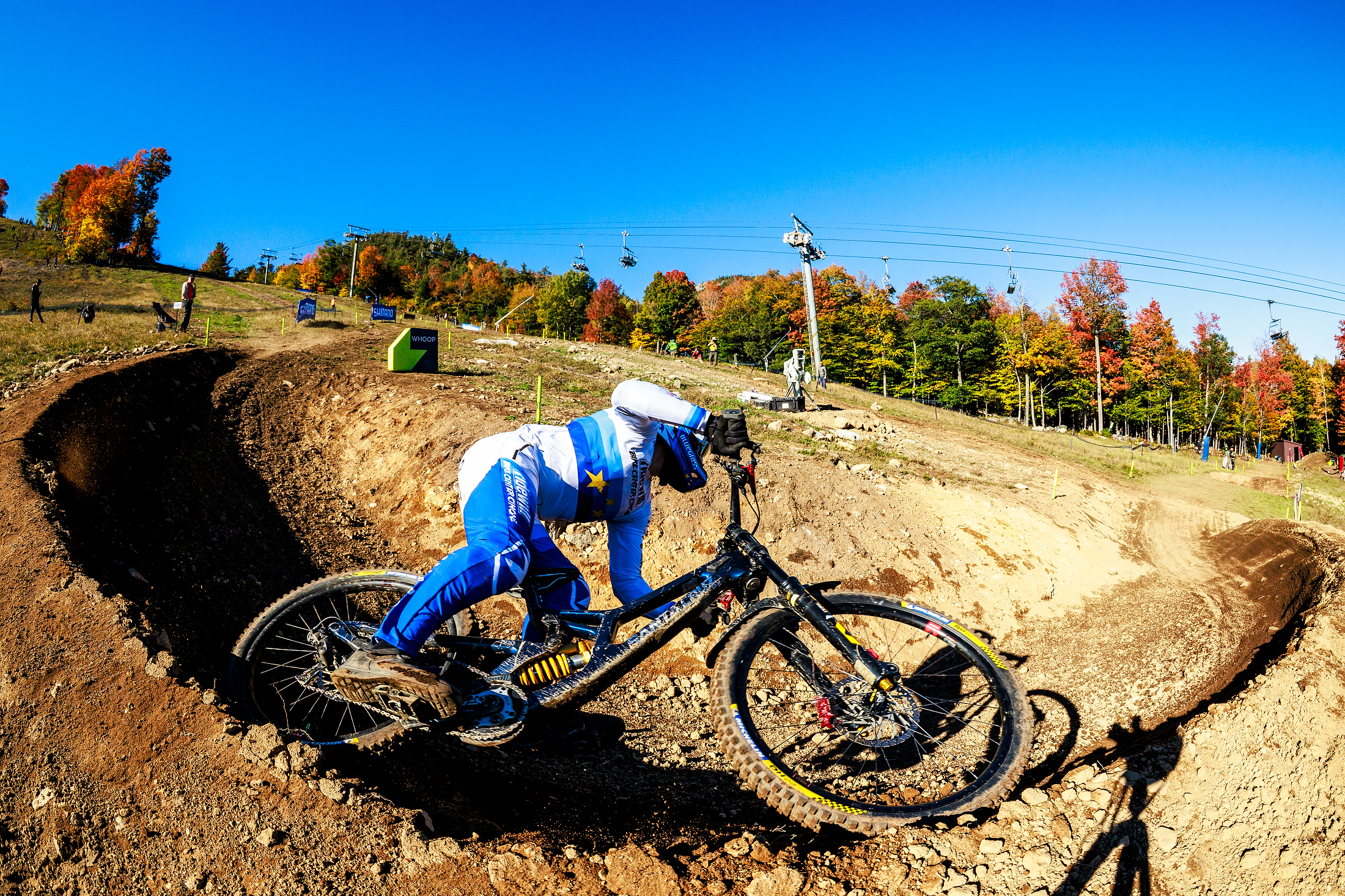
If I look at how the downhill In recent years, I think we've reached truly absurd levels. The speeds are incredibly high, and the tracks have also changed a lot.
For a while, I had the feeling that some tracks had been simplified, allowing us to go faster and faster. Lately, however, it seems to me that the tracks are being slowed down a bit again and more focus is placed on the technical side.
At Lake Placid, for example, the track slowed us down a bit, while Whistler, even if it had been wet, would have remained a fast but still quite technical track.
From what we hear in the industry, sponsors would also like slightly slower tracks, to have greater visibility as riders pass. When you're passing a camera at ridiculous speeds, it's sometimes difficult even to distinguish the brands.
This is an interesting aspect, because it helps us understand how the evolution of downhill It doesn't just depend on the riders and the bikes, but also on everything that revolves around the World Cup.
Another thing I'm noticing is that the teams seem to be starting to be listened to more. After the organizational difficulties and the conditions encountered at the race in Korea, several teams have expressed their dissatisfaction. From what I'm hearing, even though the event was scheduled for two years, it might not even be held again in the next calendar.
Personally, I hope we can find better solutions and add exciting races, on tracks that are up to the level we've reached.
La downhill It will certainly continue to evolve. It has changed a lot in recent years and I believe it will continue to change, both technically and organizationally.
As for me, I'm closing this season with some regret for the results that didn't come, but also with the satisfaction of having shown good leadership. The level of the World Cup continues to rise, and the margins are increasingly narrow. The challenge will be to transform these positive feelings into concrete results, because today, more than ever, every detail can make a difference.