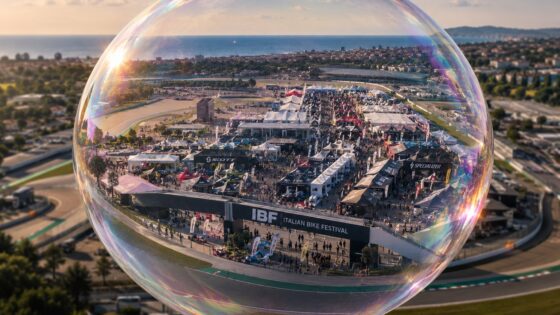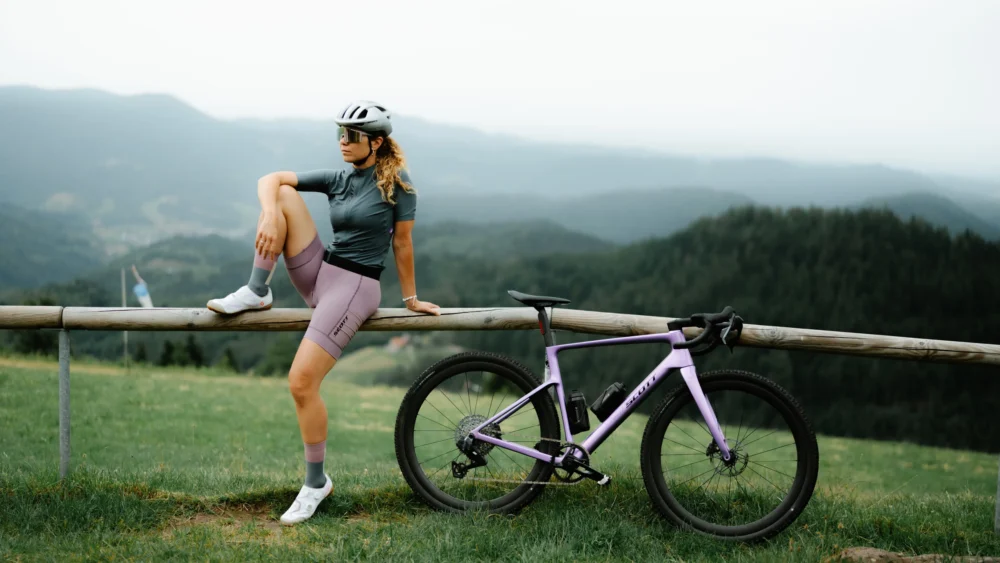
At Misano, the real star was gravel. It was hard to turn around without seeing one. Every brand seemed to have at least one prominently displayed, and even companies that were originally electric, or at least grew up around seemingly unrelated worlds, had something to show. Catalog models, 2027 releases, prototypes, new interpretations.
It's hard to deny: gravel is one of the great cycling phenomena of recent years. Part road, part mountain biking, part travel, and a whole lot of fashion. It's taken ingredients that have existed for decades, blended them with great intelligence, and, above all, imbued them with a new imagery.
The colors of the earth and nature, the vaguely retro clothing, the bags strapped to the frame, the dirt roads, the coffee brewed in the middle of nowhere, the dust, the woods. And, above all, that feeling of freedom that the bicycle evokes like few other objects.
Everything is perfectly coordinated, of course. We might even smile about it, but that would be a mistake, because it works.
It works so well that, in an age where we keep telling ourselves that no one wants to work hard anymore, one of cycling's most vibrant segments has put a bike built for pounding the miles at its heart. A bike that, moreover, isn't even particularly comfortable compared to a modern full-suspension bike.
And yet, it's liked. A lot.
Maybe we should ask ourselves why.
Gravel bikes have become big
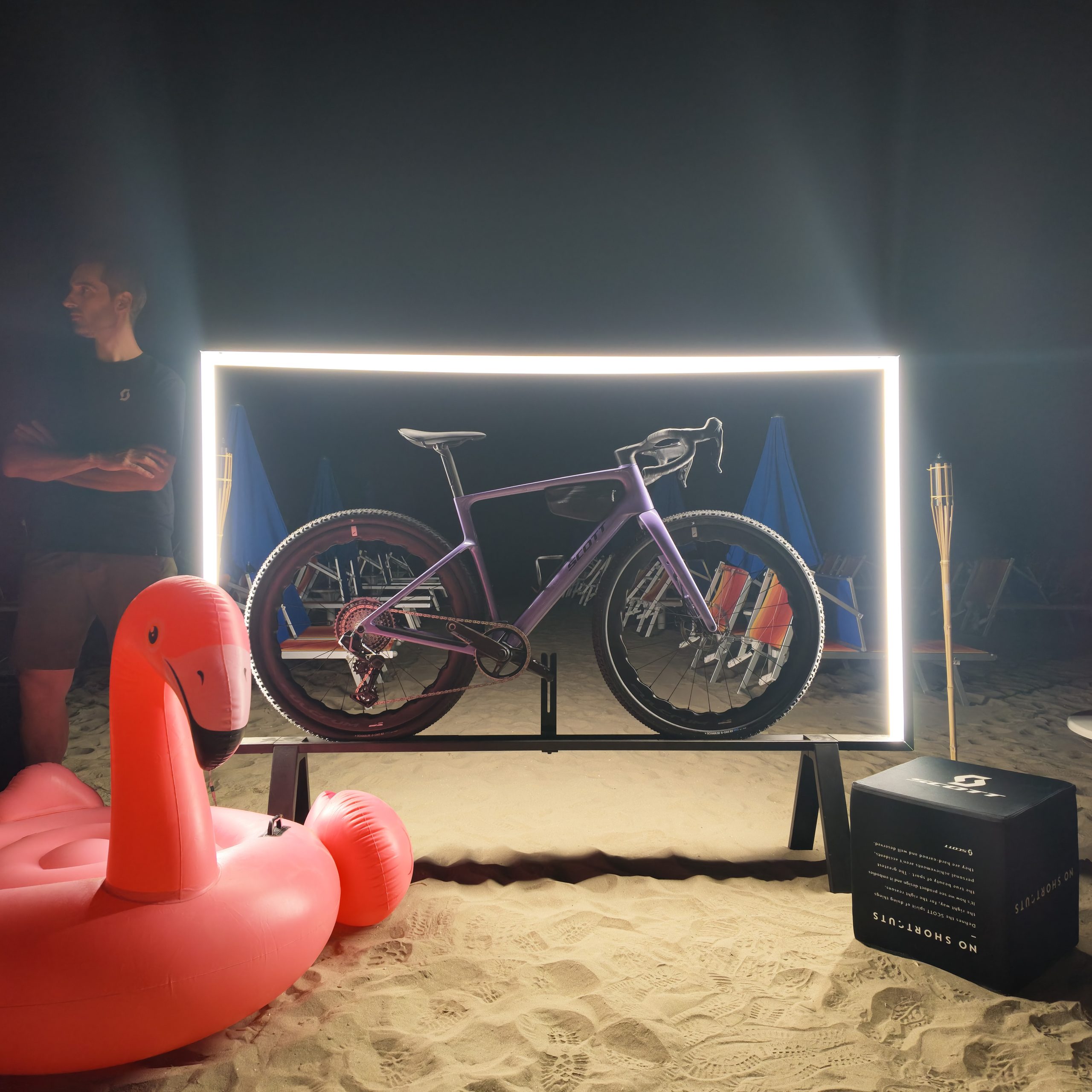
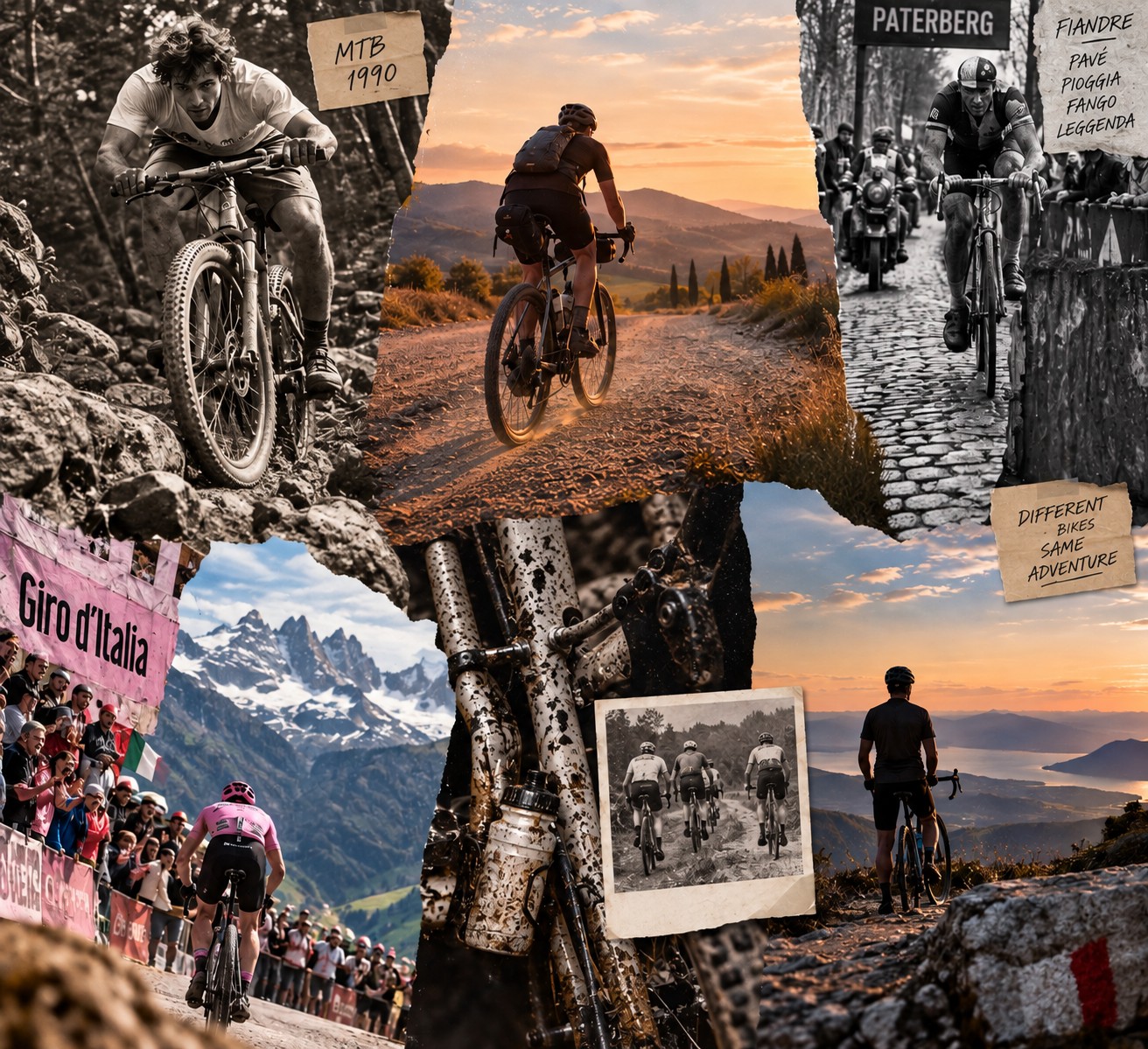
Meanwhile, gravel bikes have also grown, in every sense. The first ones were often slightly revamped road bikes or refined cyclocross bikes. Today, tires, geometry, wheel clearances, and technical solutions have profoundly transformed them, to the point that looking at some of them almost makes you think of the mountain bikes of the 1990s.
Only with disc brakes and curved handlebars.
And this is where things get interesting, because perhaps the success of gravel isn't just telling us something about gravel. It's reminding us something about cycling and why, even today, we continue to desire it.
Those who choose a bike don't just buy a vehicle. They buy the ability to set off.
He buys adventure, freedom, exploration. He buys, even before the miles he'll actually travel, the ones he imagines he can travel.
The road has never stopped telling the story of the journey
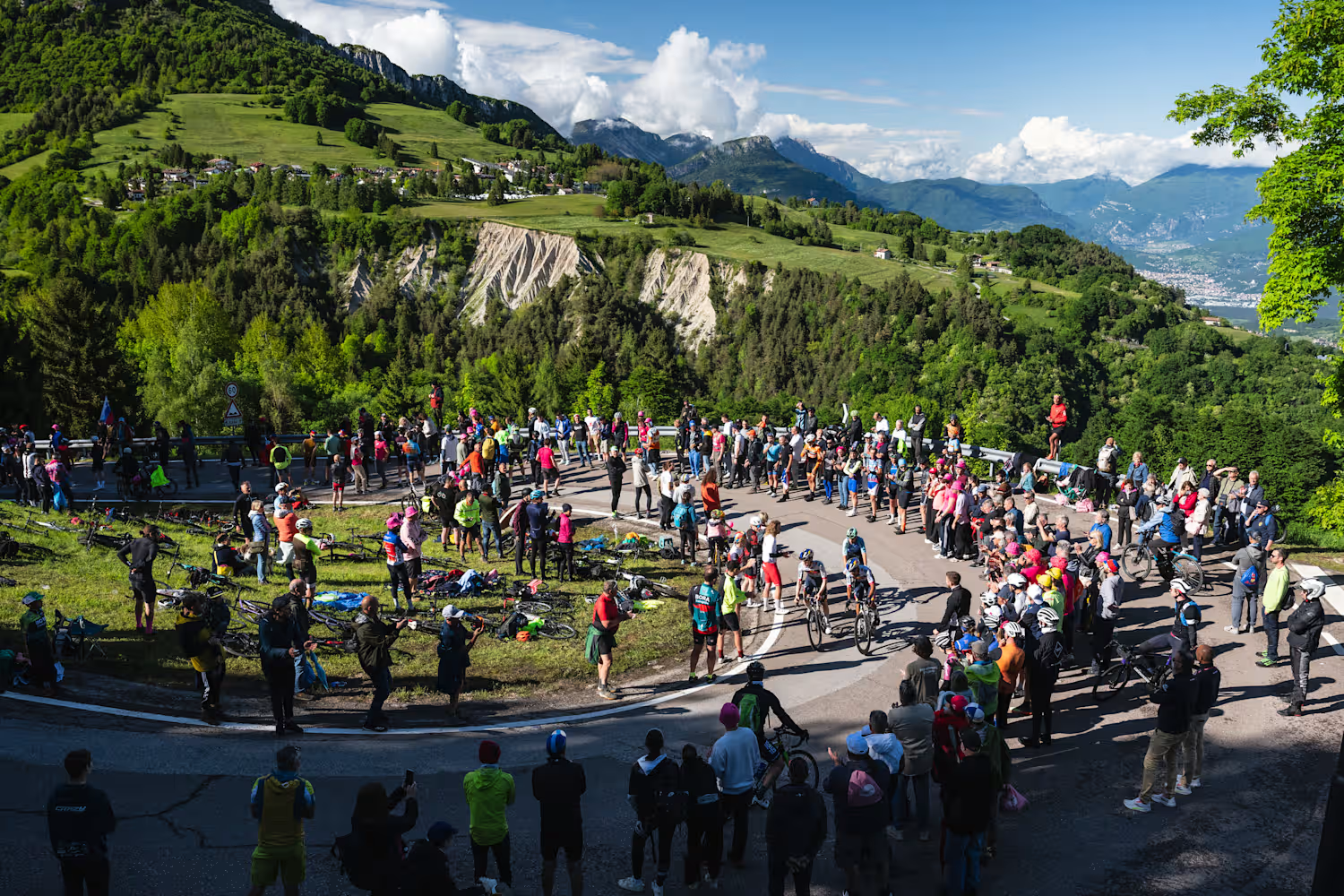
Let's think for a moment about the road world, seemingly the sector furthest from this reasoning. It's pure competition: grand tours, Monument Classics, global champions, structured teams, enormous budgets, exaggerated performance.
Yet the road has never stopped telling the story of the journey, because a road race doesn't exist within a fence: it crosses a territory.
Those who watch the Giro d'Italia or the Tour de France are certainly watching a competition, but at the same time they see the world pass before them. Villages, mountains, countryside, castles, coasts, cities. The territory isn't simply the backdrop to the race: it becomes one of its protagonists, and through those images, the viewer inevitably begins to imagine going there.
The riders thus become a kind of modern-day Ulysses on two wheels. They cross thousands of kilometers, brave the cold of Flanders, the heat of the French stages, the cobblestones, the wind, the rain, the Alpine and Dolomite passes. And above all, they ride on roads that, the next day, we too can ride.
We can pedal the cobblestones of Roubaix, tackle the Walls of Flanders, climb the Stelvio, the Galibier, or the Tourmalet. We can ride the roads of the Milan-San Remo and experience, in our own way, that extraordinary spring ritual that begins in the northern cities still dressed in winter and runs toward the sea. Then comes the Riviera, the colors, the Poggio, and that feeling that, almost more than the calendar, tells us every year that the good weather is returning.
We'll never be those champions, but we can ride through the same places. We can reach that pass, put our wheels on those rocks, recognize that curve we've seen a hundred times on television and think: they also passed through here.
It's a huge difference from many other sports.
The road has retained this extraordinary evocative power. Its champion is not just an athlete: he is someone who leaves from one place and arrives in another, traversing the world. And we, watching him, travel a little with him.
Then came the mountain bike
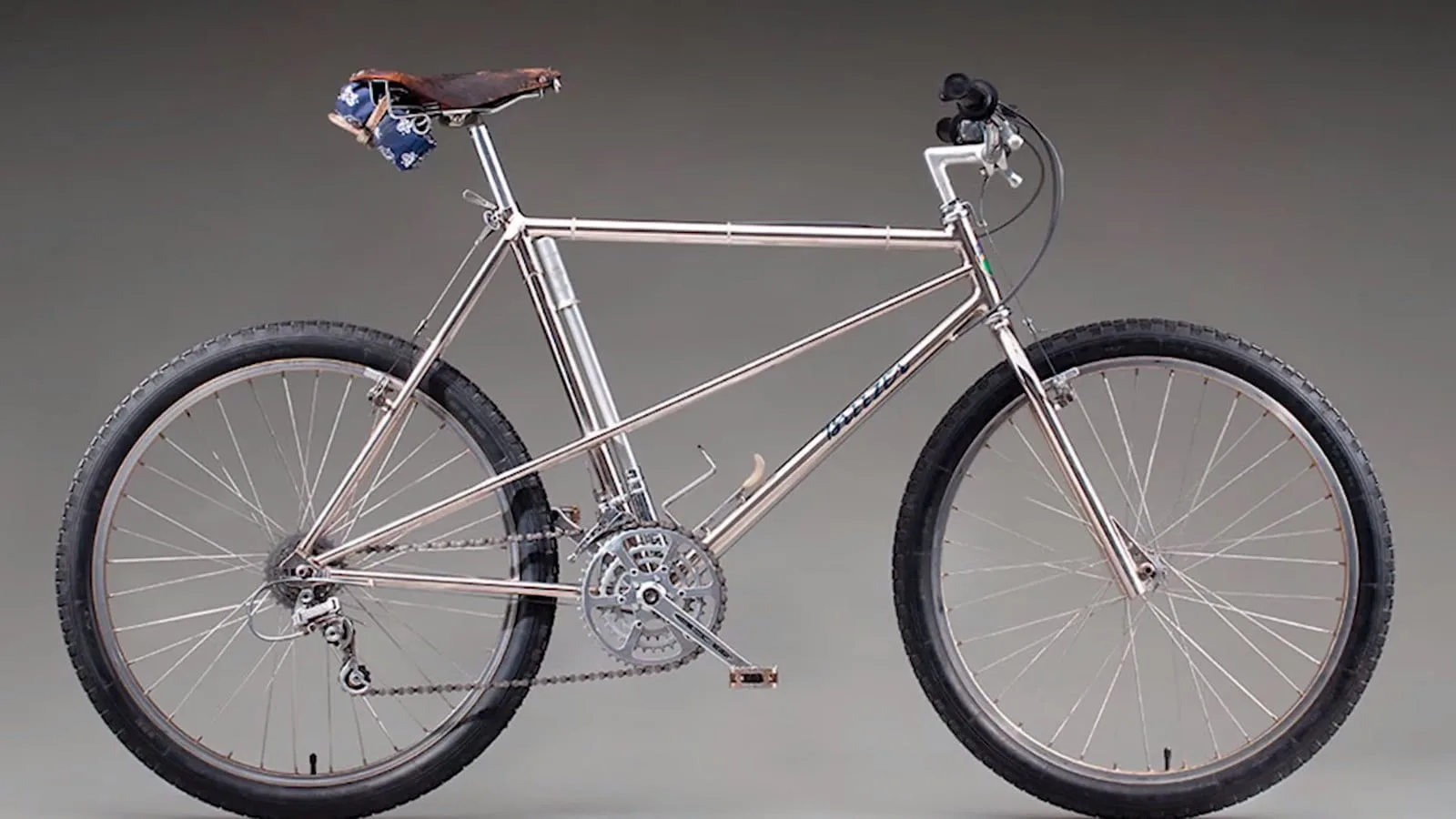
The mountain bike was born by doing something even more powerful: expand the boundaries of that world.
Its founding mythology is wonderful precisely for this reason. Slightly hip kids take unlikely bikes, modify frames and components in their garages, climb a hill they'd never have gone on a road bike, and then simply ride back down.
From that moment on, everything changes.
Gravel roads, trails, woods, mountains, and all those places that were previously off the cycling map suddenly become accessible. It's no longer just the road that connects two points: now we can take that trail that disappears into the woods and discover where it leads.
The MTB wasn't born because someone needed a wheel of a certain size.
It was born because someone wanted to go further.
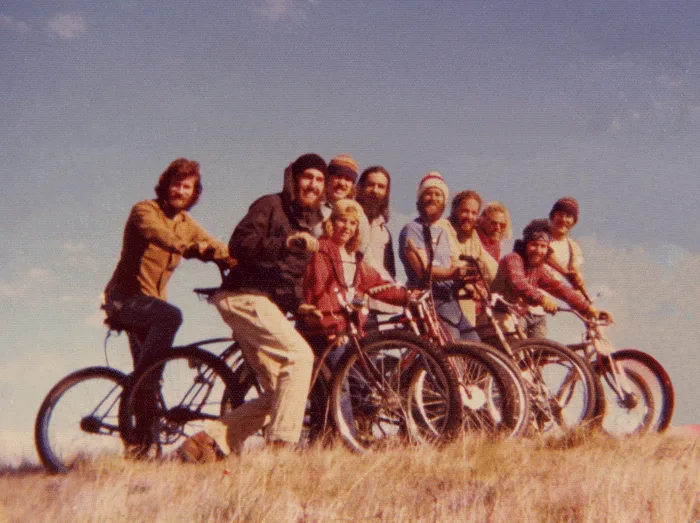
And it is that promise, much more than any technical solution, that has won over millions of people.
I'm one of those. I don't know how many would have ever imagined getting on a bike seriously and, thanks to mountain biking, a few years later even found themselves in a Lycra suit climbing a mountain pass. I did.
Mountain biking was an extraordinary gateway because it conveyed something immediately understandable even to those who knew nothing about cycling: adventure, nature, mud, discovery, freedom. Then there was that touch of competitiveness that added adrenaline, raised the level of challenge, and made us want to go a little faster.
But first came the dream.
Technology came later.
When did we start talking about the bicycle starting from the technical specifications?
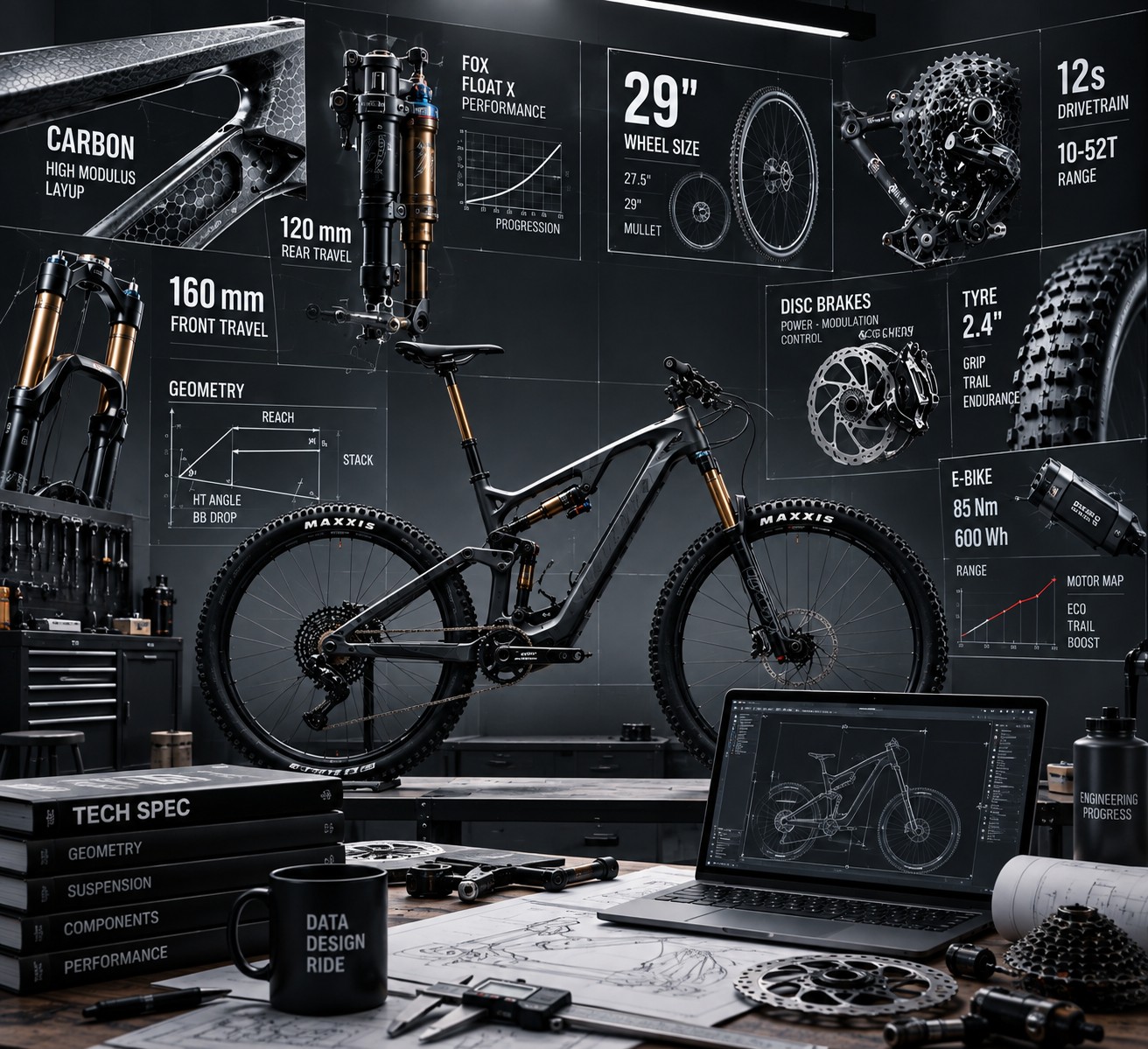
At a certain point, something changed. The races changed, and with them, a part of mountain bike communication changed as well.
We started by discussing wheel diameters, travel, standards, geometry, and kinematics. Then came motors, batteries, torque, range, and firmware. All important things, of course, and incredibly interesting for us enthusiasts who can spend an evening discussing millimeters, angles, and components.
But how much can these arguments warm the heart of someone who doesn't yet own a mountain bike?
How much do they make you dream?
Gravel, paradoxically, has taken many of the concepts on which mountain biking had built its success and put them back at the center of the scene: exploration, travel, nature, adventure. It has simply dressed them up in a more contemporary, relaxed, and cool way.
We often say that gravel communicates very well. Perhaps it would be more correct to say that Gravel has started to communicate again like mountain biking did when mountain biking made people fall in love.
And so the question becomes inevitable. If we truly live in an era where people no longer want to work hard, why does the road world hold up, gravel bikes grow, and traditional mountain biking struggles?
Maybe the problem isn't fatigue.
Maybe we've simply stopped explaining why it's worth doing.
We don't sell hard work. We sell the reason for doing it.

A climb hurts on any bike. But if at the top of that climb there's a Dolomite pass, a view, a story, a place you've seen a hundred times at the Giro, then that effort takes on a new meaning.
You're no longer just producing watts. You're going somewhere.
People accept enormous hardships when there's an experience behind them that justifies them. They run marathons, climb mountains, cycle for hundreds of kilometers. Not because they necessarily enjoy suffering, but because on the other side of that hardship lies something they desire to experience.
The point, then, is not to eliminate fatigue.
È give meaning to the effort.
Gravel has understood this very well. Road biking, after all, has never forgotten it. MTB, on the other hand, seems to have lost the thread of the story, at least in part.
Not everywhere, of course. All-mountain riding had already brought this very idea back to the forefront: starting out, climbing, crossing a mountain, and descending the other side. The bike was once again becoming a tool for exploration rather than just a sporting piece of equipment. Perhaps that was a path worth pursuing even more, because exploration should once again be one of the great driving forces of mountain biking.
Racing should also remember this
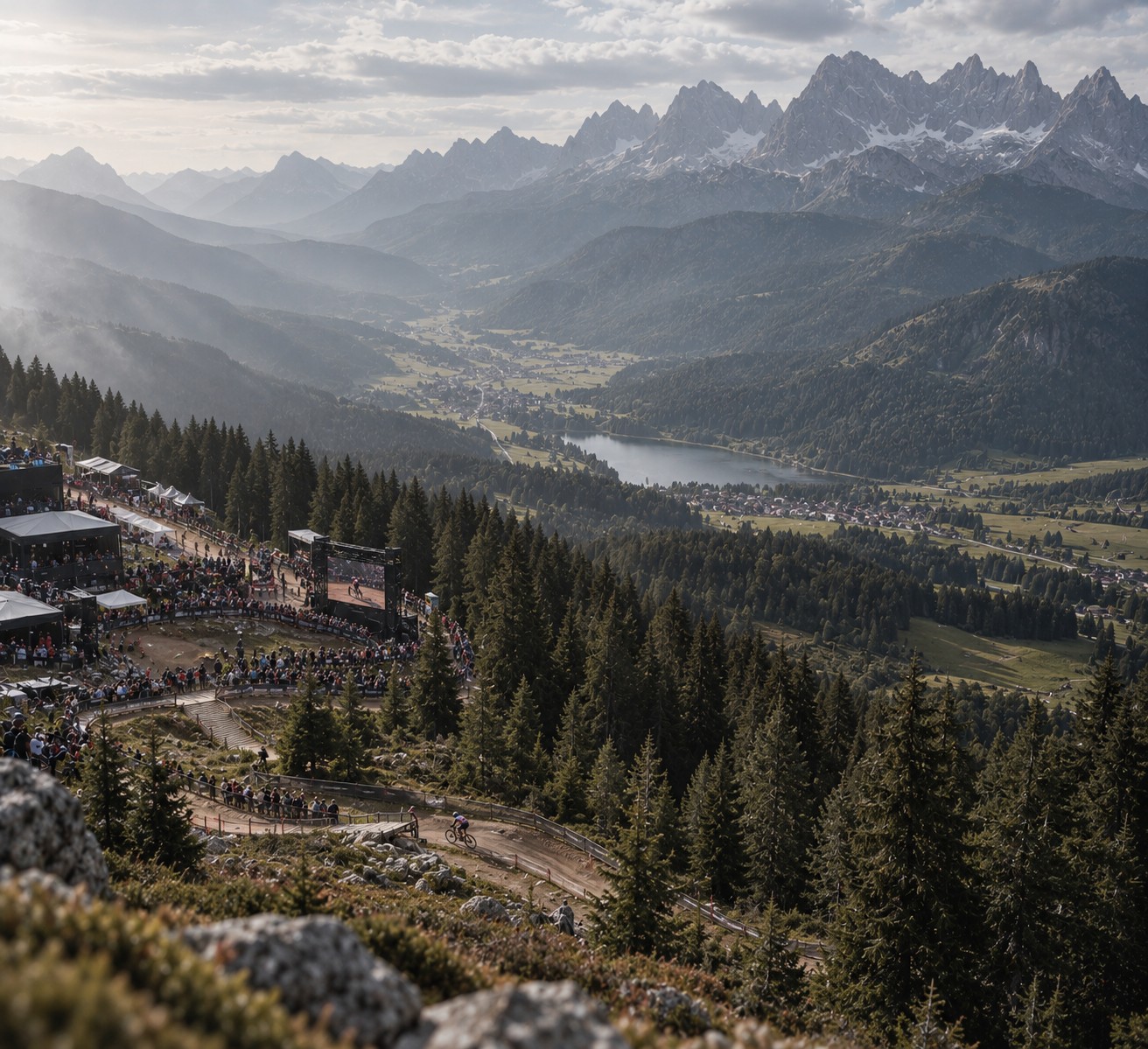
And perhaps the racing world should ask itself a few questions too.
Modern XC is incredibly fast, spectacular, and athletically impressive. Athletes do things that would have seemed impossible twenty years ago, and it's undeniable how much the spectacle has grown technically.
But there is a risk: that of becoming terribly aseptic.
A technically perfect, short circuit, built for spectators and television, repeatedly repeated, can end up turning mountain biking into a race inside a cage. A beautiful, spectacular, and extremely difficult cage, but a cage nonetheless.
So the question isn't whether XC is spectacular. It is.
The question is another: is it still evocative?
A child watching that race thinks: I want to become strong like that champion, or also think: I want to get a bike and go see what's behind that mountain?
Because that second part was the magic.
And today, paradoxically, we have technology that could allow us to reclaim it. A drone can track a rider through a forest at fifty miles an hour, cameras have become tiny, an e-bike can follow athletes while carrying video equipment, and remote transmissions allow us to report on places that until a few years ago would have been almost impossible to cover.
So why not go back to imagining epic races too?
A rider traversing Dolomite passes, forests, and valleys. A competition that showcases not only the fastest rider, but also the terrain they're traversing. A sporting adventure in which the mountains once again take center stage alongside the athlete.
Twenty motorcycles and three helicopters aren't necessarily needed. This time, technology could be used not to replace the bicycle again, but to go back to tell it.
And it would perhaps be one of the most interesting innovations of recent years.
The plutonium battery is not enough

Instead, we continue to search for yet another technical revolution. A different wheel, a few more millimeters, a new standard, a more powerful engine, an ever-larger battery, until the inevitable future of plutonium batteries.
These are innovations that can make a bicycle better. Some truly change the way we pedal, and it would be foolish to deny it.
But they rarely make people who don't have one want to get a bike.
A person might fall in love with the idea of crossing the Dolomites. They're unlikely to fall in love with a sign that says 800 Wh.
And this is where communication and product meet again.
For example, I liked the new Spark DC campaign. I even wrote to the person who created it. I liked it because it puts the experience back at the center, describing a tour, a journey, something that makes you want to experience.
One could almost say that it communicates “in gravel style”.
But that would be wrong.
It's simply going back to communicating in mountain bike style.
Those emotions, in fact, don't belong to gravel. Gravel has simply been very good at capturing them, reinterpreting them, dressing them well, and putting them back before our eyes.
They were already ours.
First the dream, then the bicycle

Perhaps we should stop for a moment wondering what the next evolution of the bicycle will be and go back to asking ourselves why anyone would want to ride one.
The road bike, in its essence, has remained the same for ages: two wheels, a frame, a curved handlebar. Sure, today it's infinitely more sophisticated. Carbon, electronics, aerodynamics, disc brakes, integration. But that's not what makes millions of people get up to watch a stage of the Tour, and it's not what makes someone spend their vacation riding the Stelvio.
It's not the watts.
That's what that bicycle represents.
The possibility of leaving.
Gravel understood this and built a powerful imagery around that possibility. Mountain biking invented that imagery, or at least brought it to a completely new dimension.
Maybe he should just remember that.
Less obsession with yet another technological revolution and less fear that people won't want to work hard anymore. Fewer hamsters in perfectly televised enclosures.
More forests, more mountains, more mud. More roads whose lead we don't know where. More places to travel, and, above all, more stories to tell.
Because in the end, the success of gravel may have reminded us of something terribly simple: People don't fall in love with a bicycle because it has a bigger wheel, a few millimeters more suspension, or a battery that can take them further.
They fall in love with the idea of being able to go further.
And they are two profoundly different things.
Long live gravel, then. Long live the road.
But above all, long live the mountain bike that made us look at a mountain thinking that, somewhere, there must be a path to get to the other side.
Long live the adventure.
And long live the bike.