What if the bike industry is shrinking the very base that made it grow?
⚠️ ALERT – This article contains irony.
High spenders aren't the enemy, and those who can afford a €15.000 bike are perfectly fine with it. Behind the jokes, however, lies a very serious question: Are we sure that increasingly concentrating the market on those with high spending power is the right way to increase the number of cyclists? Because while we're looking for clients with ever-larger wallets, some of those with the time, energy, and desire to put in the effort may have already chosen other paths. Literally.
During Bike Festivals, in presentations, talking to companies and more generally observing what has happened in recent years, we hear about him more and more often: the high-spending customer.
An almost mythological figure, half human, half credit card, seemingly willing to do anything to own the latest bike, preferably a top-of-the-range one, fitted with components costing as much as a used Panda and with enough carbon to give an aerospace engineer a hard time.
But who really is this mysterious high-spender? And, above all, are we so sure that he's the person the bike industry should be building its future around?
Let's first try to sketch him out. In my opinion, we can divide him into four broad categories.
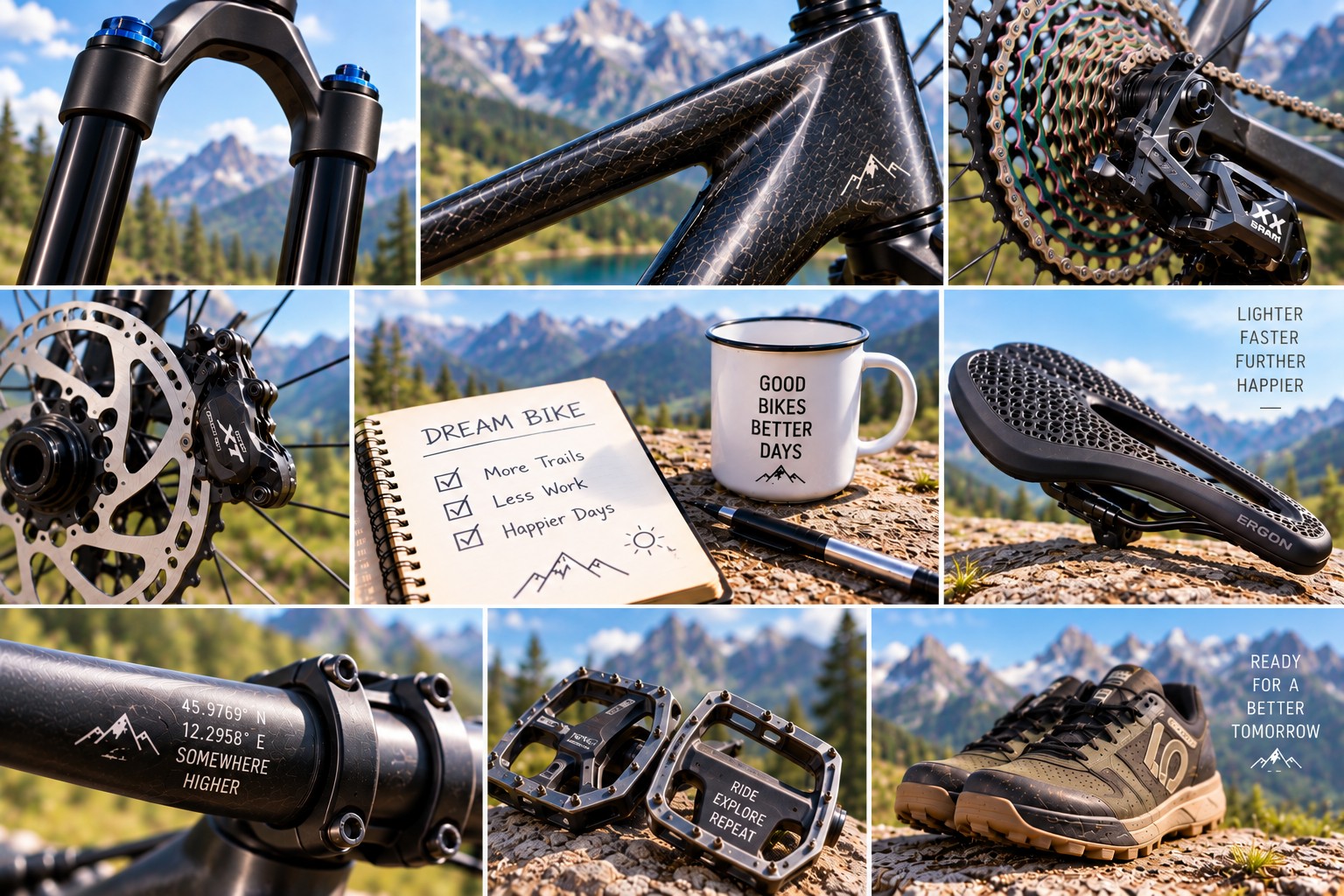
1. The super enthusiast
He's always been there. He's the guy who's made cycling his life's work and who, to have the object of his dreams, is willing to save money, give up everything else, study every component, and know the weight of a crank with a precision normally reserved for blood tests.
Once upon a time, at a certain point in his life, he splurged and bought the top-of-the-line model. He might not have been rich, but that bike was his dream, and he decided it was worth making some sacrifices to make it come true.
Today, with the price tags some bicycles have reached, this category is slowly at risk of becoming a protected species. Because there's a big difference between indulging in something crazy and having to compromise the family budget.
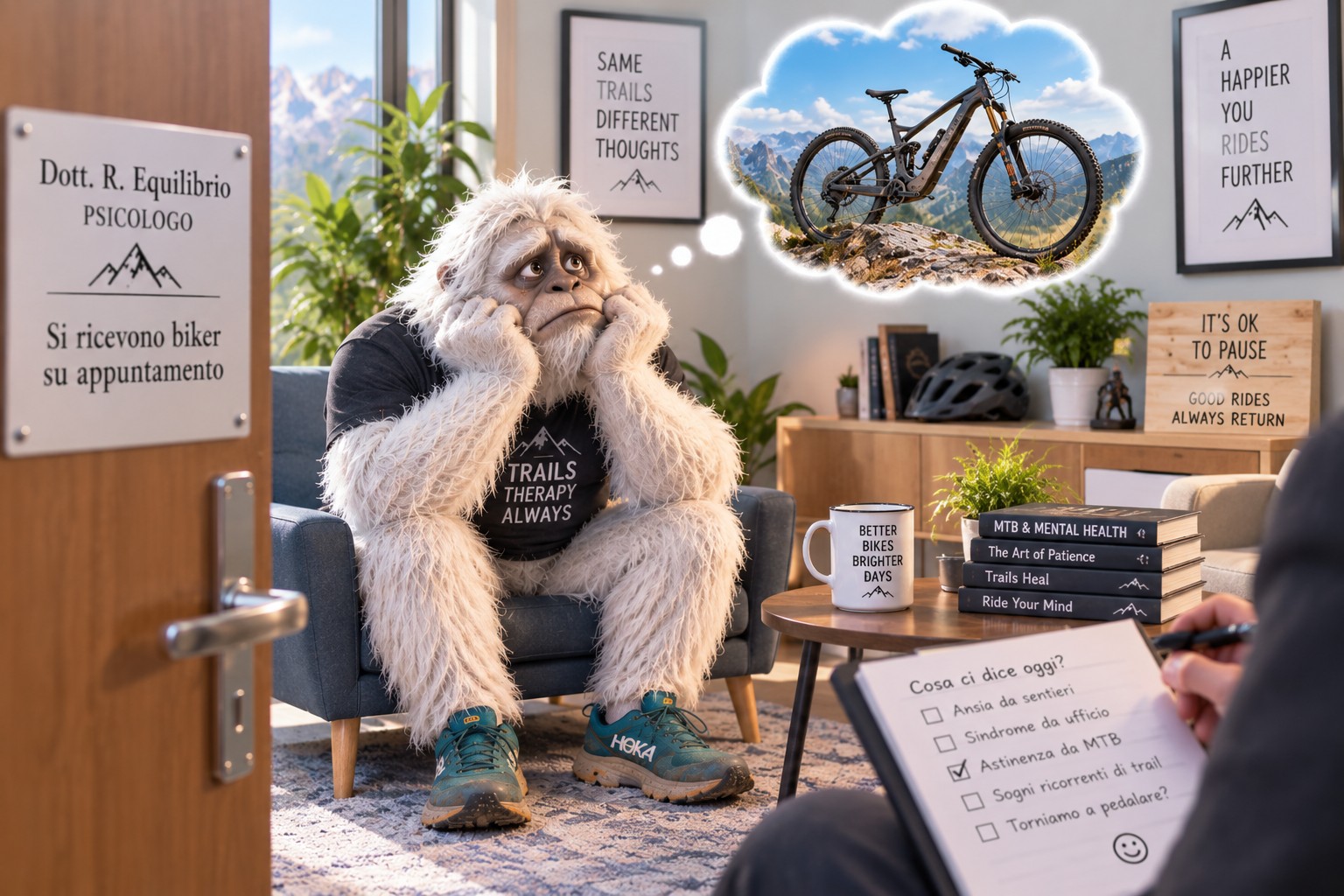
And so, to overcome the frustration of no longer being able to afford the bike of their dreams, the super enthusiast risks having to generously finance a psychologist. With the added problem that, once the sessions are paid for, they won't even have the money left for electronic gear shifting.
2. The young man with a high-spending family
The second category is that of the child who comes from a family with a good financial position. Parents, to support their child's passion, are often willing to make significant sacrifices, and the reasoning, all things considered, is understandable: it's better to spend €6.000 on a bike and know your child will spend his weekends on the trails than to have him wandering around with no idea what to do with his time.
However, it's a limited-time category, as it lasts until the boy is young enough to depend financially on his family. After that, there are essentially two options: he can become a high-spending individual himself, or he can join the super-enthusiast in the aforementioned psychologist's office.
Who, in the meantime, thanks to this new flow of customers, could have bought himself a new bike.
3. The rich family member
Then we have the one who starts a few slots ahead in the Monopoly of life. He inherited houses, funds, apartments, or assets from grandparents, uncles, or parents that allow him to live well. He may even have a perfectly normal job, but he doesn't have some of the economic pressures we'll discuss later.
Good for him. On paper, he might be the perfect client, although there are at least two subcategories here too.
The first is that of the wealthy family member who truly has an unbridled passion for cycling. In that case, we hit the jackpot: he pedals, buys a bike, swaps it, tests components, and powers the entire system.
The second is that of the serial enthusiast. Today, for him, only two wheels exist: he buys bikes, protective gear, bike racks, clothing, and probably even a van to transport everything. In two years, he'll discover kitesurfing, then paragliding, then trials, then motorcycles, and maybe, after another couple of years, sailing.
At that point, the €12.000 bike remains hanging in the garage next to the kiteboard, under the paraglider, and behind the enduro bike. A customer who's certainly interesting in terms of revenue, but not always entirely loyal to the cause.
4. The real target: managers, professionals and entrepreneurs
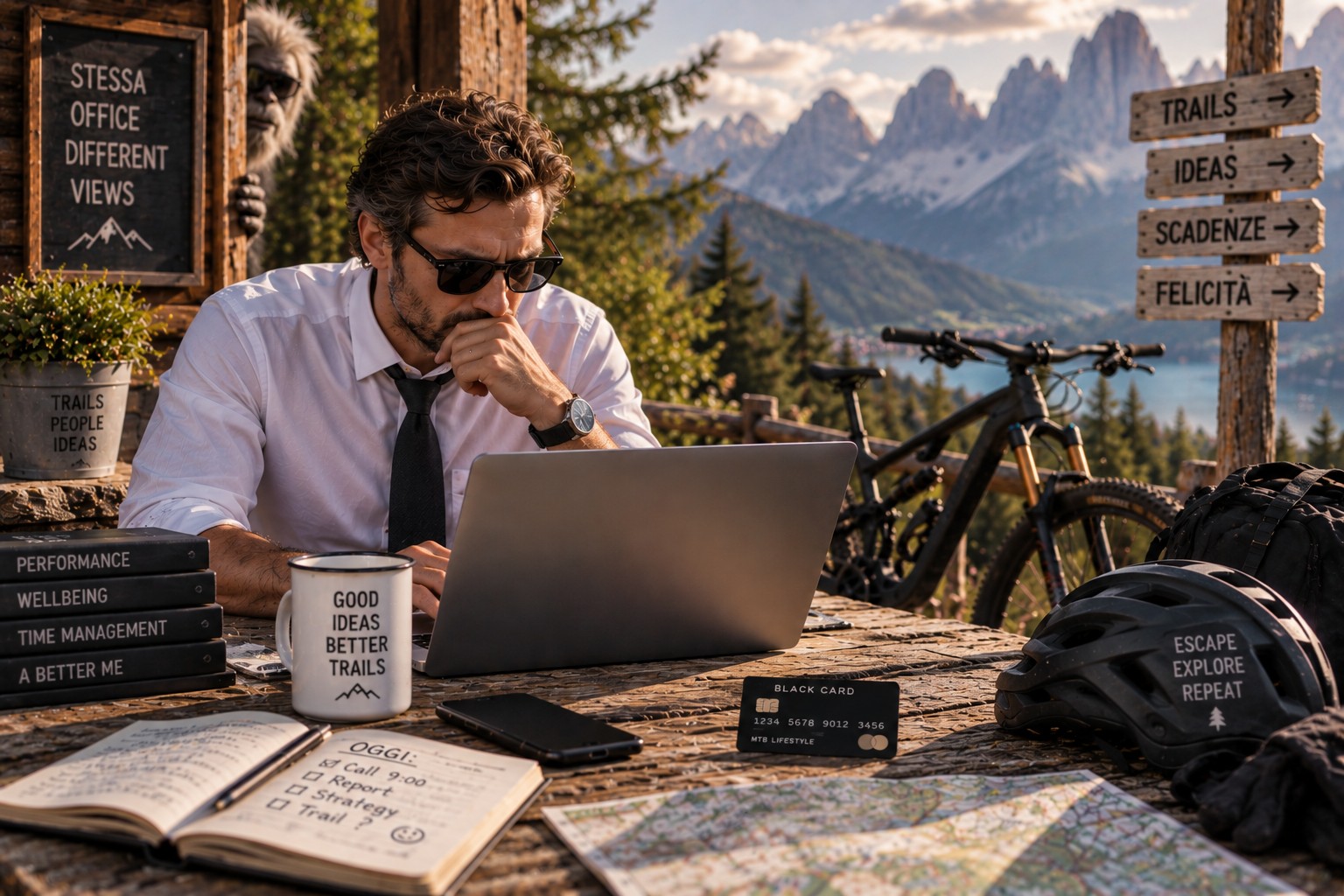
This brings us to the most interesting category, and probably the one that has become the true target of many premium campaigns in recent years: managers, CEOs, established lawyers, dentists, doctors, and business leaders.
And of course the psychologist who has to treat all the bikers who are frustrated because they can no longer afford the top of the range.
Jokes aside, this is a category I've gotten to know quite well in recent years. I've collaborated with several Milanese companies, handling wellness issues, helping managers and professionals manage their time and, above all, find some time to dedicate to exercise.
We are talking about an audience of approximately 200 GuestsIn many cases, they're still young, with honors degrees, excellent careers, significant salaries, and a strong motivation to stay fit. In short, on paper, they seem like the perfect customer for a premium bike.
But when you look at what they actually do, the picture changes considerably. One does long-distance running with some regularity, one does triathlon, one does enduro, a couple manage to ride their bikes on Saturdays. The others mainly do the gym and run, a few swim.
The most frequent cyclists? Four work at the Turin office, where the hilly landscape makes it relatively easy to incorporate cycling into their daily routine, and one lives in Bormio. Not exactly a coincidence.
And be careful, because we're talking about people who also have a fair amount of flexibility in their work schedules. Anyone can work remotely, some even significantly. I have people who spend part of the summer working at the beach, and one who works from a cabin in the winter so she can put on her skis as soon as she gets off her computer.
So they're not necessarily physically chained to a desk. Yet the bike still struggles to find space.
The problem isn't money. It's time.
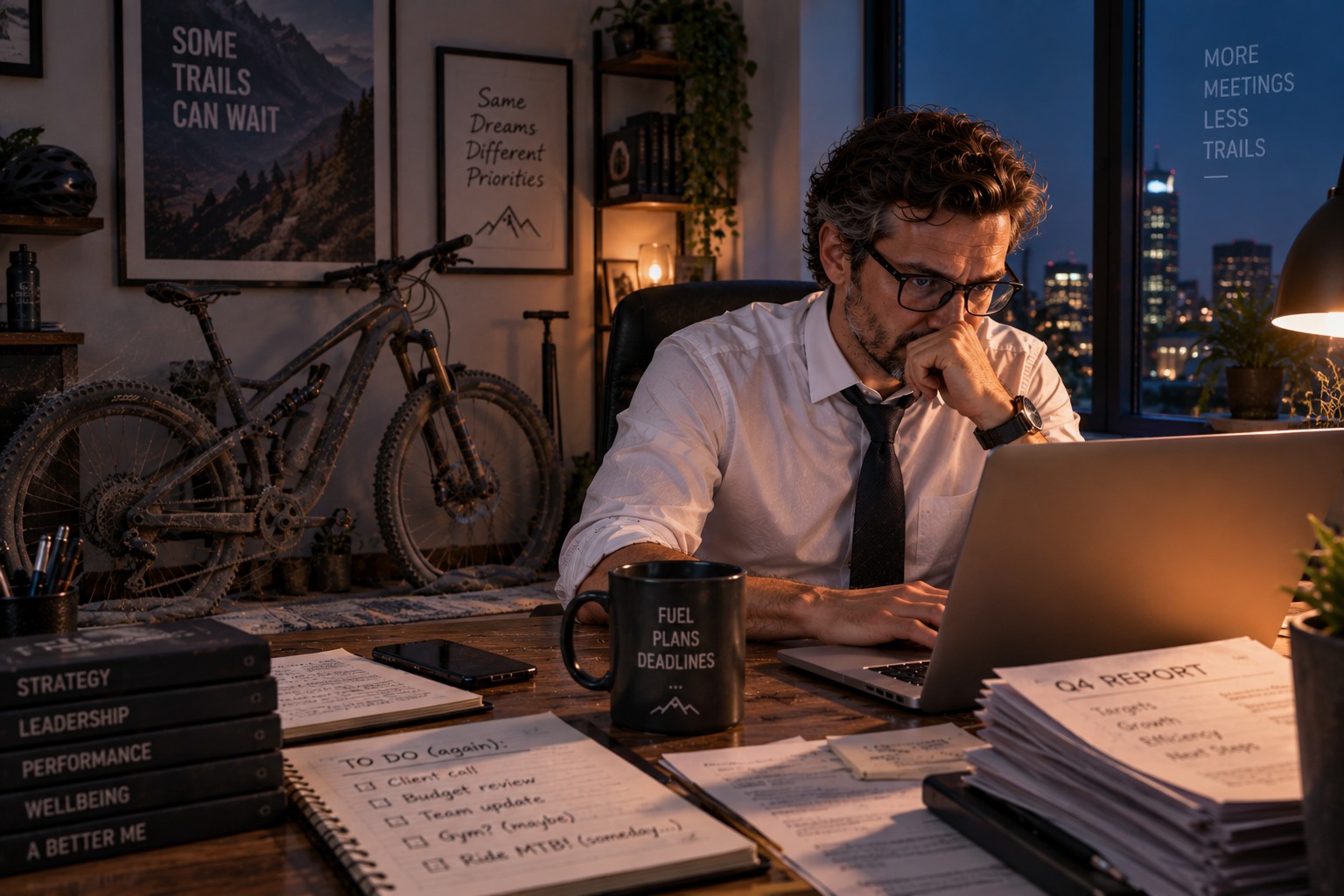
Here, in my opinion, we come to the crux of the matter. Why don't these high-spenders ride bikes, or at least, they do so much less often than one might expect?
Very simply because they don't have time, especially those that gravitate towards large cities and Milan in particular.
The typical day of many managers I've met goes something like this: wake up at six, maybe a thirty-minute run two mornings a week—the most organized manage to do it three times—and then work. Ten, eleven, often twelve hours. They return home or, if they're working remotely, they close their computer, eat, and sometimes open it again to finish whatever's left over.
On Saturdays, some people manage to run for an hour. Those preparing for a half marathon or a marathon can fit in a more structured long run at certain times.
And this is where a fundamental difference emerges: to run, you need a pair of shoes, shorts, and a door to open. In thirty seconds, you're out.
Mountain biking is a different matter. You have to have your bike ready, often load it into the car, get to the trails, pedal enough to make the ride worthwhile, come back, wash up, and maybe even wash it too. If you live in downtown Milan, unfortunately, the singletrack doesn't start right outside your front door.
The bike is wonderful, but takes timeAnd time is precisely what people with greater economic availability often lack.
The 30.000 euro motorbike yes, the MTB no
This leads to seemingly paradoxical situations. The same manager could easily buy a €30.000 motorcycle, perhaps a maxi-enduro with grand tour luggage and enough accessories to cross Africa, and then use it primarily for commuting to work.
But it works, because the bike fits into his day. It solves a problem, he likes it, maybe even gives him status and doesn't require him to find three free hours he doesn't have.
A €10.000 mountain bike or e-bike, on the other hand, needs space that often simply doesn't exist. Some people buy one, only to discover they can only use it during those two weeks a year they spend in their mountain home.
And that's where another problem arises. If you haven't seriously ridden a mountain bike for eleven months, when you finally get to the mountains, it doesn't necessarily mean you'll be eager to hit the trails. Because a fall doesn't just mean getting hurt: for a professional with significant responsibilities, it can mean losing their job, and suddenly that risk takes on a whole new dimension.
Meanwhile the others have not stopped working hard
At this point, however, there is another part of the story that I think the bike industry should look at very carefully.
Because while we're chasing the customer with huge spending power and very little time, what are those who perhaps have more time, love sports, the woods, the mountains, and hard work, doing, but don't have 8, 10, or 12.000 euros to put toward a bicycle?
Some of them are going elsewhere.
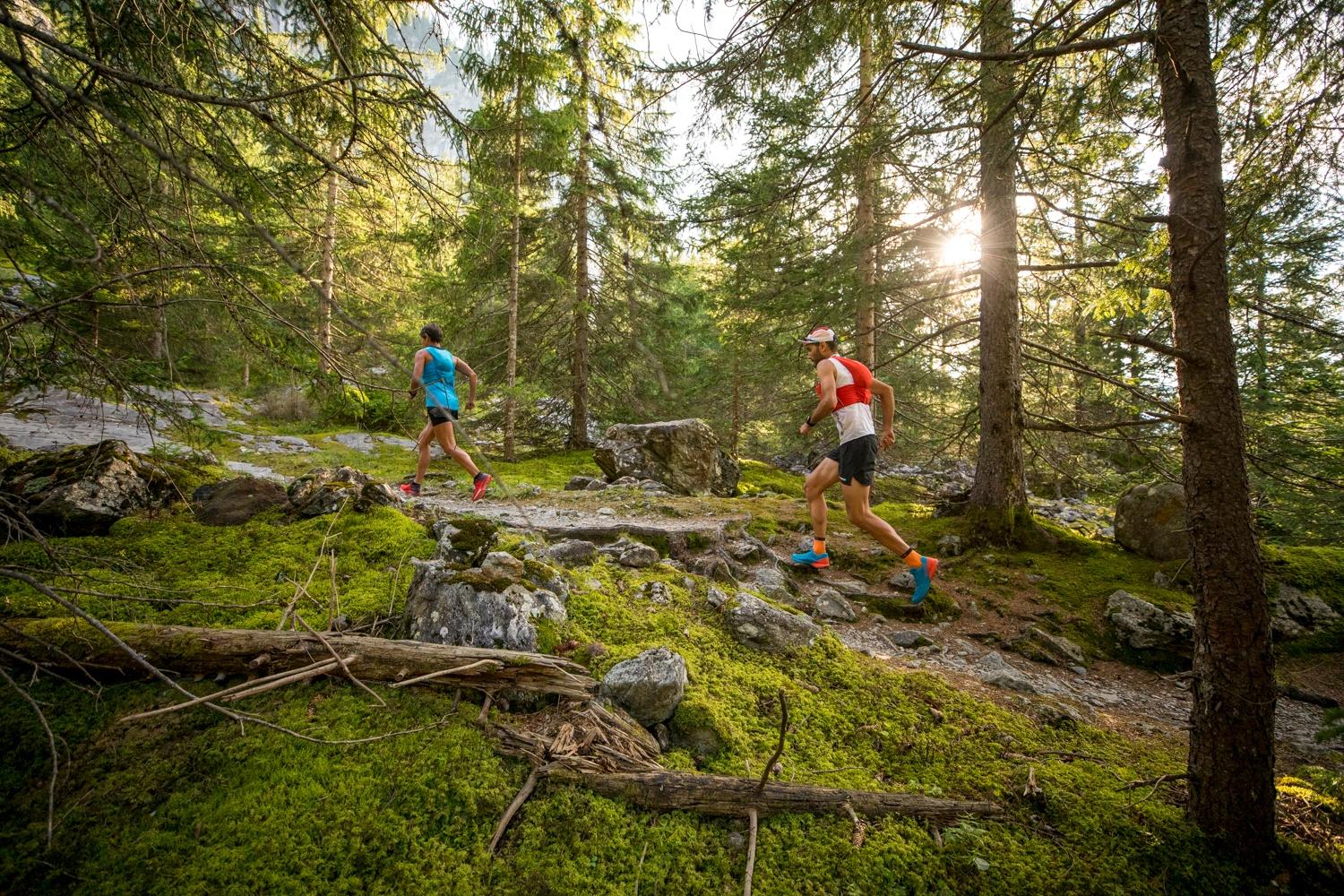
And one of the most obvious examples is the trail running.
In recent years, it's often been said, more or less seriously, that people no longer want to work hard. The arrival and success of e-bikes have sometimes been interpreted this way: hard work is an endangered species, much like the panda, and we poor, die-hard sweat-lovers are destined to be observed behind a fence by the WWF.
It's a shame that then you go to the mountains and you find more and more people running uphill.
And it doesn't exactly strike me as an activity designed for those who want to avoid hard work.
The desire to sweat, train, be in nature, challenge yourself, and reach the top with your tongue in the dirt is still there. What has changed, if anything, is the cost of access.
To start trail running seriously, you need good shoes, some clothing, maybe a backpack, poles, and some accessories. Of course, you can spend money on these too, because we enthusiasts are extraordinarily good at turning any sport into an opportunity to buy gear, but we're still on a completely different scale than mountain biking.
And above all, trail riding has another fundamental characteristic: it's simple. Put on your shoes, go out and run. If you have an hour, do an hour. If you have two, do two. You don't have to worry about maintaining your fork, brake pads, drivetrain, tires, or seatpost that decided to stop working on Saturday morning.
So a portion of that audience that twenty years ago might have naturally approached mountain biking can now look at the entrance fee, check their bank account and take another path.
Literally.
Or rather, a path.
It's not the passion that has disappeared, it's where the wallet takes it that has changed.
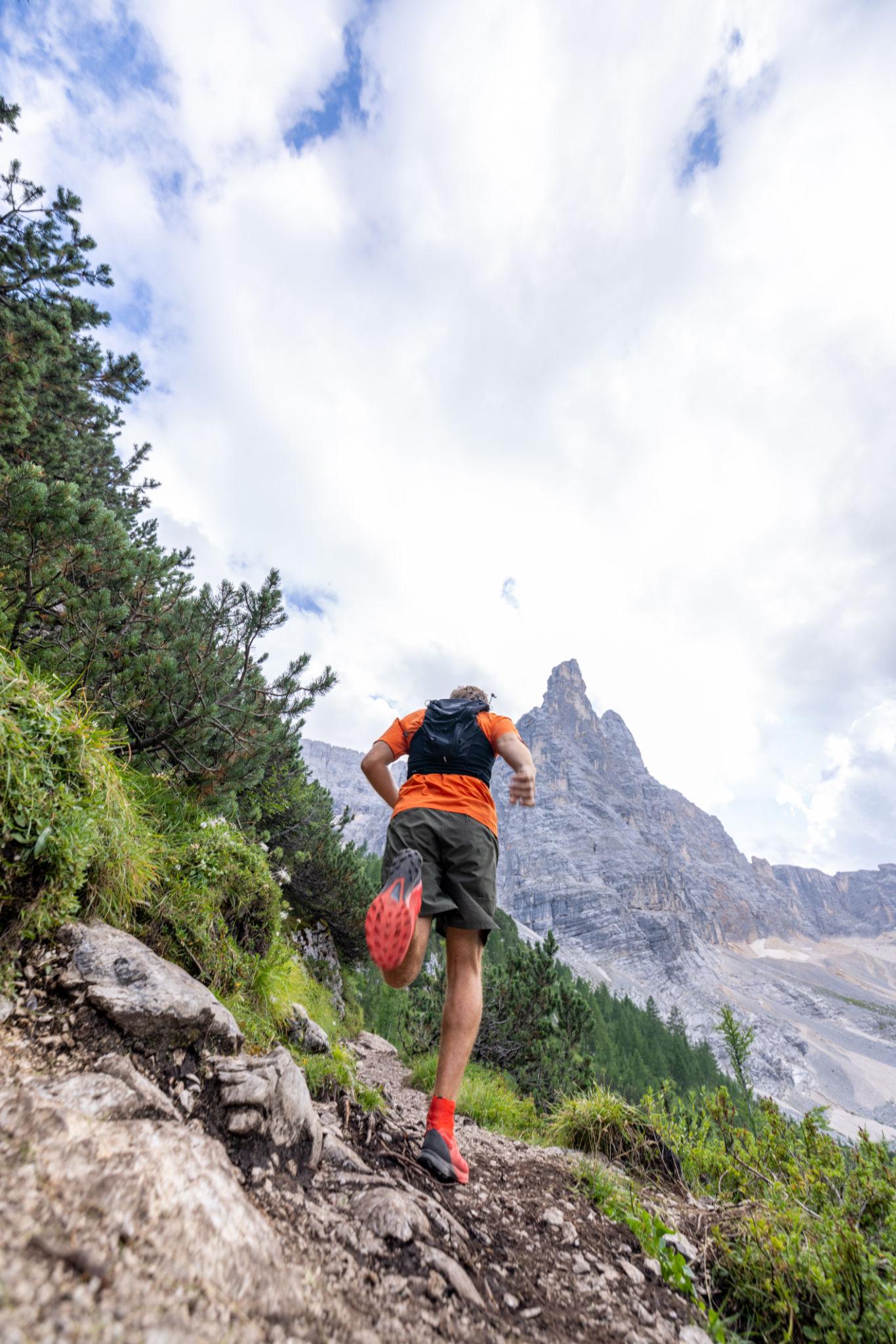
This is a fundamental point for me, because it completely changes the way we look at the problem.
If people had simply lost interest in outdoor sports, mountains, and hard work, the bike industry would have little to reproach itself for. It would be a social change we must reckon with.
But if those same people continue to wake up early on Sunday mornings, go to the mountains, climb 1.500 meters of altitude, participate in races, buy equipment, discuss shoes, poles and travel times and create communities, then it means that the demand for hard work and outdoor still exists.
Only it doesn't necessarily end up on two wheels anymore.
And perhaps, rather than simply following their passion, at a certain point people go where their wallet takes them.
This should be of great interest to the cycling world, because we're talking about exactly the audience that has historically helped it grow: ordinary people, passionate about sports, with a bit of free time, willing to spend on what they love but within limits compatible with a normal income.
If that audience finds the financial barrier too high, it doesn't necessarily mean they'll stop playing sports. They'll simply choose a different sport.
And once he's found new friends, new races, new goals, and a new community, bringing him back isn't so easy.
Are we sure that high spenders are the right target?
This is where, in my opinion, the bike industry should start asking itself some questions. I'm not saying the premium market shouldn't exist, far from it. The extraordinary bikes, the technology, the advanced materials, the sophisticated components, and even the ridiculously expensive items are part of the allure of this world.
The problem arises when the exception becomes the center of the market.
Because a potential customer with €12.000 or €15.000 might have the money to buy that bike, but they don't necessarily have the time to use it. Conversely, those who have the time, desire, and ability to ride three times a week risk losing their financial access to a bike they consider desirable.
And if the latter, instead of going into debt to buy a mountain bike, buys €150 worth of shoes and starts riding the trails, the problem isn't just that we've lost the sale of a bike. We could have lost a cyclist.
In the long run, that makes a huge difference.
When the base was wider
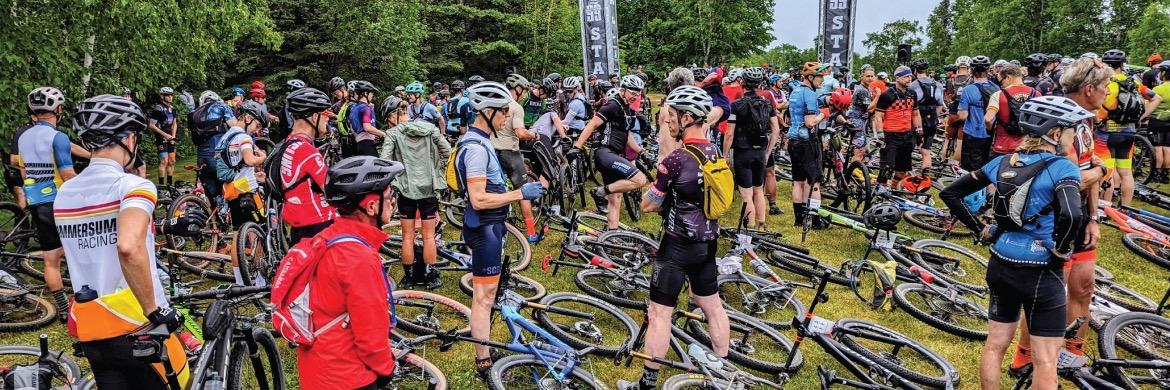
When I first started cycling, you'd meet all sorts of people on the trails: office workers, shift workers, postmen, government employees, students. Of course, there were also entrepreneurs, professionals, and what we'd call "high spenders" today, only no one called them that. They were simply the ones with the nicest bikes.
The fundamental difference is that the base was much widerThere were lots of people cycling, and many people had mid-range bikes. Those people went out, raced, organized rides, talked about cycling, got their friends involved, and, probably without realizing it, created communities.
And most importantly, they made the system work. They'd go to the cyclist, change tires, break something, buy a fork, test an exotic component, and debate for weeks about the usefulness of an extra 20 millimeters of travel.
Then, every now and then, someone would do something crazy. They'd save up and buy the premium bike. It was a reward, a gratification, the object they'd wanted for years.
But underneath that dream bike there was an entire pyramid of people pedaling.
And it is that pyramid that we risk narrowing today.
First come the cyclists, then the customers
Perhaps this is the point that is really worth reflecting on. The bike industry doesn't just need people who can afford a bicycle. It needs people who can afford to be cyclists.
And they are two very different things.
A healthy sector needs the young person, the employee, the shift worker, the professional, the laborer, the student, and the entrepreneur. It needs those who can ride once a week and those who do it four times a week. It needs those who buy a dream bike, but also those who walk into a shop with a normal salary and need to be able to find something that makes them dream without simultaneously asking for a quote for the sale of an organ.
Because if I have to sell a kidney to buy a bike and then work twelve hours a day to pay for the one I have left, when will I use it? And most importantly, who will I build community with?
As the base expands, the number of people cycling, the number of rides, races, events, groups of friends, shops operating, and the bike culture grow. And within a large base, there will always be someone who, sooner or later, will decide to spend a completely unreasonable amount on a bike.
It's always happened and it's beautiful that it happens.
But first we need to get him to become a cyclist.
Otherwise we'll continue to wonder where all those who loved being in the woods, working hard, and coming home exhausted on Sunday afternoons have gone.
The answer could be very simple.
I'm still in the woods.
Only now they have trail shoes on their feet.
Let's leave the mythological high spender alone
So a little appeal to the bike industry.
Perhaps it’s time to leave the “high-spending customer” where he naturally belongs: alongside the Yeti, the Loch Ness Monster, and the Minotaur.
Let's continue to produce dream bikes for those who can and want to buy them. They're beautiful, they make you dream, and they're useful too. But let's get back to thinking that... Normal people should be able to buy bicycles too, especially those who still want to use them.
Because the desire to work hard isn't dead. It hasn't been killed by e-bikes, and it hasn't ended up on the list of protected species along with the panda. It's alive and well.
Simply put, when he finds a mountain bike costing several thousand euros in front of him and a pair of trail shoes next to it, every now and then he makes a very rational decision.
If we can get some of these people back on bikes, we'll likely have a stronger industry, more cyclists, more shops, more races, more groups, and more communities. And in the end, we'll all be a little happier.
All except one.
The psychologist.
That will lose a lot of frustrated customers because they can no longer afford the top of the line.
But don't worry too much about him.
With his turnover in recent years, he has probably become a high spender.
And maybe he even bought some trail shoes in the meantime.