Autumn, the season of waiting
There's something profoundly captivating about autumn, something that transcends the colors of the woods, the leaves turning gold and red, or that soft light that seems to caress everything before giving way to winter. It's a special season, suspended between what has been and what is yet to come, a time when nature seems to slow down, almost as if seeking one last moment of contemplation before the great change.
Summer has now come to a close, and its endless days, the warmth of the rocks, and the great adventures at high altitude have become memories, some still vivid, others already shrouded in that subtle nostalgia that accompanies all the beautiful things of the past, things we know won't return, at least not in the same form. Yet it's not winter yet, even though the signs of its arrival are becoming more and more evident: the days are getting shorter, the shadows are getting longer, the air is getting crisp, and the first dustings of snow are whitening the highest peaks, almost as if to remind us that the mountains are preparing to change.
It's a moment when everything seems to come together in a more intimate dimension. The silence of the woods deepens, the colors gain intensity, and the light, ever briefer, seems more precious. We too, almost unconsciously, begin to feel the call of the warmth of a home, the protection of walls, the ancient charm of a burning fire, as if the change in nature awakens something primordial, the need to find shelter as the outside world prepares to face the long winter.
But autumn isn't just a season of nostalgia; it's above all a season of anticipation, of the promise of what's to come. And before the snow once again covers the trails, before the silence of winter takes over the ridges, the desire to get out, to climb, to seek one last horizon remains.
It is precisely in this atmosphere, suspended between melancholy and a desire for adventure, that our journey to Monte Croce takes shape.
Monte Croce: a small gateway to another world
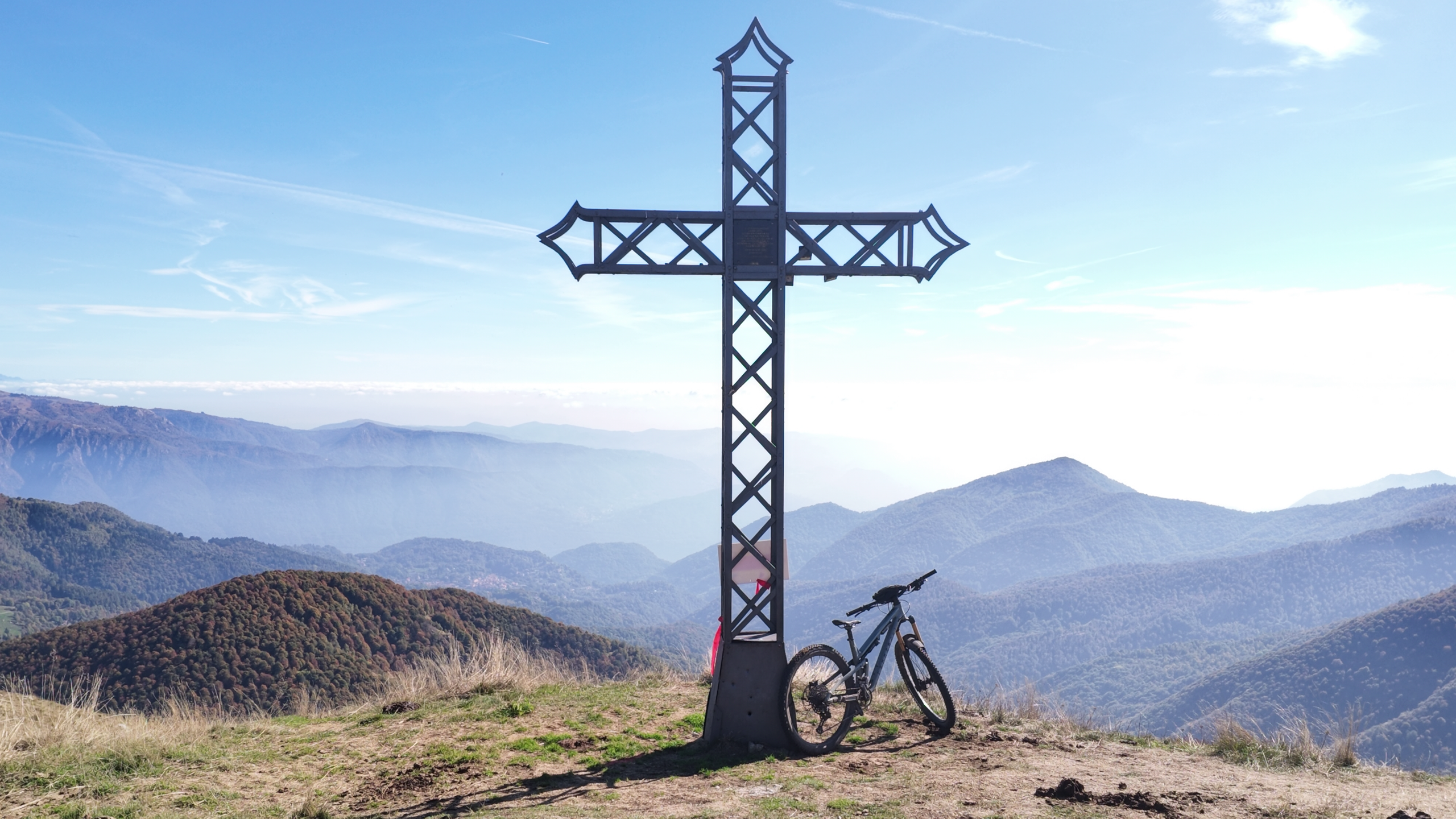
Not all adventures have to be long, extreme, or technically challenging to leave a lasting impression. Sometimes all it takes is a few hours, a seemingly modest mountain, and the desire to leave the beaten path to find yourself immersed in a completely different dimension, where your relationship with the land changes and mountain biking once again becomes, above all, a tool for exploration.
The Monte Croce tour perfectly embodies this philosophy. It's a relatively simple mountain bike tour, not particularly long, and suitable for many bikers who are already comfortable riding on natural trails. If undertaken slowly, the route can be completed in about three hours, with the actual portage concentrated in about thirty to forty minutes, and a descent that, while requiring attention and a good understanding of the terrain, doesn't feature excessively extreme sections.
But it would be a mistake to judge this experience solely by numbers, because Monte Croce is above all a small gateway to a different way of experiencing mountain biking, an opportunity to understand what it means to move away from the familiar, groomed, cleared, and built-to-ride trails, entering an environment where trails aren't created to suit our needs, but are the product of time, water, the passage of animals, and the often ancient passage of man.
Here, there are no facilities designed to make everything more comfortable, no shelters around every bend, no refreshment points waiting for us, no prepared trails to accompany our wheels. There are simply the mountains, their shapes and their rules, which we must learn to recognize and respect, accepting that it won't always be possible to pedal and that, at times, it will be necessary to stop, observe, and decide how to proceed.
The charm of Monte Croce lies precisely in its ability to allow you to savor all this in a dimension that is still accessible, where the adventure retains its authenticity without requiring the commitment of a major Alpine expedition. A sort of introduction to cycle mountaineering, a brief experience of freedom that, despite its limited duration, manages to provide sensations and views worthy of much more challenging itineraries.
From Camasca to Ranghetto: the call of the summit
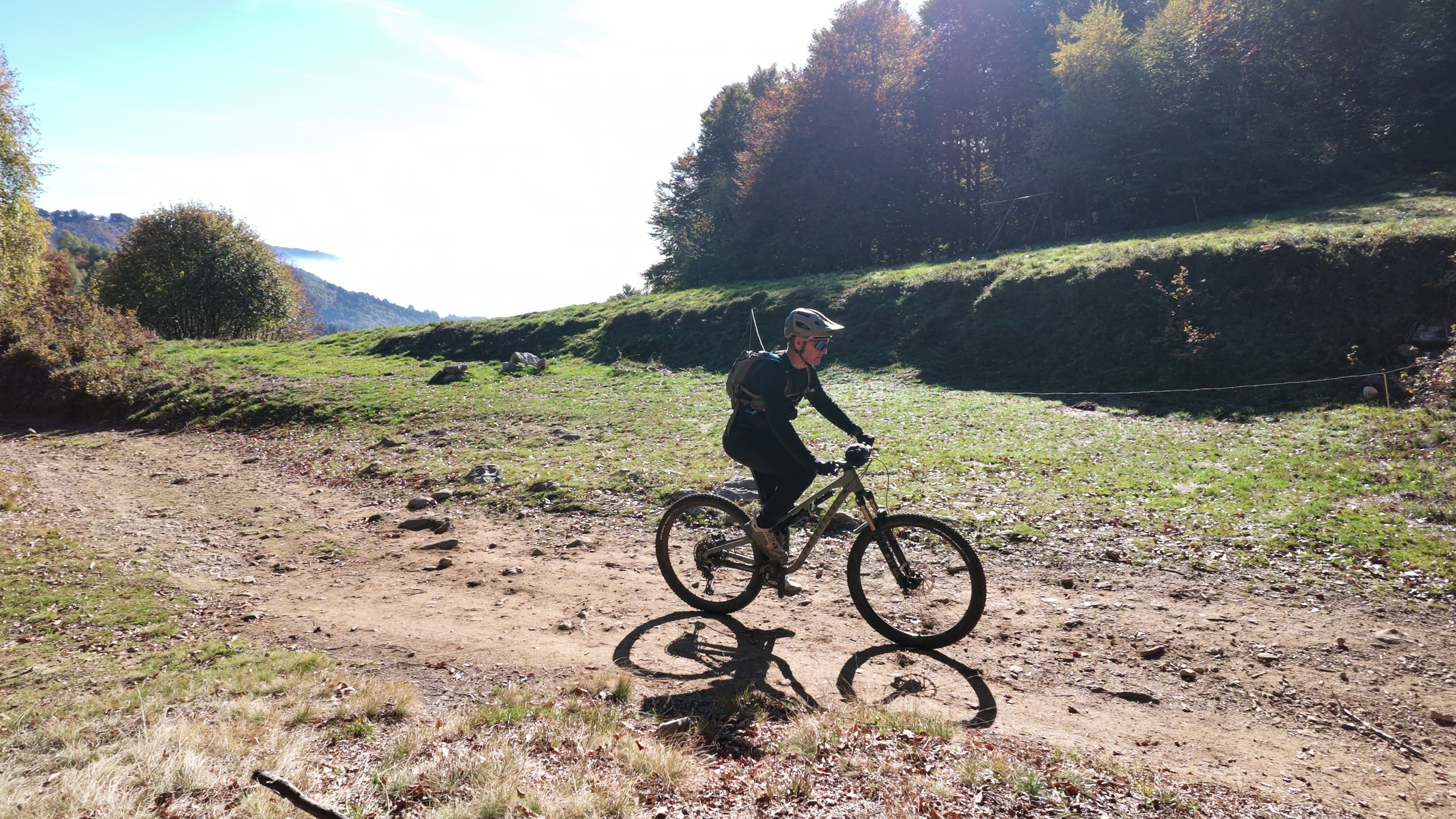
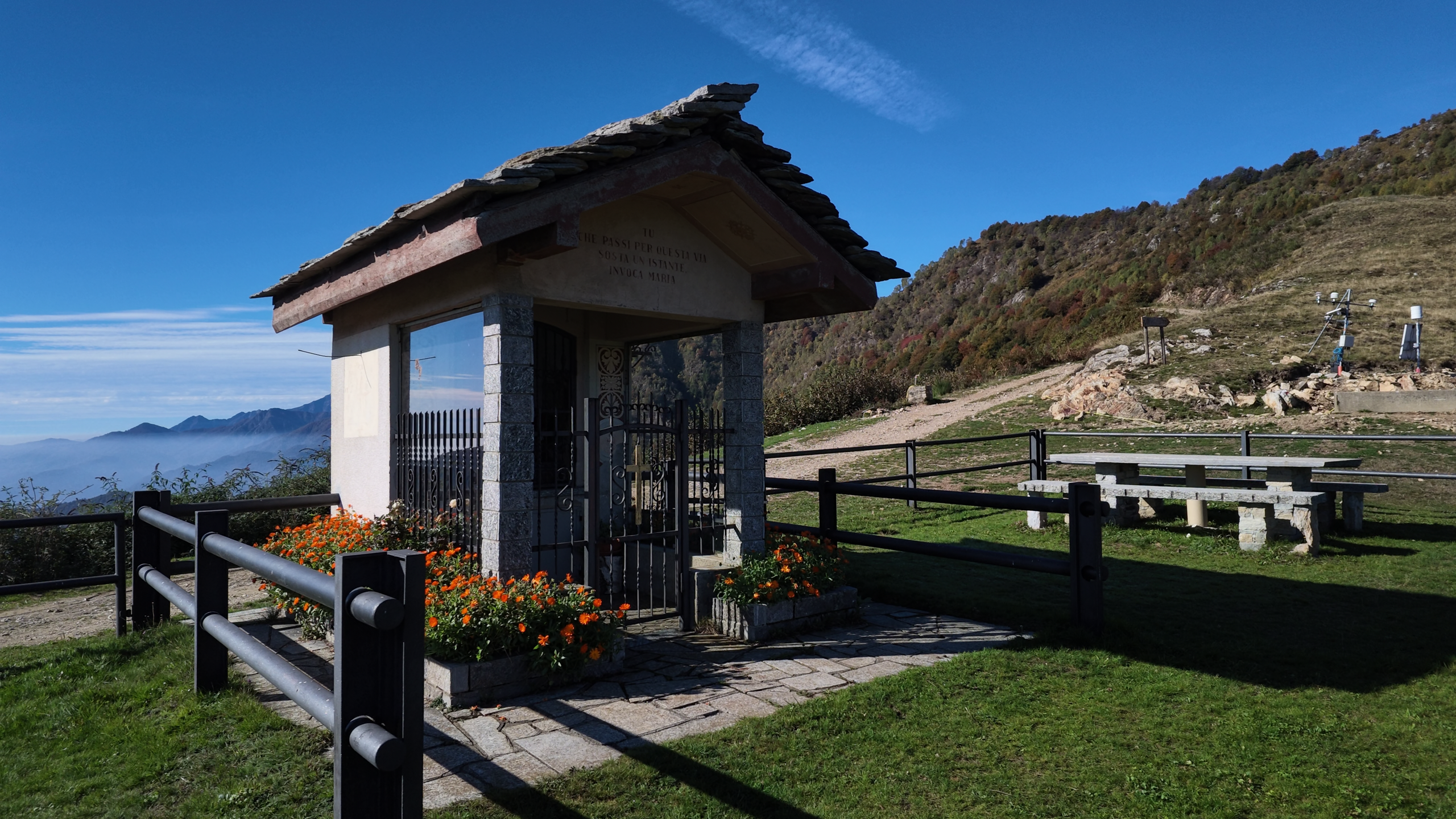
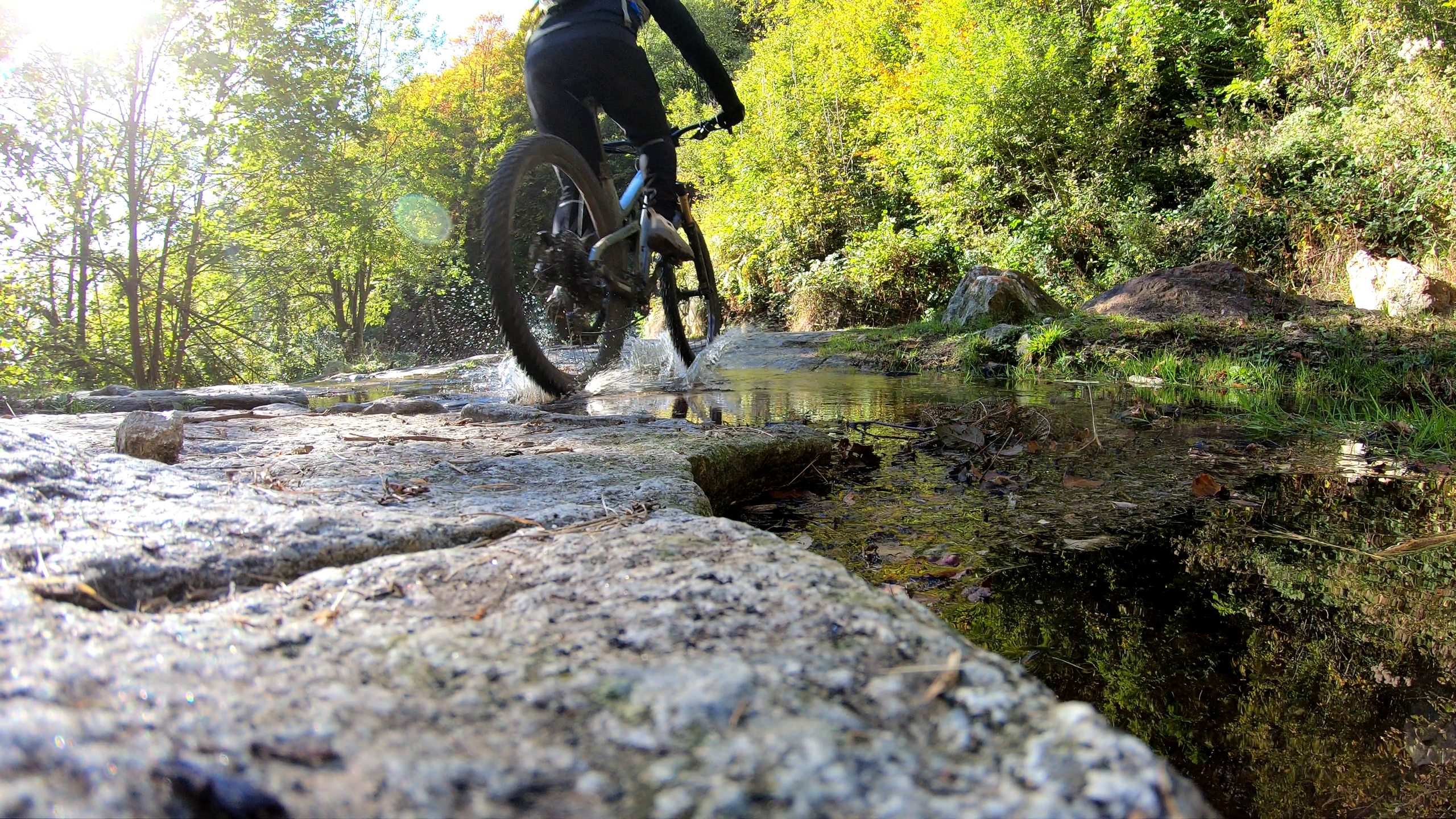
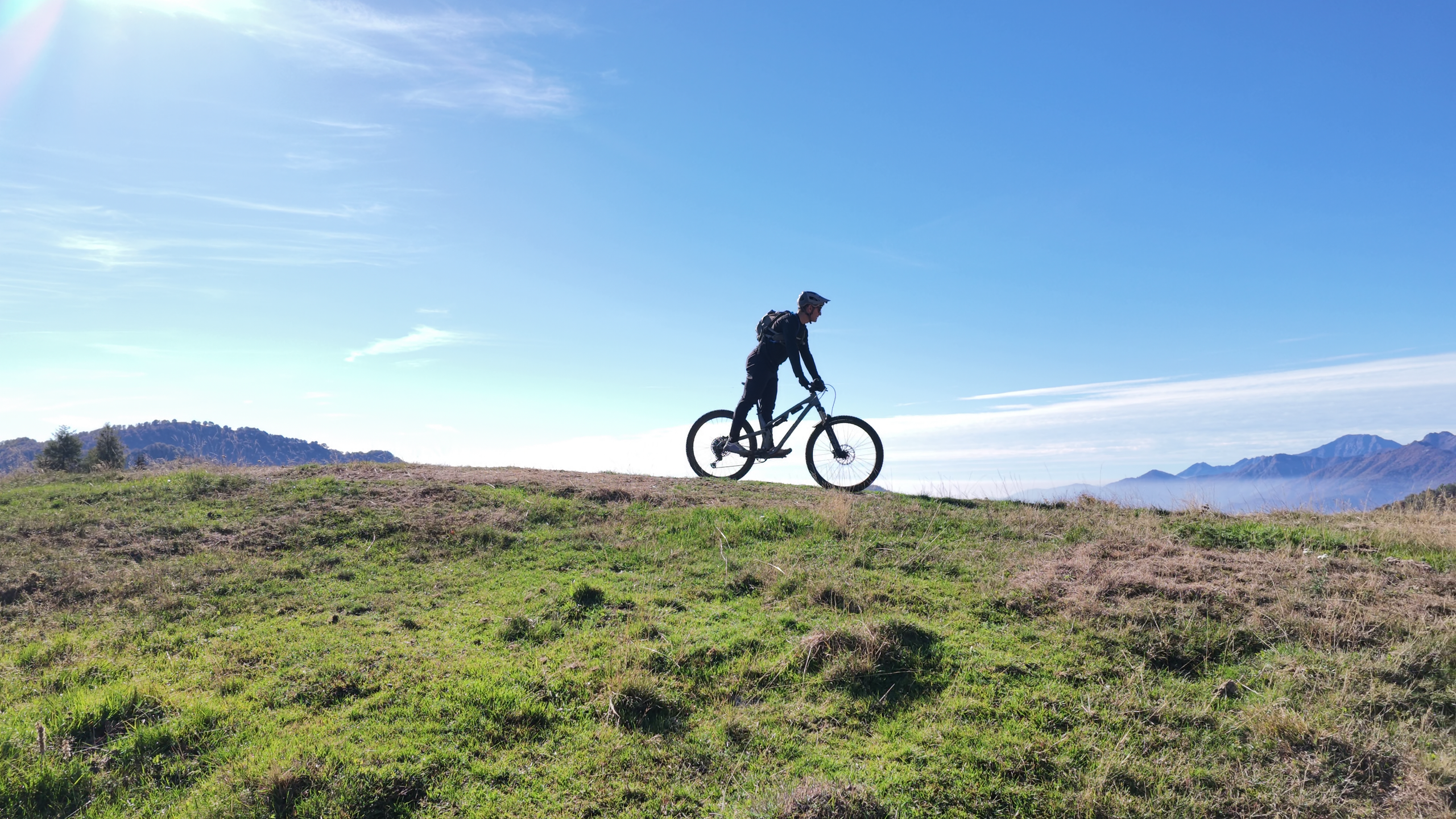
This time, the journey begins in Camasca, a mountain pasture I've visited before in other seasons, and which, precisely for this reason, welcomes me with that pleasant feeling of familiarity you get when returning to a familiar place. It's curious how the mountains manage to appear different each time, yet maintain the same reference points: the light, the scents, the colors change, the way the landscape presents itself to our eyes changes, and perhaps even our state of mind, making each return a new discovery.
From Camasca, we head towards the Ranghetto Pass, following a wide, easy dirt road that allows for easy access, with a series of ups and downs that make the approach enjoyable. The route doesn't require much effort, but it does invite us to keep our eyes peeled, as between one bend and the next, the outline of Monte Croce, our destination, begins to appear through the trees and open landscape.
The summit appears in glimpses, almost as if reminding us where we're headed without completely revealing itself, and every glimpse allows us to imagine what lies ahead, to observe the ridge we'll have to climb, and to search with our eyes for a possible line of ascent. It's one of those moments when the journey begins long before reaching the mountain, when the mind anticipates the route and curiosity grows with every pedal stroke.
The Ranghetto Pass appears as a natural respite, a broad saddle dividing two provinces and representing a crossroads of roads and trails, each capable of suggesting new exploration possibilities. It's one of those places that seem to invite a change of plans, a new direction to be intrigued, but today our goal is clear, and the path to follow is the one that heads upward.
From here, the route gradually changes, and pedaling begins to alternate with pushing, constantly adapting to the terrain. Some sections still allow you to get back on the bike, others force you to dismount, until the gradient and terrain require you to tackle the actual portage, a good half-hour during which the bike stops being just a means of moving forward and becomes a companion, accompanying you toward the summit.
It's one of the most unique aspects of cycle mountaineering, perhaps also one of the most difficult to grasp for those accustomed to thinking of the bicycle solely as something to pedal. Yet, once you enter this dimension, carrying your bike becomes an integral part of the experience, a small price to pay for reaching places that would otherwise remain beyond our reach.
The summit, seen from below, still seems distant, but in the mountains distances have a different meaning and often what appears distant is merely hidden by a fold in the terrain, a change in slope, or a ridge that still prevents you from seeing beyond.
The Crest: Where the World Becomes Essential
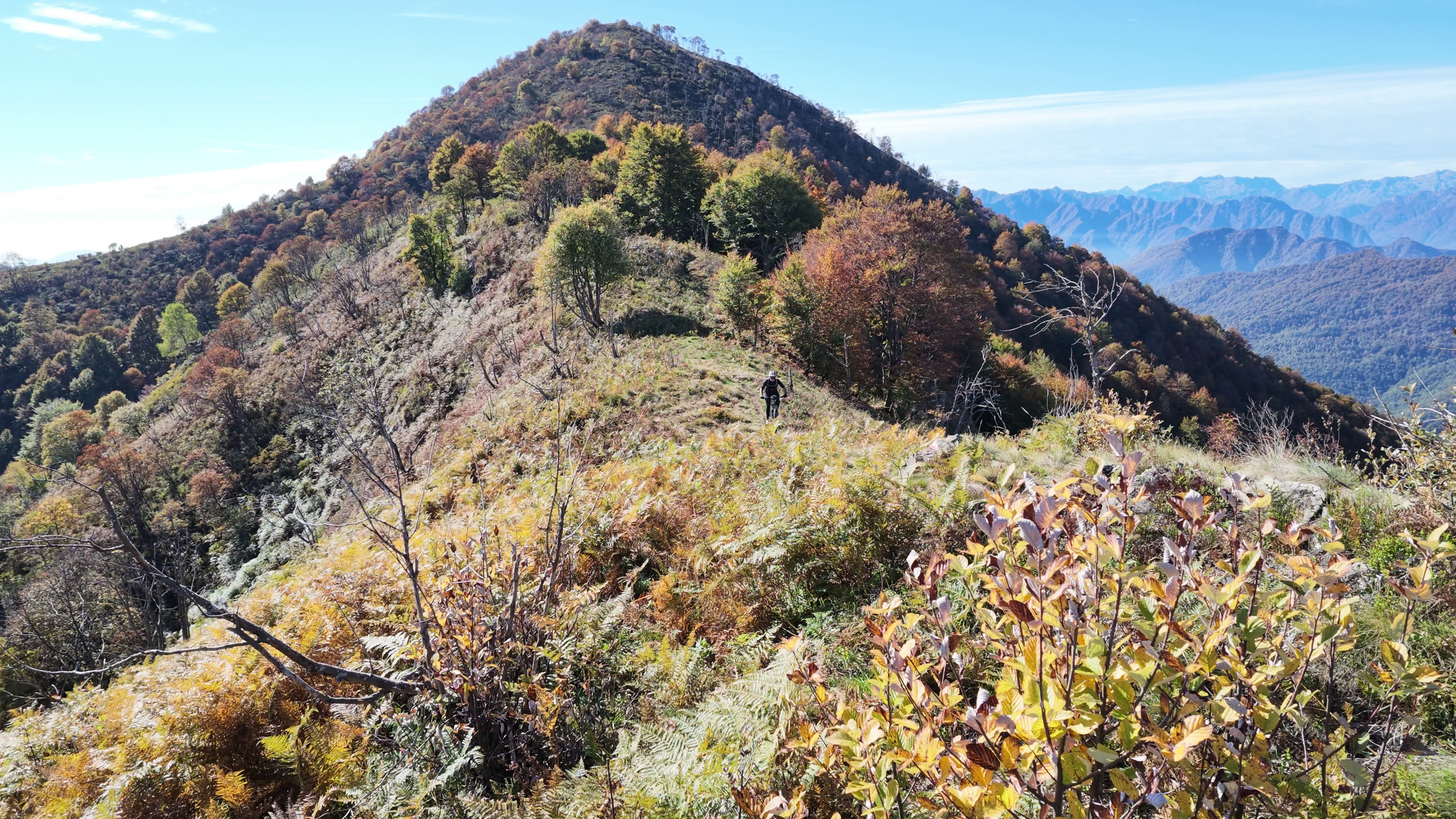
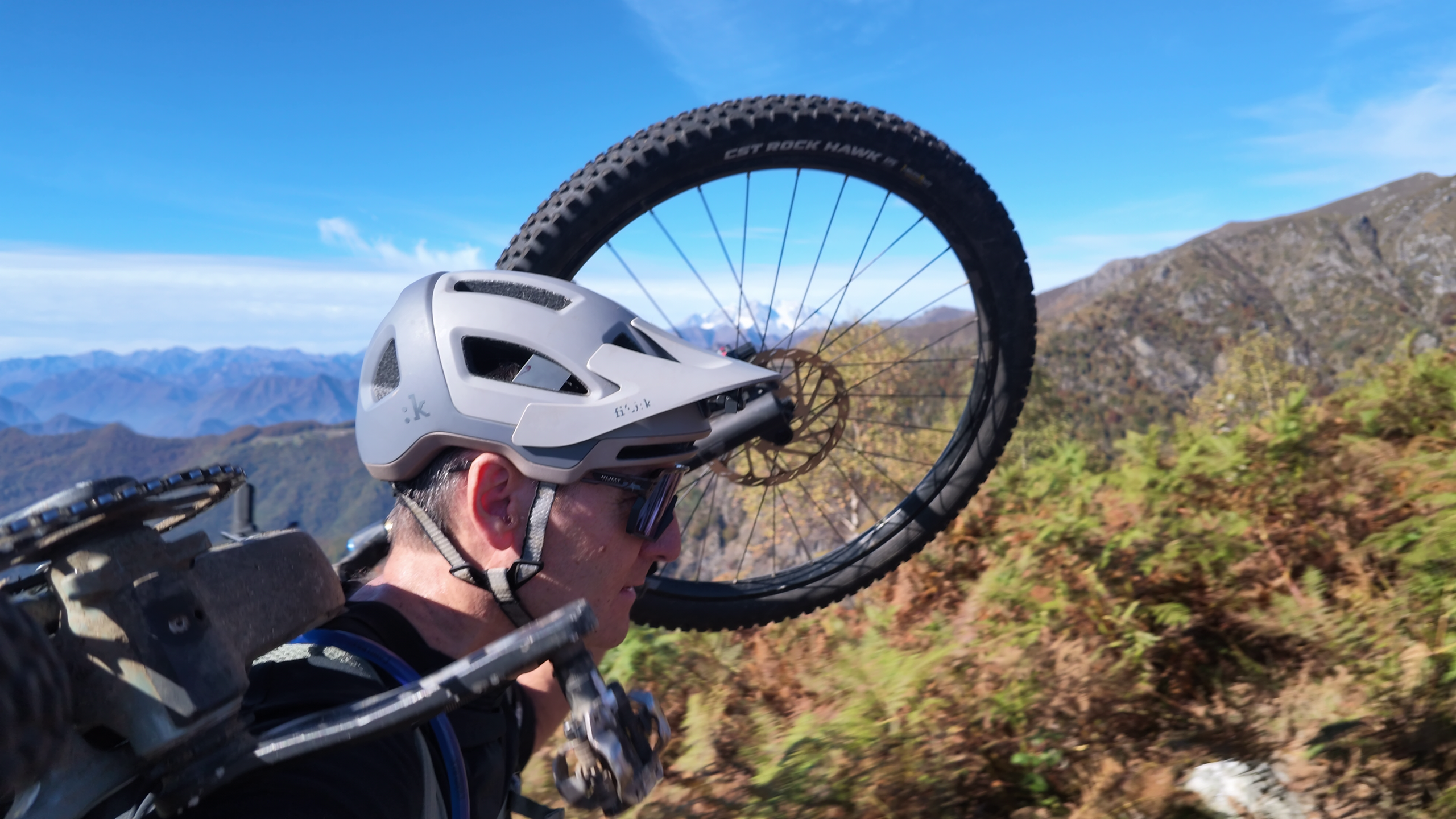
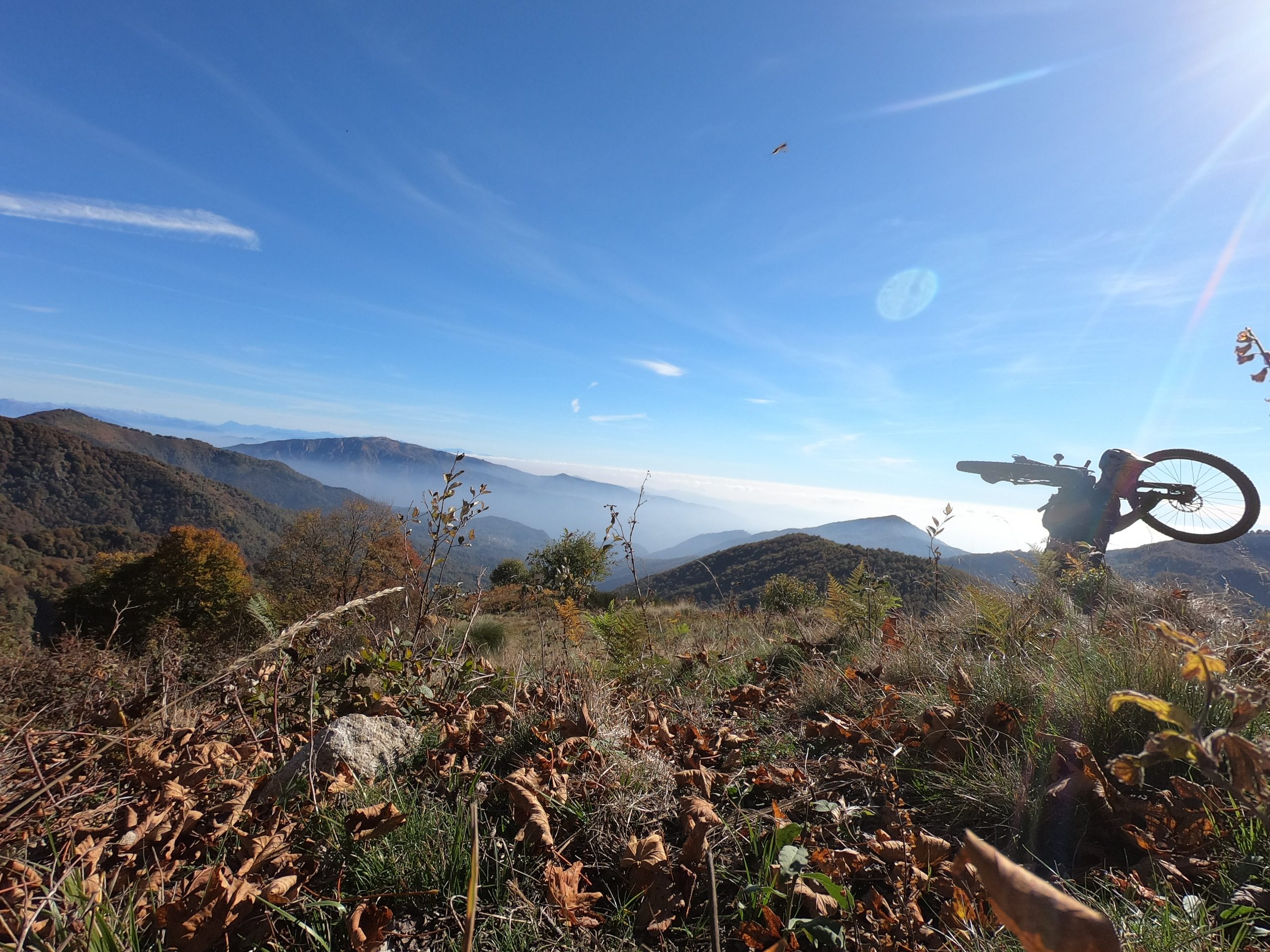
When you finally reach the crest, Monte Croce begins to reveal its most fascinating character and the landscape suddenly changes dimension, opening onto two sides that seem to tell completely different stories.
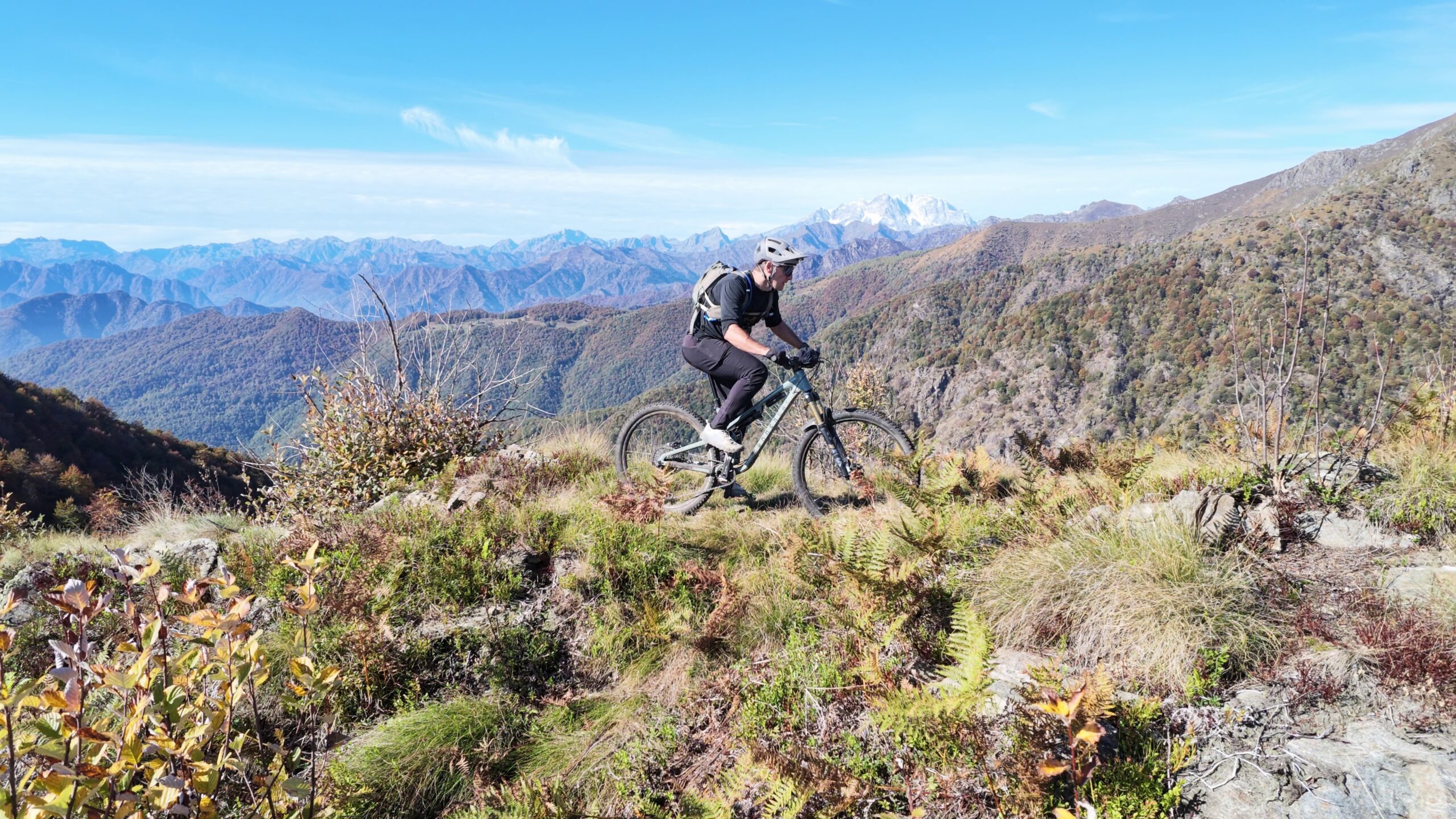
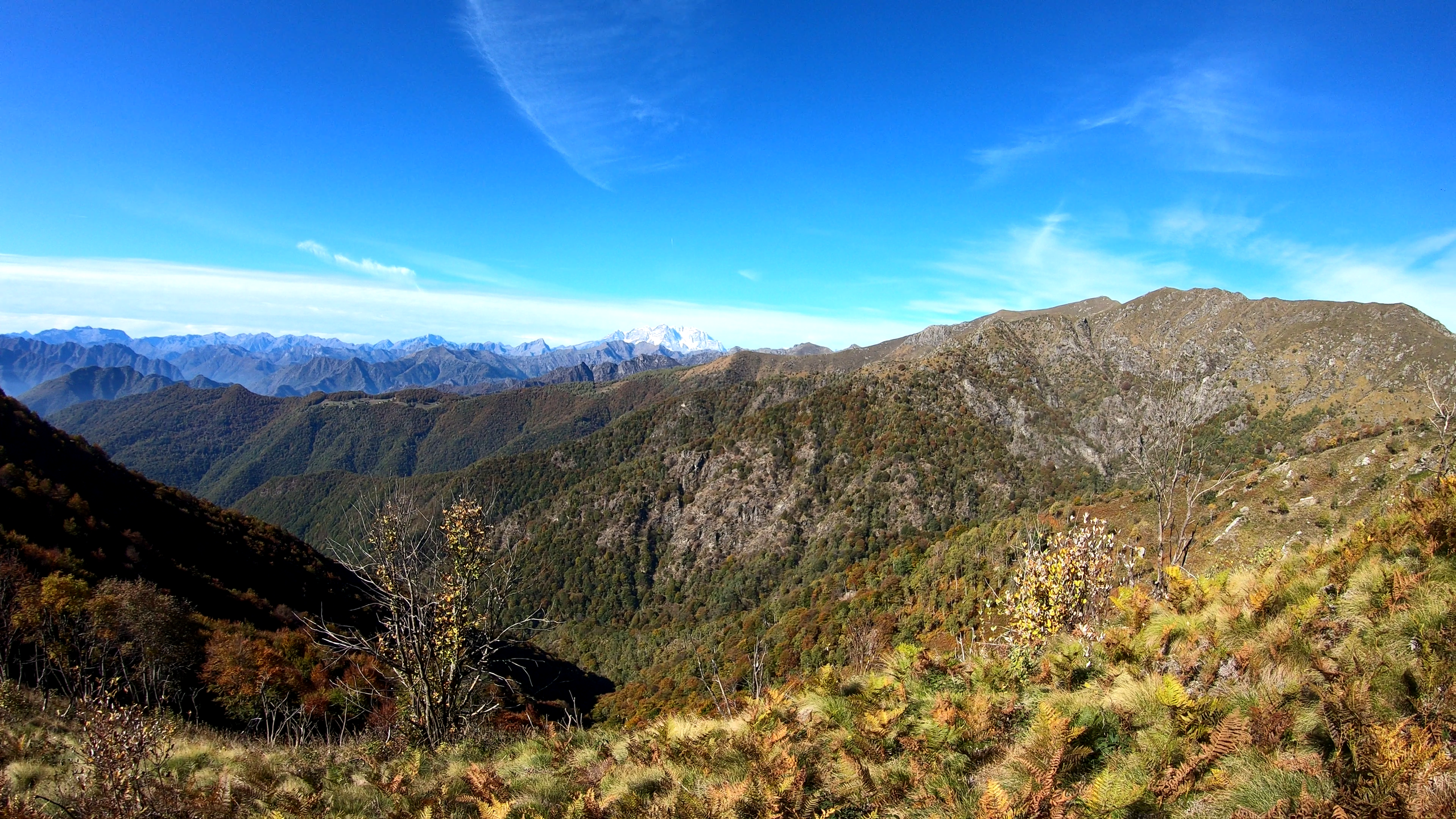
To the left, Monte Rosa watches us, immense and silent, the first snowfalls already whitening its highest peaks, casting a thin winter cloak on its walls. It almost seems to smile, with that calm that only great mountains possess, to those who have seen countless seasons pass by and know the immutable rhythm of nature. Its presence accompanies every step, reassuring and majestic, like a giant watching over our path and reminding us how small we are in the face of such dimensions.
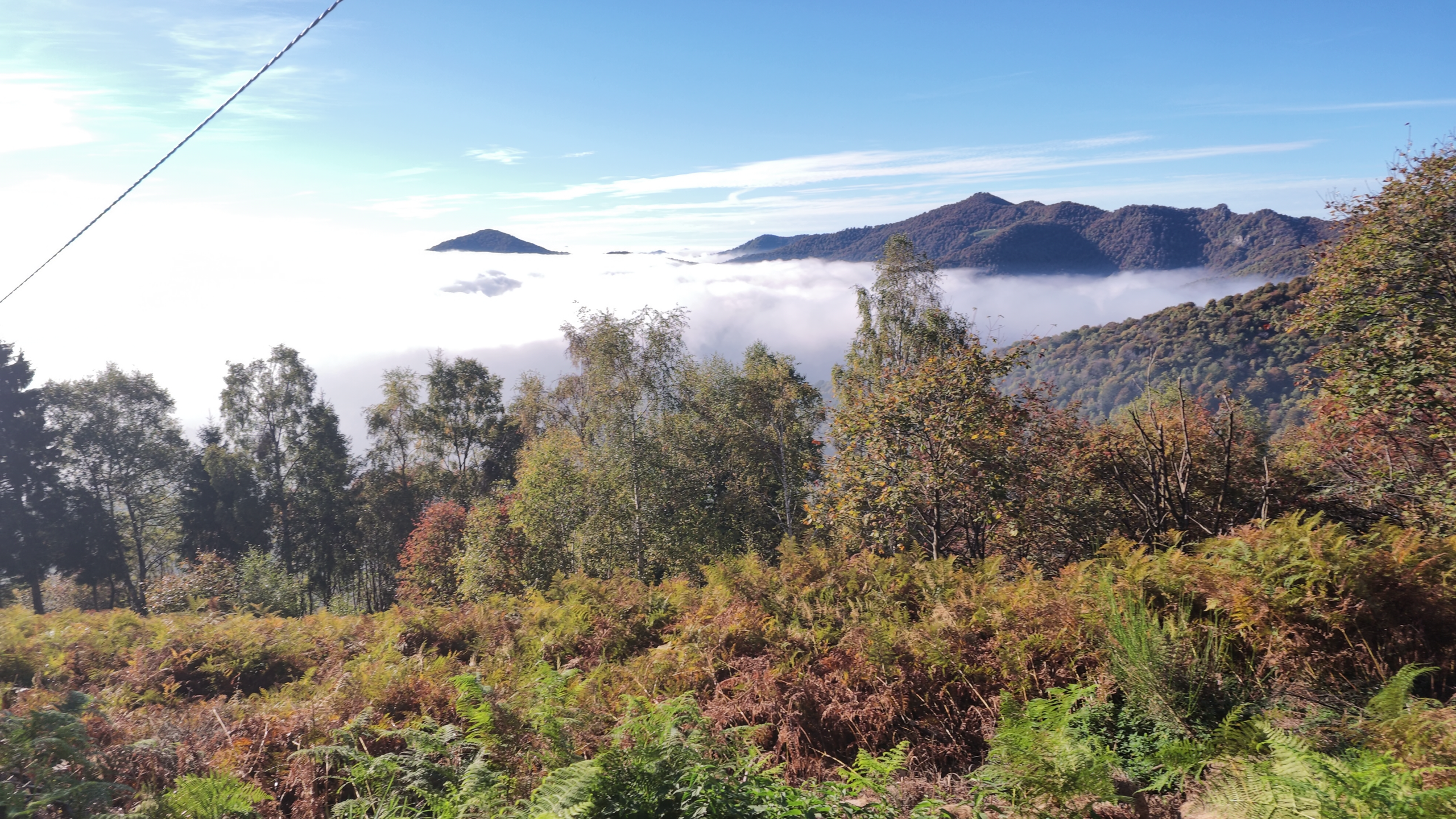
To the right, however, the landscape becomes undulating and irregular, with small peaks chasing each other, overlapping ridges, and hills that seem to slowly descend toward Lake Orta, now completely hidden by a blanket of clouds. In place of water, a white, still sea appears, filling the valleys and erasing the boundaries of the land, transforming a familiar landscape into something mysterious, almost unreal.
Ahead of us, the summit continues to elude us, allowing us to glimpse it without fully revealing it, while the ridge leads us through an increasingly bare landscape, where the presence of man seems to dissolve. There are no bivouacs, mountain pastures, or buildings to interrupt the landscape, only rocks, bushes, grass, and sky, with small red and white trail markers painted on the rocks reminding us that someone, before us, has passed through these places.
It's a unique sensation, because even though you're not actually far from civilization, for a few moments you feel like you've completely left it. The noise of the world remains below, hidden beneath the clouds, while up here everything is reduced to the wind, your breathing, the sound of your boots on the rocks, and that thin line of earth that accompanies you toward the summit.
Perhaps it's precisely this essentiality that makes certain places so fascinating, the ability to eliminate everything that normally occupies our thoughts and bring us back to a simple, almost primitive dimension, where the only important thing is to keep walking, observe our surroundings, and let ourselves be swept away by the sensations the mountains convey.
The summit: a horizon suspended between reality and legend
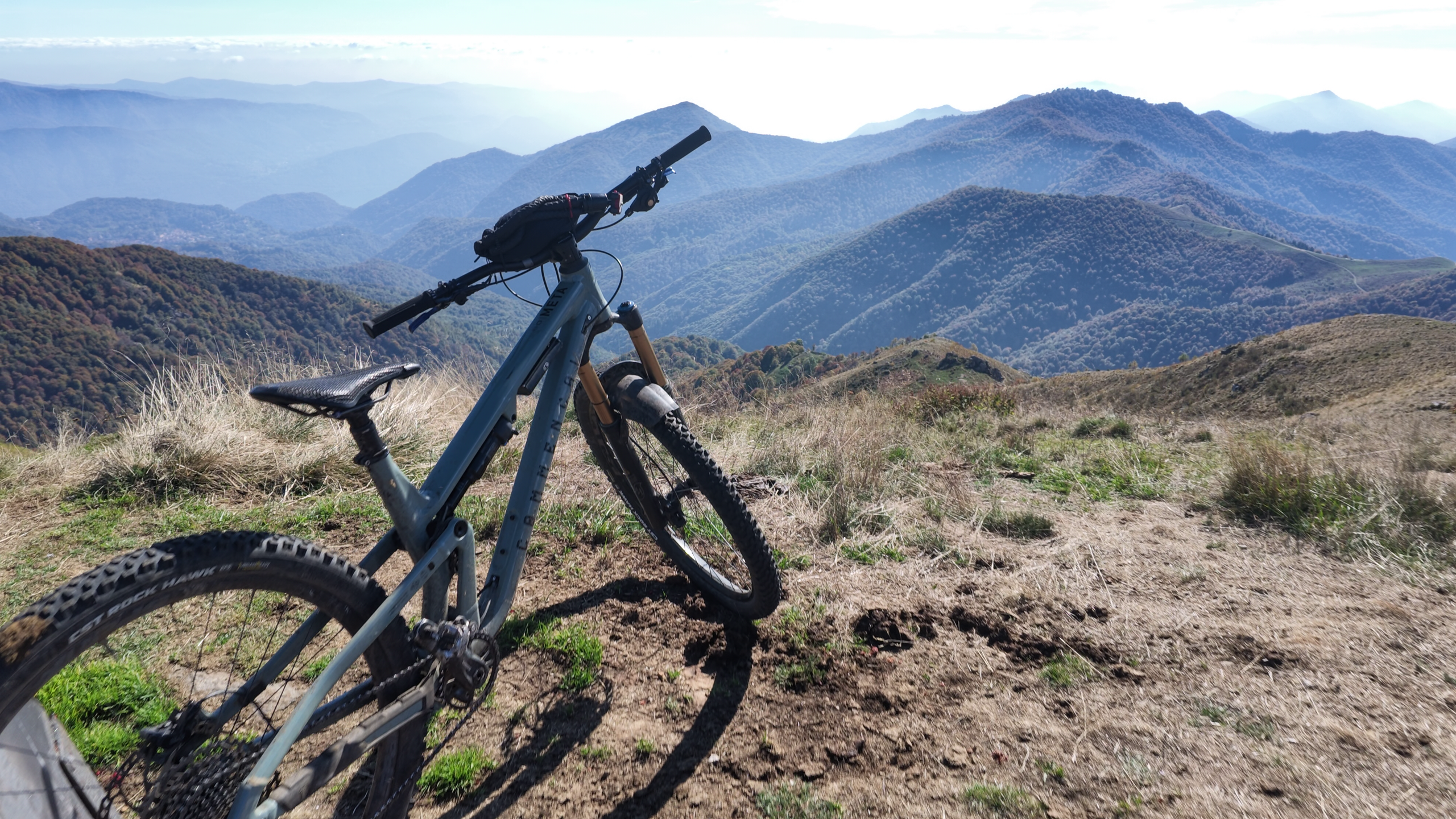
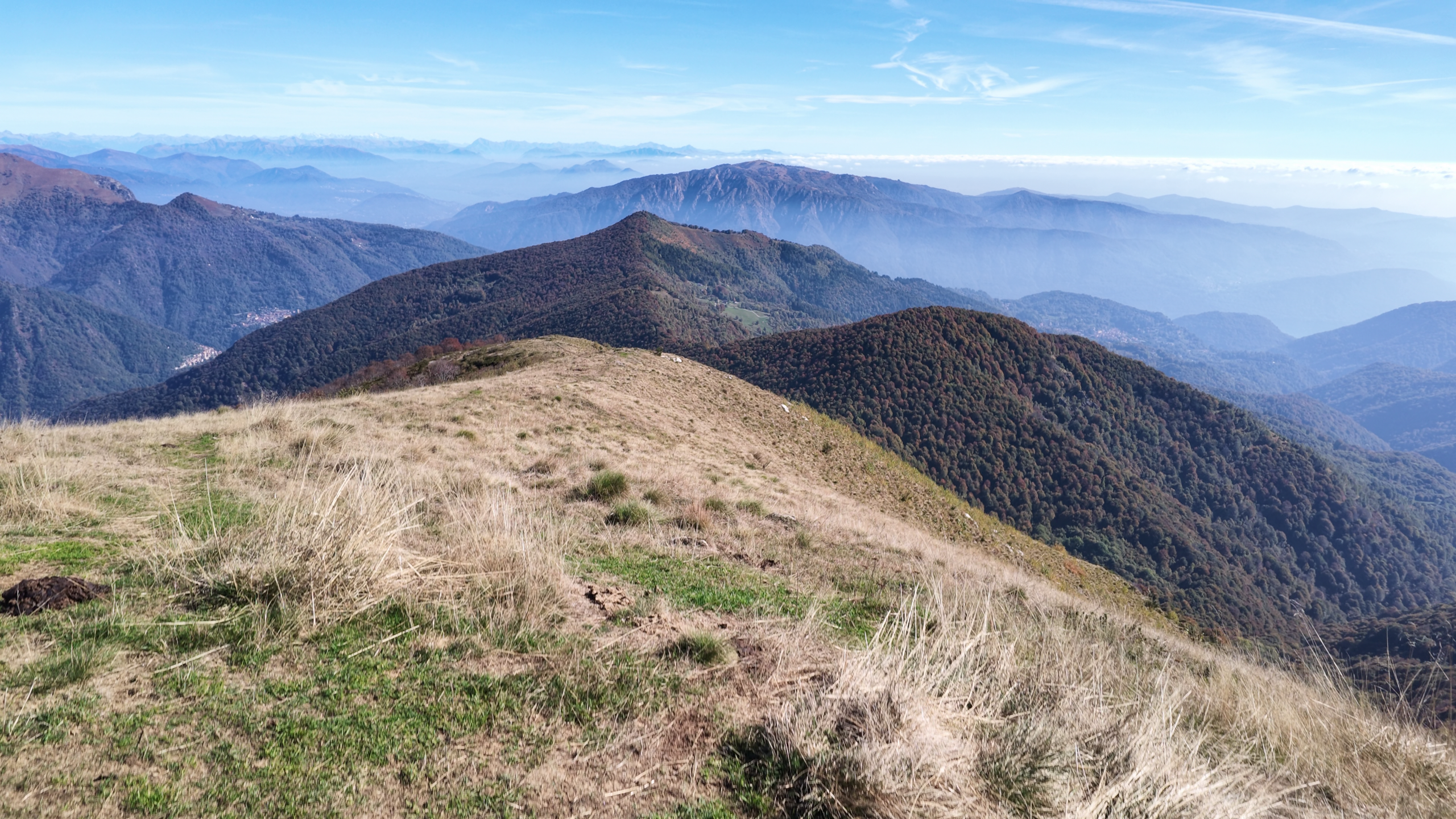
Then, almost suddenly, the ridge ends and you reach the summit, where the landscape opens up in all directions, offering a 360-degree panorama, one of those that surprise precisely because it comes from a mountain that, seen on the map, might seem secondary compared to the great Alpine giants that surround it.
Monte Rosa remains the undisputed star, with its immense east face, that wall of rock and ice often called the only Himalayan face in the Alps—a term that perhaps doesn't even fully convey the sense of grandeur one gets when viewing it from afar. A little further on, Monte Leone emerges on the horizon, reminding us how close Switzerland is, while among the mountains we can also make out Mount Massone, reached during the summer as part of the Cadorna tour.
Seeing a summit you've already conquered from a different perspective is always a special thrill, because the landscape ceases to be just a succession of names and geographical profiles and becomes a sort of personal diary, where each mountain holds a memory, a struggle, a day lived. Further away, the Lake Maggiore basin opens up, and on clear days, the gaze can stretch all the way to the Po Valley, losing itself in a seemingly endless horizon.
But today is not one of those days, and perhaps that's precisely what makes the experience even more evocative.
Today is autumn, the mist obscures the distances and clouds fill the valleys, while above us the sky appears tense, almost as if building an immense vault over a sleeping world. The mountains emerge from that white sea like forgotten islands, the ridges seem to belong to an ancient and unknown territory, and the silence carries with it something mysterious, difficult to describe, yet capable of completely transforming the way we observe our surroundings.
It is a landscape that leaves room for the imagination, one of those that could belong to the lands described by Tolkien in The Lord of the Rings, among mountains that are guardians of ancient stories, secret passages and hidden kingdoms, or act as a backdrop to the medieval atmospheres, full of fog and mystery, that cross the pages of The Name of the Rose by Umberto Eco.
In moments like this, we realize that the beauty of a view doesn't necessarily depend on how far we can see, because sometimes it's precisely what remains hidden that makes it extraordinary. Fog erases details, softens contours, hides landmarks, and leaves it up to our imagination to complete what nature has chosen not to reveal to us.
It is a different beauty from that of the great summer days, less dazzling and perhaps more intimate, which does not seek to amaze through vastness, but invites us to stop, observe and imagine, allowing the landscape also to become an interior space.
And perhaps this is the deepest charm of autumn: its ability to not show everything, to leave something pending, to transform anticipation and mystery into a particular form of beauty.
The descent: a dance in which the mountain leads
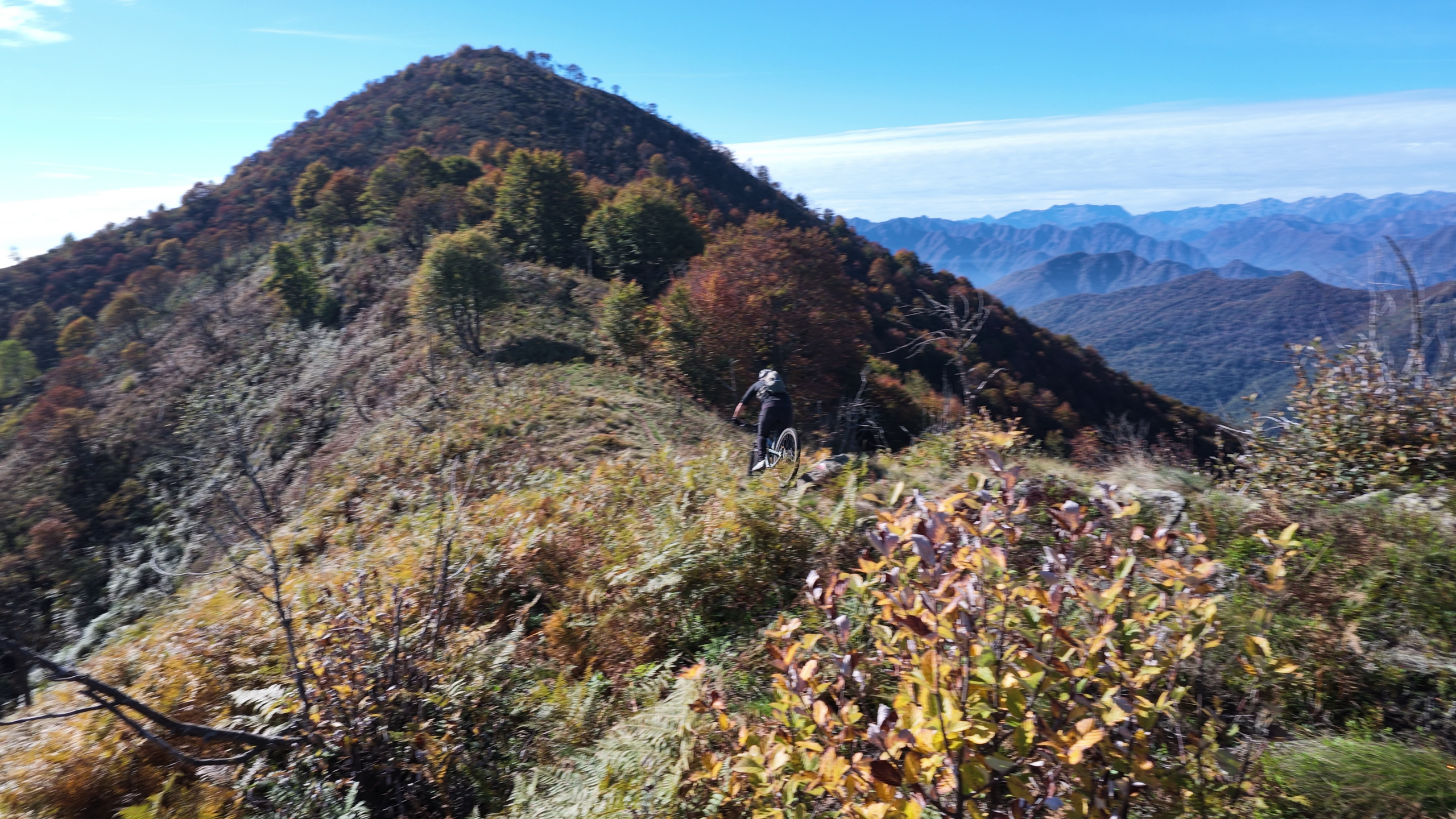
But cycle mountaineering has a peculiarity: reaching the summit does not represent the end of the adventure, it is simply the moment when the journey changes language.
The equipment is set up, the saddle is lowered, the bike is checked.
Then we leave.
And everything we observed during the climb slowly, step by step, begins to flow under the wheels.
The descent from Monte Croce is an experience of constant changes.
It's not a bike park. Nor is it one of those natural trails that, over time, have been redesigned, landscaped, and adapted to the needs of mountain biking.
Here the path doesn't try to accommodate our pace.
Here we are the ones who have to adapt to the rhythm of the mountain.
And this is, perhaps, one of the most profound differences between simply riding a mountain bike and experiencing cycle mountaineering.
We cannot expect the terrain to always offer us the ideal line, the perfect curve, the right support.
We must learn to read what is in front of us.
To interpret it.
Understanding when to let the bike roll and when to hold it back. When to shift weight, when to lighten the wheels, when to accept that the best way forward is to dismount and walk the bike for a few meters.
It's a dance.
A dance in which balance, sensitivity and adaptability count more than speed.
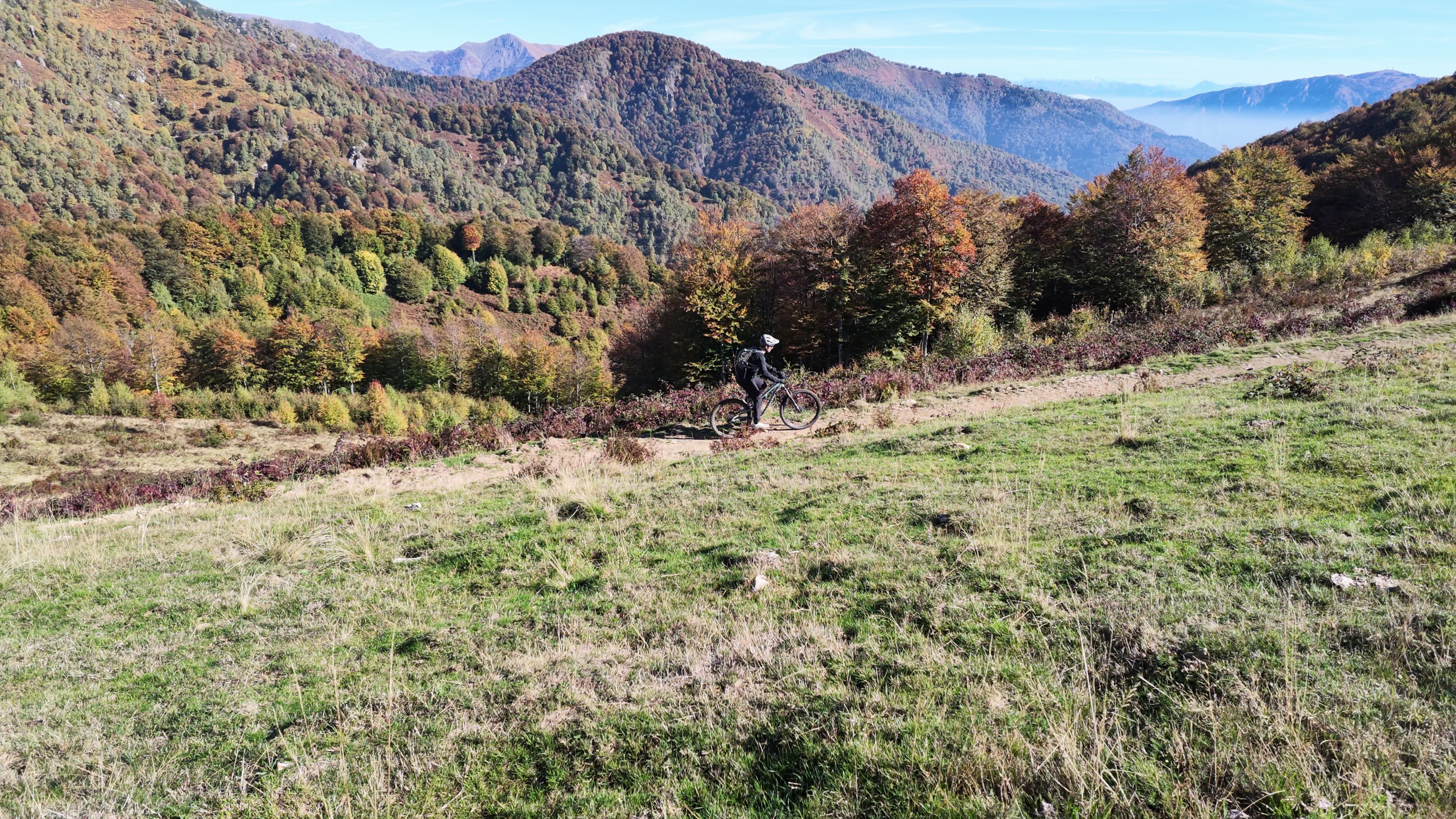
You cross open meadows, brush against shrubs, and tackle more technical sections that require precision and concentration.
There are trialistic traits, small obstacles to interpret, moments in which speed disappears and every movement must be measured.
Then, suddenly, the path gives way.
The bike accelerates, the curves follow one another, the terrain becomes smoother.
The flow is coming.
The authentic, unconstructed kind, born when for a few moments our rhythm and that of the path seem to coincide perfectly.
Then another change.
A passage to tackle on foot, a slower stretch, a new line to seek.
There is no predictable sequence.
And this is precisely what makes the descent so engaging.
The mountain doesn't offer us a prepared path for enjoyment. It simply allows us to traverse it.
And we must do it with respect, almost asking permission at every bend, at every rock, at every change in slope.
Finally comes the beech forest.
The landscape closes in, the light filters between the tree trunks, the ground changes texture again.
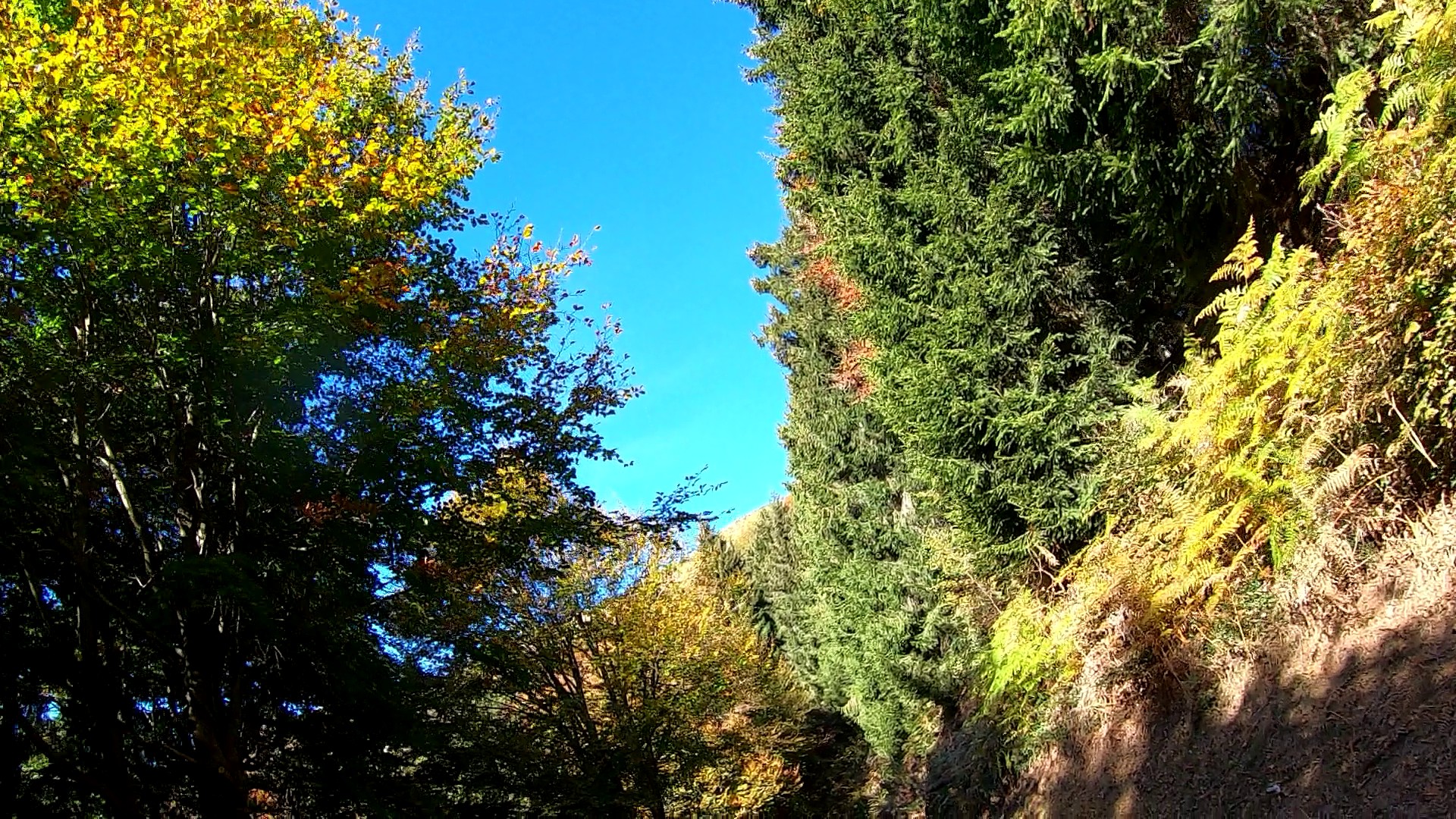
The forest welcomes us with its autumnal colors, with leaves covering the path and that unmistakable smell of damp earth that belongs only to this season.
It's the final act of our dance.
The return: when the mountain remains inside
The trail ends, and almost without realizing it, we return to Camasca, rediscovering those familiar places we'd left behind only a few hours earlier. The tour is complete, and the satisfaction is the same that always accompanies a beautiful day in the mountains, but this time there's something different, a feeling difficult to attribute solely to the pleasure of the descent or the conquest of a summit.
Only three hours have passed, perhaps a little more if we've taken the time to observe, photograph, and breathe, yet it feels like we've traveled through a much larger world, an experience that can't be measured solely by the kilometers traveled, the elevation gain, or the difficulties overcome.
Before setting off again, it's natural to raise our eyes upward, searching among the mountain's shapes for the ridge that had just accompanied us to the summit. Monte Croce is still up there, seemingly distant, almost alien to where we are now, yet only minutes earlier we were standing on those rocks, the wind on our faces, Monte Rosa before our eyes, and the clouds stretched out below us.
It's amazing how little it takes to transition from one world to another, how a simple climb, a ridge, and a descent can transport us to a dimension that in everyday life seems increasingly difficult to reach. Perhaps this is one of the great privileges of mountain biking, experienced as an exploration, the ability to traverse diverse territories in just a few hours, from forests to mountain pastures, from dirt roads to the wildest ridges, until, at the end of the day, we find ourselves back where we started.
But something, in the meantime, has changed.
Because cycle mountaineering isn't just about taking a bike where pedaling seems impossible, nor about seeking wild descents or spectacular views. Above all, it's about learning to enter the mountain without trying to change it, accepting its rhythms, difficulties, and silences, with the awareness of being guests in an environment that exists independently of our presence.
And perhaps it's precisely this awareness that makes certain experiences so precious, because it reminds us that it's not always necessary to travel far, climb very high, or undertake extraordinary feats to experience a true adventure. Sometimes, all it takes is choosing a lesser-known path, agreeing to push the bike for a while, and taking the time to see what surrounds us with different eyes.
Meanwhile, autumn continues its slow march. The days will grow shorter, the first dustings of snow will become more abundant, and soon the high-altitude trails will once again rest under the white of winter, silently guarding the tracks of those who traversed them during the warmer months.
But today Monte Croce gave us one last story to carry with us, made of wind, clouds, fatigue, and wheels dancing on the stones, one of those days that seem simple while we live them and only later, thinking back, reveal their full intensity.
Because autumn is the season of anticipation, but it's also the season when every adventure seems to turn into a memory even before it's over, as if the knowledge that winter is now approaching makes every moment more intense, every view more precious, and every mountain outing a small privilege worth cherishing.
And as we move away from Camasca, our gaze once again seeking the summit we just left, that subtle sensation remains of having done something more than a simple bike ride.
For a few hours, we inhabited a different world, following its rules and listening to its silence. Now we return to our own, carrying a small fragment of it with us, while up there the mountain continues, indifferent and magnificent, its slow wait for winter.