THINK ABOUT IT #02 | Modern geometry, advanced suspension, and stability unthinkable just a few years ago. Mountain bikes allow us to go faster and tackle increasingly challenging routes. But when the bike's performance exceeds that of the rider, the fun can turn into risk.
Bikes have changed. What about us?

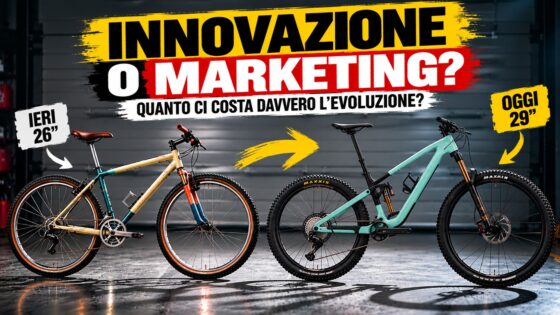
Anyone who has had the opportunity to ride a mountain bike from twenty years ago and a modern trail or enduro bike knows the difference well.
Today's bicycles are amazing.
The geometry has evolved, the suspension works better, the tires offer extremely high levels of grip and the braking systems allow you to manage speeds that once would have been difficult even to imagine.
Whether it's a traditional MTB or an e-MTB, the result is clear: greater stability, more control, and an ability to tackle technical terrain that has profoundly changed the way we pedal.
And that's a good thing.
Technological advances have made mountain biking more accessible in many ways. Obstacles that once hindered even expert riders can now be tackled with greater safety and confidence.
But there is one aspect of this evolution that perhaps we talk too little about.
Bicycles have improved enormously. Are we sure that the skills of those who ride them have improved as well?
Stability can become a double-edged sword
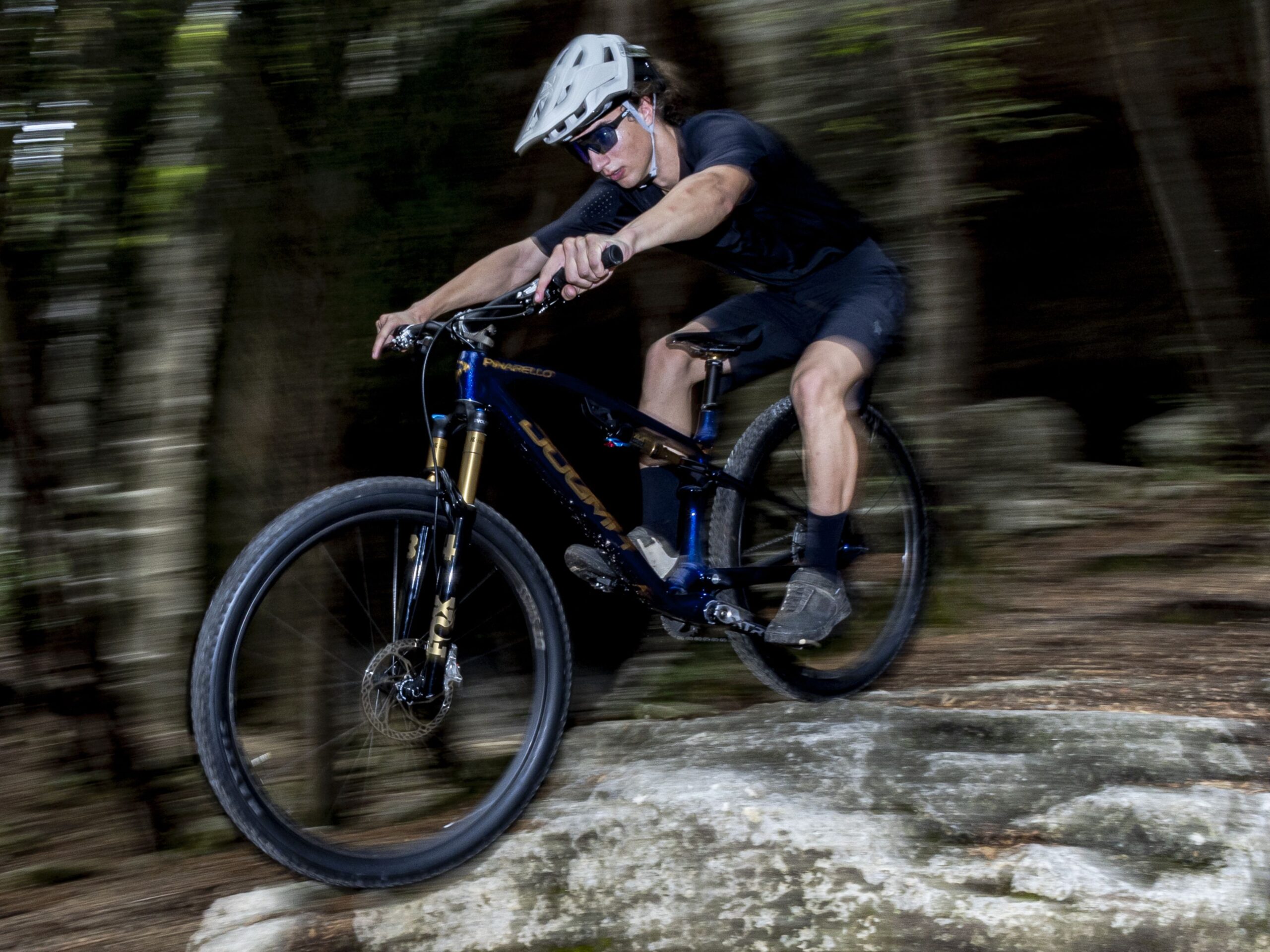
One of the most striking features of modern MTBs is stability.
Longer frames, slacker steering angles, suspension capable of absorbing obstacles and increasingly high-performance tyres convey a great sense of safety.
The biker feels at ease, tackles challenging sections with greater confidence and often progressively increases speed.
As long as everything works, the experience can be extraordinary.
The problem arises when something doesn't go as planned.
A corner taken too quickly, braking too late, a hidden stone, a sudden change in grip.
At that point the stability of the bike is no longer enough.
Skills come into play that no technology can completely replace: reading the terrain, choosing trajectories, managing braking, correctly distributing weight and reacting to the unexpected.
And the faster we go, the less time we have to make a decision.
There's also a very simple physical principle: kinetic energy increases as the square of the velocity. For the same overall mass, going from 20 to 30 km/h increases the energy 2,25 times.
This doesn't mean that a crash at 30 km/h necessarily causes consequences 2,25 times more severe. The dynamics of a crash are much more complex. But it's enough to understand how speed can change the risk conditions.
A bike that allows you to go faster also requires greater awareness of what we are doing.
More hiking does not automatically mean more fun

In recent years we have seen a growth in the performance of trail, enduro and e-MTBs.
Long travel, aggressive geometry, powerful brakes and increasingly specialized tires have become desirable features even for those who don't usually tackle extreme routes.
But are we sure that the best performing bicycle is always the most suitable one?
An enduro bike designed for tackling challenging descents can offer extraordinary stability and control. This doesn't mean it's necessarily the best choice for a beginner or someone who primarily rides smooth trails.
A bike with more travel isn't automatically more difficult or dangerous to ride. In fact, it can be more forgiving on certain terrain.
But it can also encourage you to maintain high speeds and seek out increasingly challenging routes, without the technical level increasing to the same extent.
Furthermore, a specialized bike requires an understanding of its characteristics and may be less effective or fun on terrain other than that for which it was designed.
The point is not to establish that one category is better than another.
The point is to choose a bike based on your abilities and how you use it, not just its maximum performance.
E-MTB: more opportunities, but also new responsibilities
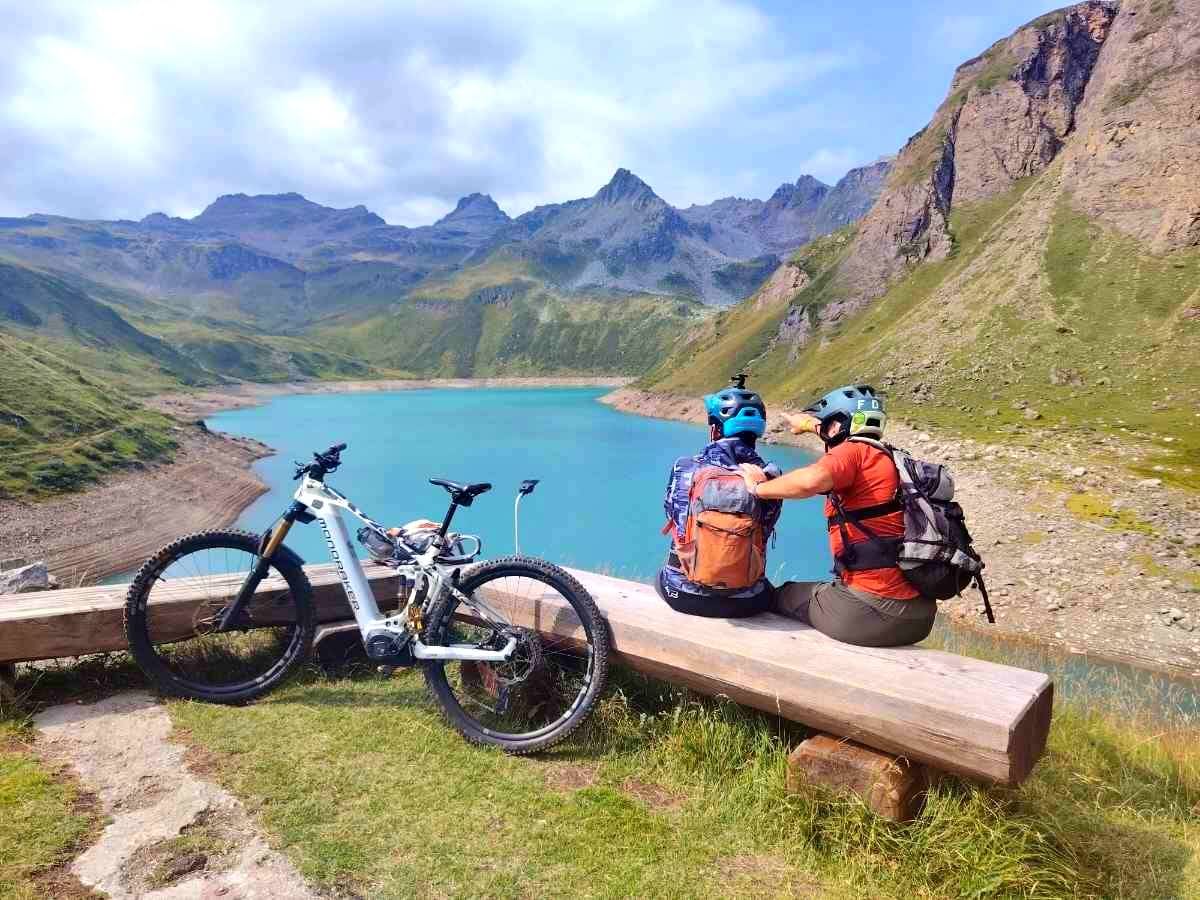
E-MTBs have greatly expanded the possibilities of mountain biking.
They allow you to tackle significant elevation changes, reach distant locations, and repeat descents. They've also introduced off-roading to people who, for various reasons, would have found it difficult on a traditional bike.
This is a positive result.
But electric assistance also introduces elements that deserve attention.
The ability to tackle technical climbs at greater speed, the generally higher weight of the vehicle and the ease with which you can accumulate kilometres and altitude gain require conscious management.
Motor assistance doesn't replace proper riding technique. And above all, it doesn't replace the preparation needed to tackle downhill slopes.
Easily reaching the top of a route doesn't automatically mean you're ready to descend it.
This applies to e-MTBs, but the principle is identical for muscle bikes: the ability to reach a trail does not necessarily coincide with the ability to ride it safely.
Physical preparation is part of safety
When we talk about mountain bike safety, we immediately think of helmets, protections and the quality of the components.
These are important elements, but they are not enough.
Riding a mountain bike requires physical effort.
You have to maintain control of the vehicle, absorb obstacles, manage your body position and stay focused even when you become tired.
A long, technical descent can tire your arms, legs, and attention span. And when we're tired, the precision of our movements and the quality of our decisions can deteriorate.
A high-performance bike does not eliminate these limitations.
Indeed, by allowing us to cover more challenging or faster distances, it can expose us to greater physical demands than we are used to managing.
You don't have to be a professional athlete to have fun mountain biking.
However, it is important to know your level of fitness and choose routes, speeds, and durations of outings that are consistent with your conditions.
Knowing how to stop is also part of driving skills.
A badly adjusted bike doesn't work as it should.
Then there is another aspect that is often underestimated: the setup.
Today we have sophisticated suspensions, adjustable geometry, specialized tires and very powerful braking systems.
But how many people really know how their bike works?
Incorrect tire pressure, incorrectly adjusted suspension, poorly positioned brake levers, or an ineffective riding position can compromise control and comfort.
Simply buying a high-end fork doesn't automatically mean you'll be able to exploit its potential.
You need to understand how it works, adjust it according to your weight, riding style and routes, and check its conditions periodically.
Technology offers extraordinary possibilities, but requires knowledge.
A less sophisticated bike, but properly adjusted and suited to the rider, can offer a better experience than a top-of-the-range one used without understanding how it works.
We spend thousands of euros on bikes. How much do we invest in learning to ride them?

And here we come to the crux of the matter.
In the MTB world we are used to constantly talking about upgrades.
We change suspension, brakes, wheels and tires for greater control, safety and performance.
But how much do we invest to improve our technique?
A driving course with a qualified instructor can teach you how to properly manage braking, take a curve, use body position and recognize your limits.
It can help correct mistakes that we have been carrying around for years, often without even realizing it.
And above all, it can provide the tools to understand when a step is within our reach and when it is best to stop.
Of course, a course does not eliminate risk and does not automatically transform a beginner into an expert rider.
But it represents an investment in your ability to control the bike, not just in the performance of the bike itself.
Maybe we should start considering technical training as a normal part of MTB practice, just like bike maintenance.
Not something reserved for those who want to compete or tackle spectacular jumps.
Something useful for everyone.
We mustn't slow down evolution. We must develop bikers.
The solution is not to stop progress.
It would make no sense to ask manufacturers to make less performing bicycles or to abandon innovations that have improved control, reliability and capability of the vehicles.
The solution is to accompany technological evolution with more informed communication.
Telling not only how fast a bike can go, but also who it is actually suitable for.
Explain that more hiking does not automatically mean more fun.
Show the importance of physical preparation, adjustments and riding technique.
And remember that speed isn't the only parameter by which to measure a good ride.
We, the specialized media, also have a responsibility.
When we describe a new MTB, we shouldn't just extol its performance. We should help readers understand the skills required to use it optimally and the conditions in which it can offer its benefits.
Because not everyone needs a racing enduro, just as not everyone needs the most powerful e-MTB on the market.
And there's nothing wrong with that.
Real progress is having more fun, not just going faster.
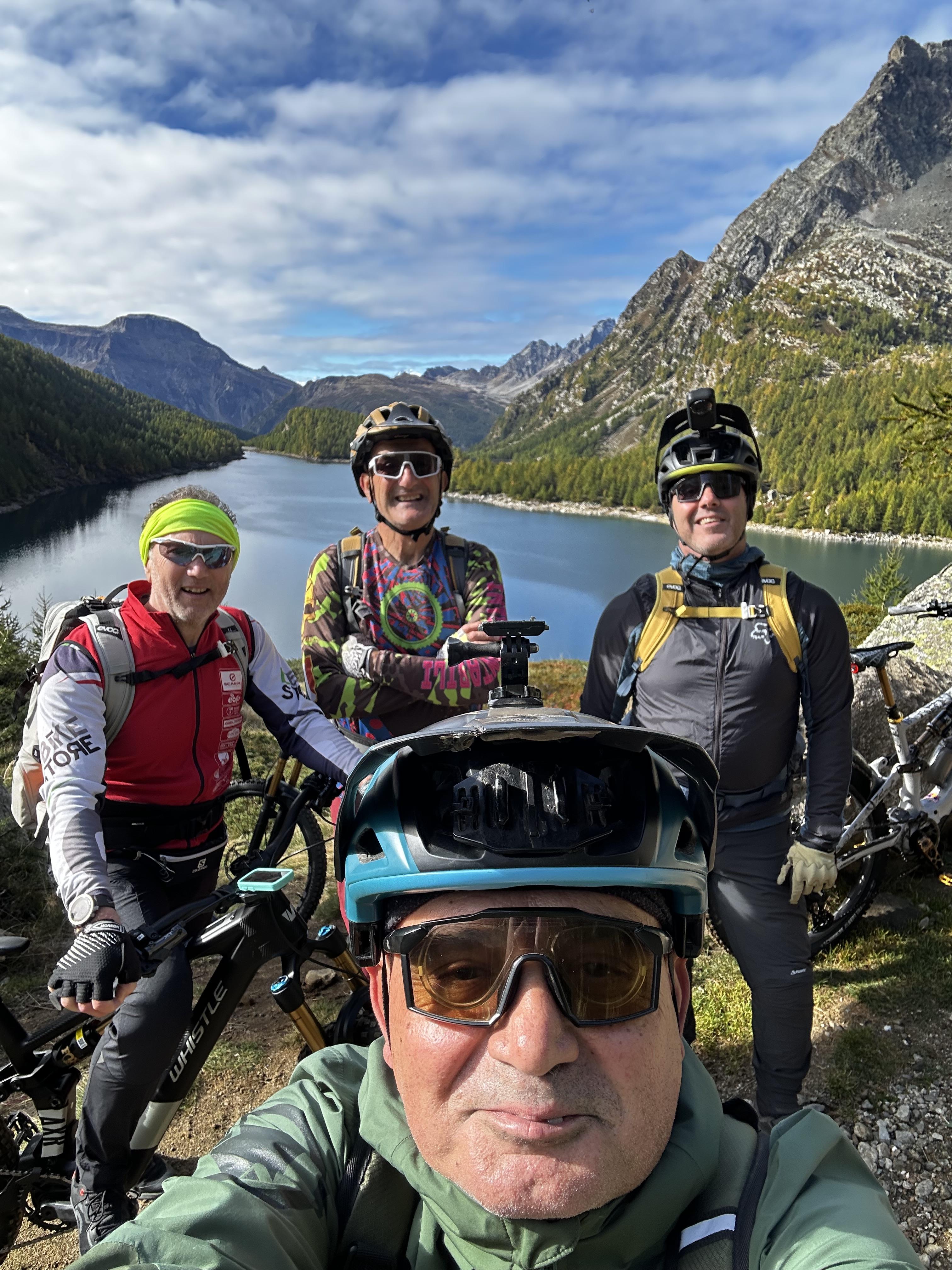
Mountain biking is an extraordinary sport because it combines freedom, adventure, technique, and contact with nature.
Modern bicycles allow us to experience all of this with possibilities that until a few years ago seemed unthinkable.
But fun doesn't necessarily increase with speed.
Sometimes it grows when we learn to drive better.
When we take a curve more fluidly, we overcome an obstacle without fear or finish a challenging descent feeling in control of the situation.
Safety doesn't mean giving up fun.
It means creating the conditions to continue having fun.
Mountain bikes have become extraordinary. Now we need to ensure that riding culture grows with them.
Because the best performing bike isn't necessarily the one that gets us down the valley fastest.
It is the one that we are truly able to drive, control and use with satisfaction.
And perhaps, before asking ourselves what the next great evolution of MTB will be, we should ask ourselves a much simpler question:
are we investing enough in the evolution of those in the saddle?