Eighteen trails, nearly 40 kilometers of trails, and a team of about ten professionals. At Plan de Corones, the quality of the mountain bike experience begins with an often invisible effort: that of those who design, build, and maintain the trails. A crucial aspect for any bike destination aiming to offer a high-quality experience.
When evaluating a bike destination, attention often focuses on the number of trails, the kilometers available, the lifts available, and the variety of routes. These are all important factors, of course. But there's one factor that more than any other determines the quality of the experience on the trail: the professionalism of those who design, build and maintain those trails over time.
It's a topic we've returned to repeatedly in our in-depth articles, as it represents one of the key aspects in developing a modern MTB offering. A trail doesn't become beautiful simply because it passes through a spectacular environment. It requires specific skills, the ability to interpret the terrain, and a thorough understanding of riding dynamics.
Il Bike Park Kronplatz, at Plan de Corones, represents a concrete example of this approach. And not just on paper: during our visit last spring, we had the opportunity to personally verify the quality of the work done on the trails.
Trail building is a profession, not a detail
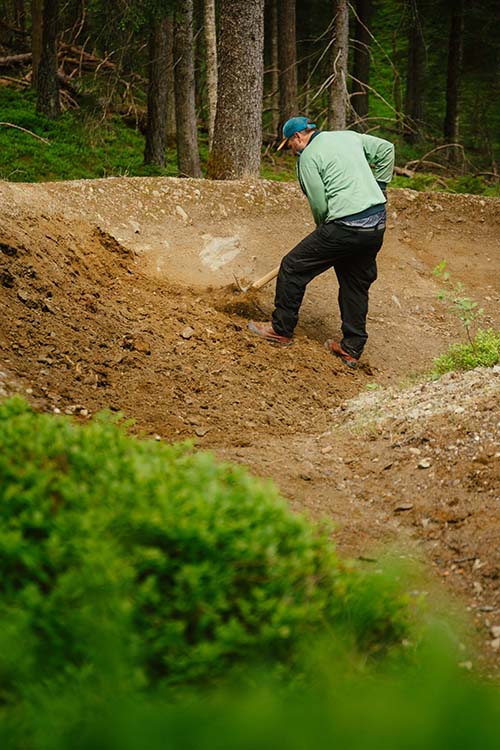
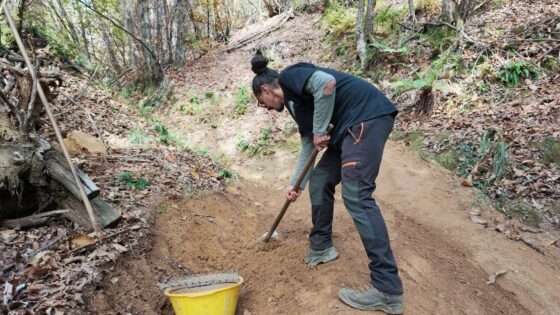
Behind the 18 trails and nearly 40 kilometers of trails at the Kronplatz Bike Park is a team of about ten professionals. This group handles not only routine maintenance, but also the design, construction, and development of the lines.
This is precisely the central point: Trail building requires professionalism, experience and skills that go far beyond the simple ability to move earth.
A good trail builder must know the behavior of the mountain bike, understand the speeds, predict the trajectories and construct a succession of elements that give the rider a sense of continuity.
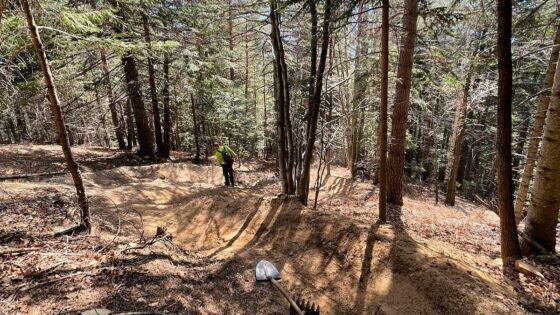
A parabolic curve isn't simply a mound of dirt. Its slope, radius, and connection with the previous and next sections determine how the bike is supported and guided. The same goes for a jump, where entry speed, takeoff, and landing speed must interact.
These are details that make a huge difference in riding. And riders often perceive them without necessarily realizing it: when a trail works, everything feels natural.
Flow cannot be improvised: it is designed
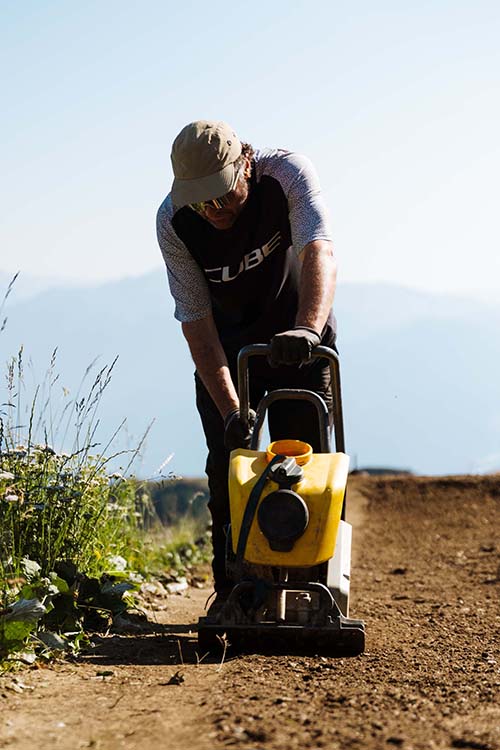
One of the most common mistakes is to associate the concept of flow exclusively with easy, flowing trails or trails full of parabolic curves. In reality, flow is above all the result of a coherent design, regardless of the difficulty of the route.
Even a technical line can have an excellent flow, when obstacles, changes in slope, curves and more challenging sections are inserted in a legible and well-studied sequence.
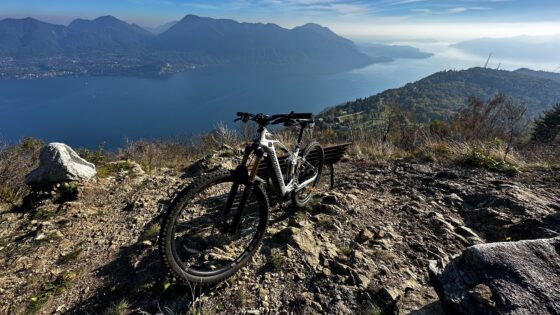
At Kronplatz, this work must contend with a particularly complex morphology. The bike park extends from the summit at 2.275 meters to approximately 900 meters above sea level, traversing diverse terrain, with rocks, roots, varying gradients, and ground conditions that change significantly along the descent.
The task of trail builders is to interpret these characteristics, exploiting what the mountain offers and intervening where necessary to obtain functional lines.
It doesn't mean making everything easier or eliminating difficulties. It means building paths in which the technical challenge is a conscious design choice, not the consequence of a route built without criteria.
And it is precisely this ability to interpret that distinguishes professional work.
Maintenance is an integral part of quality
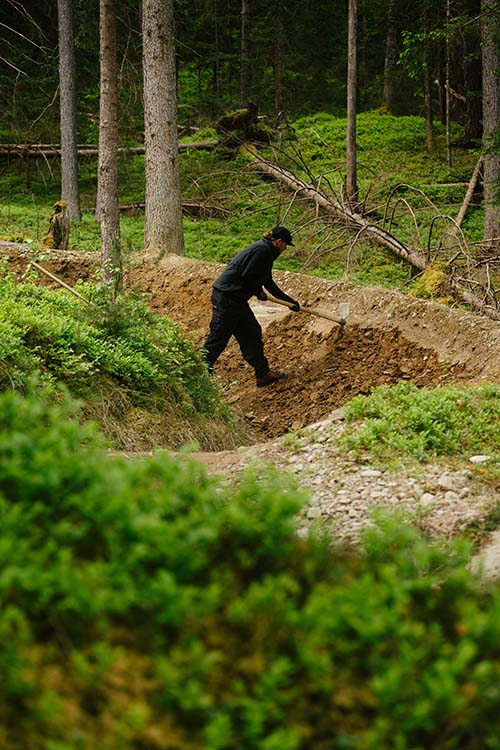
There is another aspect that is often underestimated: a well-built trail does not automatically remain a good trail.
The constant passage of bicycles modifies the surface, especially in the areas subject to the greatest stress. Braking creates ruts and braking bumps, curves progressively lose surface finish, supports become deformed, and water can compromise entire sections.
For this reason, maintenance cannot be considered an occasional intervention, to be carried out only when a track presents obvious problems.
It must be an integral part of managing a bike destination.
At Kronplatz, shapers work throughout the season, monitoring trail conditions and fixing the sections most prone to wear. This work also requires observation skills: analyzing riders' trajectories, identifying the areas where they brake most, and understanding how they negotiate jumps and turns allows them to identify potential critical issues.
Maintenance thus also becomes a tool for improving the original project.
Water management is particularly important. In an Alpine environment, where precipitation can be intense and weather conditions change rapidly, drainage is one of the key factors in ensuring the longevity of a trail.
Proper intervention means understanding how water flows through the soil, preventing erosion, and, when necessary, modifying slopes or reconstructing sections. Filling a trench isn't enough: you need to understand its cause.
Skills, resources and knowledge of the territory
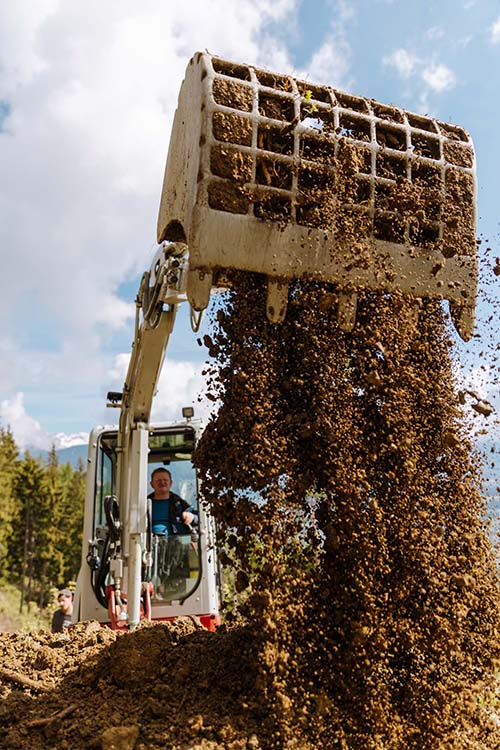
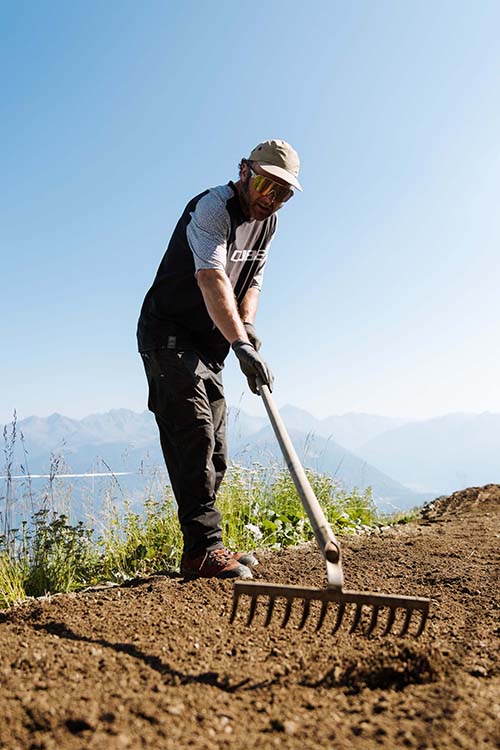
The shapers' work combines manual activities and the use of specialized machinery.
Shovels, pickaxes, and rakes remain indispensable for finishing touches and more precise work. Excavators and compactors, on the other hand, allow you to shape the terrain, move materials, and build more complex structures.
But the tools alone do not guarantee the result.
The real difference lies in the ability to choose how and when to intervene. At Plan de Corones, for example, the presence of rock can be an obstacle or a resource for consolidating certain sections. Likewise, humidity and soil conditions influence the ability to effectively work the material.
These are assessments that require field experience and knowledge of the mountain environment.
And this is where another decisive element emerges: A professional trail builder doesn't just build a trail, but must understand how it behaves over time..
A bike destination can also be recognized by those who work behind the scenes
In the MTB landscape, the growth of a destination cannot be measured solely by the opening of new trails.
Expanding the offering is important, but equally important is ensuring that existing routes maintain their quality, identity, and driving characteristics over time.
This requires continuous investment, planning and, above all, qualified personnel.
It's a concept we've already addressed when talking about the design and development of MTB destinations: Trails are not simply infrastructures to be built, but a technical heritage to be managed.
The difference between an offering built with a long-term vision and one based solely on the quantity of available routes emerges precisely in the attention to detail.
From this perspective, our firsthand experience at Kronplatz last spring allowed us to appreciate the results of the trail building team's work. This quality doesn't arise by chance, but from a professional approach to trail construction and management.
The quality of the trails is an investment in the destination
The work of shapers often remains invisible to bike park visitors. Riders remember a particularly successful turn, a well-connected sequence of jumps, or a descent that invites them to let the bike run.
He hardly thinks about the hours it took to design that line, the choice of materials, or the interventions carried out after a storm.
Yet it is precisely that work that determines a good part of the experience.
The case of Kronplatz therefore reiterates a principle that should be the basis of any tourism development project linked to mountain biking: Having a mountain and designing trails is not enough to become a quality bike destination.
We need competent people, dedicated resources, and a vision that considers design and maintenance as strategic elements of the offering.
Because, in the end, the professionalism of those who work behind the scenes is what allows cyclists to focus solely on the pleasure of the descent.
For information on the routes and the Kronplatz Bike Park: kronplatz.com.